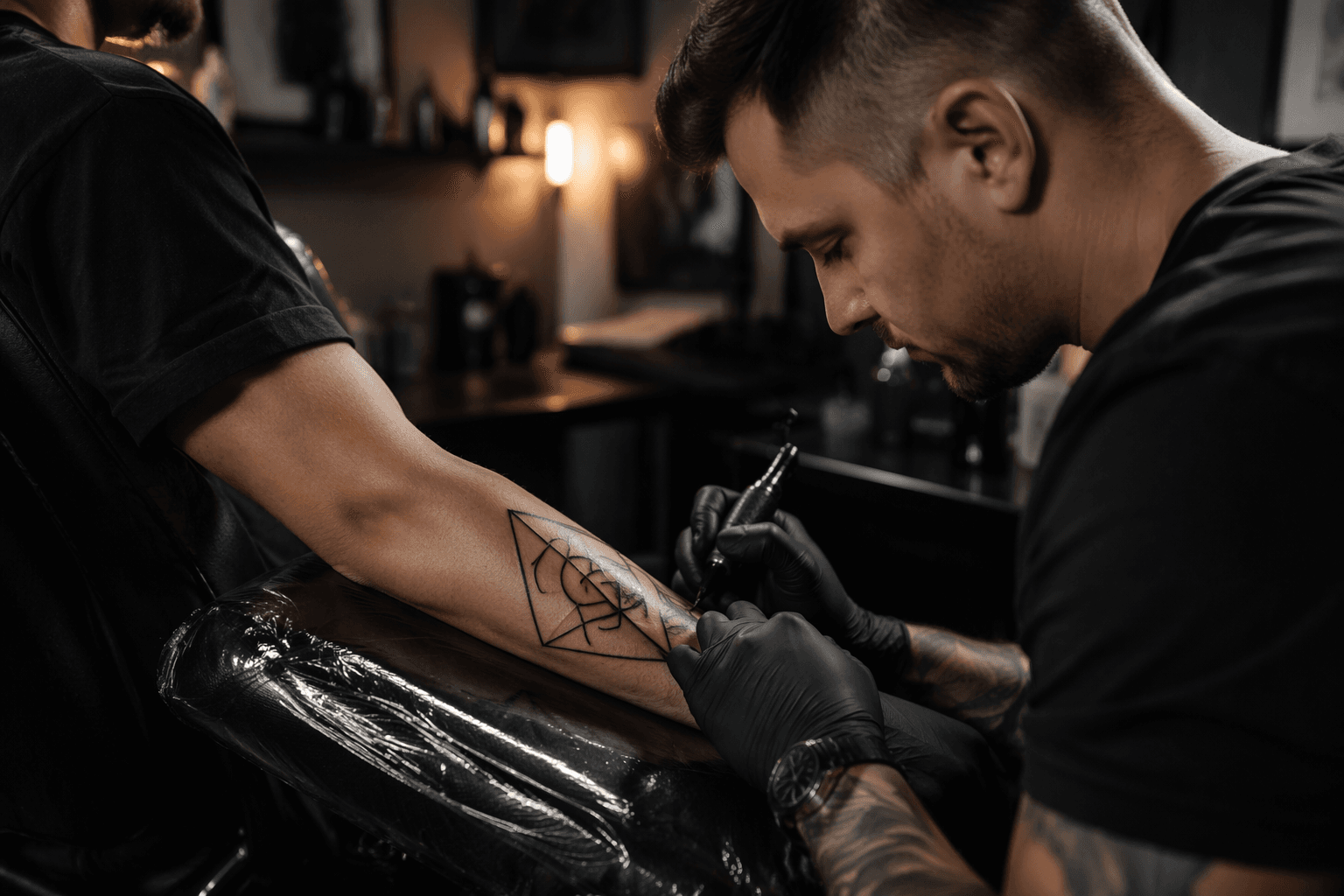
Sacred geometry tattoos gain momentum with symbolic designs and placements
Sacred geometry is moving from single-symbol ink to layout-driven work, where scale, symmetry and placement decide what still reads cleanly on skin.

The new sacred-geometry brief
Sacred geometry tattoos are having a moment because they promise more than ornament. The strongest pieces now read like structure you can wear: symbolic, orderly, and precise enough to carry meaning without collapsing into visual clutter.
That is the real signal in the latest AllAboutTattoo roundup. Instead of treating sacred geometry as one motif, it frames the style as a design system, moving from spiritual symbols to sleeves, armbands, face work, blackwork, matching pieces, and large compositions that can change the whole architecture of a body placement. The message is simple: the idea you choose matters, but the way it sits on the skin matters more.
The motif families driving the look
The clearest trend is the shift away from a single canonical symbol and toward families of geometry that can flex across placements. Flower of Life designs still anchor the field, but they are now being read alongside Seed of Life pieces, Fibonacci-inspired layouts, Tree of Life variations, and alchemy motifs. Each one pushes the same visual language in a different direction.
A Flower of Life tattoo carries the most obvious read on creation and interconnectedness. A Seed of Life feels like the cleaner, more distilled cousin, with a growth narrative built into the form. Fibonacci-inspired work brings the look closer to philosophy and proportion, while alchemy-inflected pieces lean into transformation and personal symbolism. Bee and butterfly versions add another layer, using recognizable living forms to soften the geometry without abandoning it.
The roundup also points to a wider range of aesthetic lanes: spiritual sacred-geometry designs, feminine approaches, skull motifs, blackwork sacred geometry, and matching tattoos. That breadth matters because it shows how the style is no longer confined to one visual mood. It can be airy or dense, ornamental or blunt, symbolic or almost architectural.
Where the trend is spreading on the body
Placement is now part of the language, not an afterthought. The roundup moves through neck pieces, hand tattoos, chest placements, forearm pieces, back pieces, leg tattoos, shoulder work, armbands, and face tattoos, which tells you exactly where the style is expanding fastest.
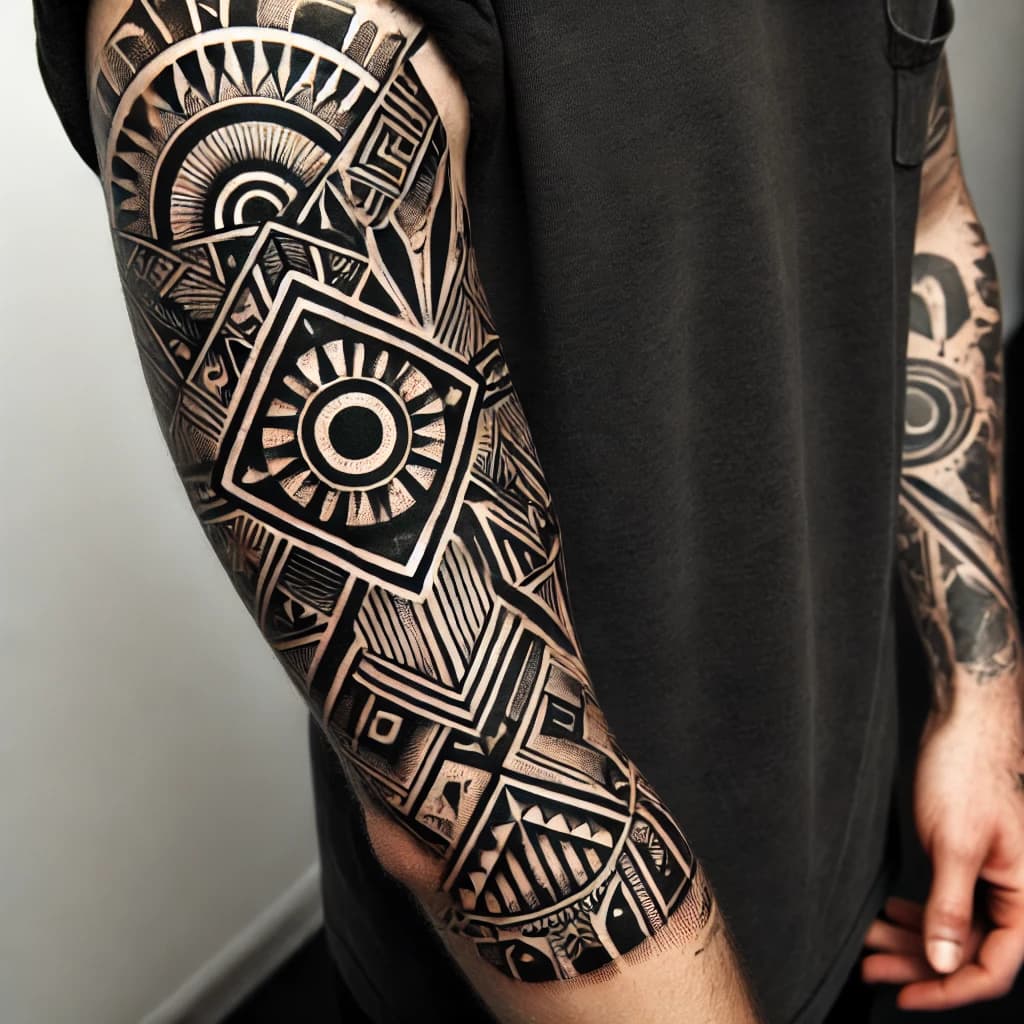
Some placements naturally reward geometry better than others. Forearms, shoulders, chests, backs, and sleeves can support more elaborate symmetry and denser line systems because the larger canvas gives the pattern room to breathe. Armbands also make a lot of sense here because their circular logic keeps the design contained and legible, even as the body moves.
By contrast, small tattoos, hand tattoos, neck pieces, and face tattoos demand a much stricter edit. The smaller or more exposed the placement, the simpler the geometry has to be if it is going to hold its shape over time. Dense sacred geometry on a tiny field can quickly become visual static, especially when line spacing is tight.
That is why the most durable sacred-geometry tattoos are usually the ones that respect the body’s real scale. Larger compositions can take on more detail, but only if the symmetry survives the wrap, the curve, and the movement of the placement. On smaller placements, the design has to breathe from the start.
What actually ages well
The difference between a striking geometric tattoo and a muddled one usually comes down to four things: symmetry retention, spacing, line density, and placement. Sacred geometry is unforgiving because the eye reads even tiny deviations immediately. If the spacing collapses or the linework gets too crowded, the design stops feeling intentional and starts feeling busy.
That is why cleaner structures tend to age better. Pieces with open negative space, disciplined symmetry, and a clear center survive far longer than designs that cram every available millimeter with detail. Blackwork sacred geometry can work beautifully, but only when the shapes remain readable and the fills do not overpower the pattern. The style is strongest when it feels exact, not heavy for the sake of being heavy.
This is also why the roundup’s practical advice is so useful. It keeps returning to the idea that the artist and client need to think about scale and placement together. A symbol that looks elegant in a design sheet can fall apart on a finger, while the same logic can look powerful across a forearm or back piece.
The older language behind the trend
Part of why sacred geometry keeps returning is that the visual language is much older than any current tattoo cycle. Britannica describes mandalas in Hindu and Buddhist Tantrism as symbolic diagrams used in sacred rites and meditation, essentially representations of the universe. That makes the modern sacred-geometry tattoo feel less like a passing aesthetic and more like a contemporary version of an old symbolic habit: mapping order, cosmos, and selfhood into a geometric form.
The Metropolitan Museum of Art adds another layer by showing how geometric patterns function as a defining decorative feature of Islamic art, linked to repetition, symmetry, and an illusion of infinity. Just as important, those patterns appear across architecture, textiles, ceramics, metalwork, and manuscripts, not in one isolated medium. That cross-medium logic is part of why geometric tattooing feels so adaptable on skin.
Then there is the deeper tattoo history. Smithsonian Magazine points to the Iceman, found on the Italian-Austrian border, whose tattoos are about 5,200 years old and geometric and abstract, made of dots and small crosses. Some of those markings may even have been therapeutic, placed near areas of strain-induced degeneration. In other words, geometric tattooing is not a new invention dressed up as spirituality. It is one of the oldest visual habits humans have used on the body.
The Flower of Life, often linked in modern tattoo culture to ancient Egypt and to overlapping-circle symbolism around Abydos, fits neatly into that lineage even when the reading is contemporary. Add in the long conversations about proportion associated with Vitruvius and Leonardo da Vinci, and the current wave starts to look less like a trend and more like a renewed appetite for measured design.
Sacred geometry is gaining momentum because it satisfies two urges at once: it looks precise, and it means something. The tattoos that last will be the ones that respect both facts, letting the symbol do its work while the layout, spacing, and placement keep the whole composition from slipping out of balance.
This article was produced by Prism’s automated news system from verified source data, official records, and press releases, then run through automated quality and moderation checks before publishing. The system is built and supervised by the people who set the standards it runs under. Read our full AI policy.
Did this article answer your question?