Sanskrit tattoos lean on mandalas, symmetry, and precision
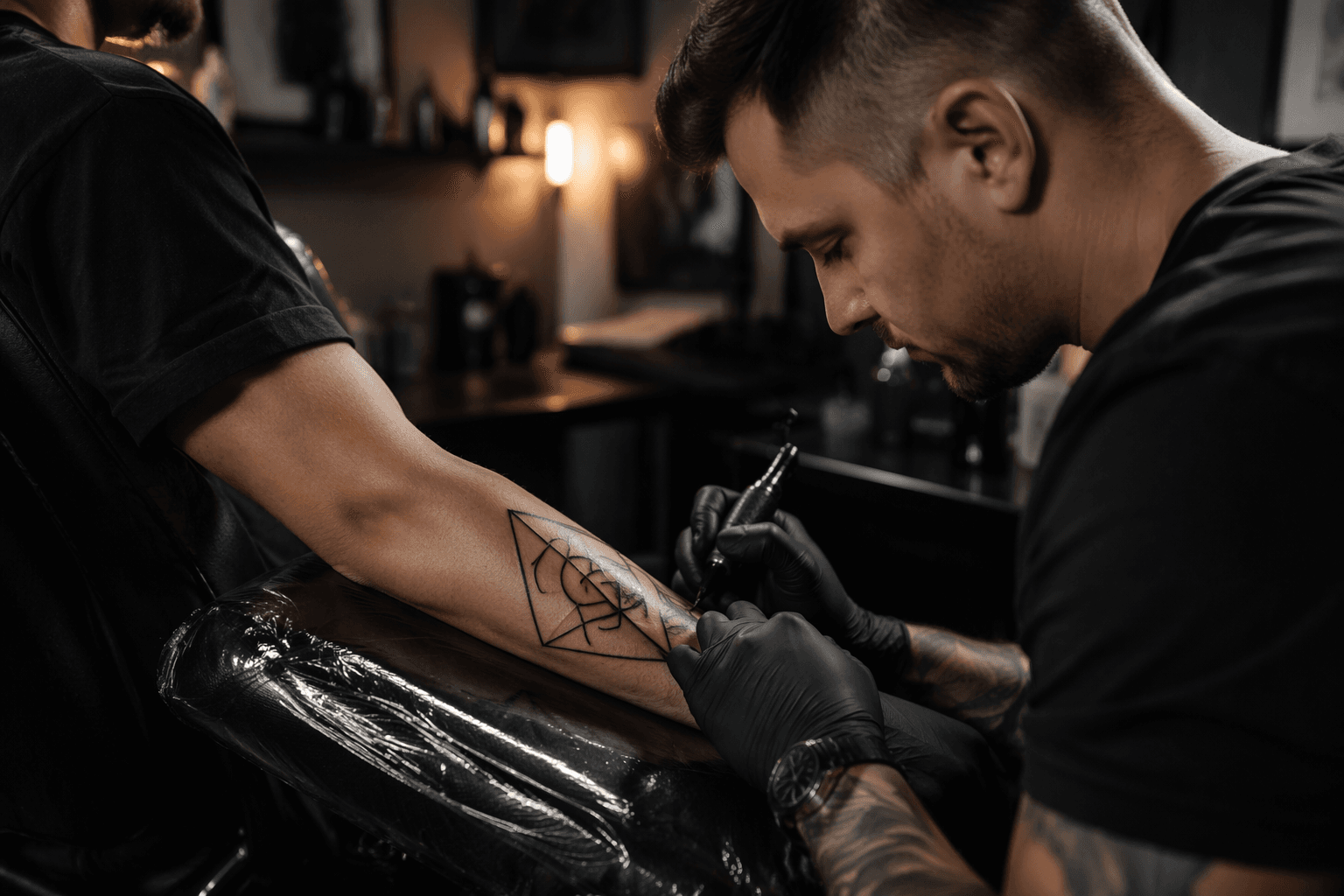
Sanskrit tattoos look strongest when the geometry serves the script, not the other way around. Check translation, spacing, and line weight before mandalas swallow the meaning.
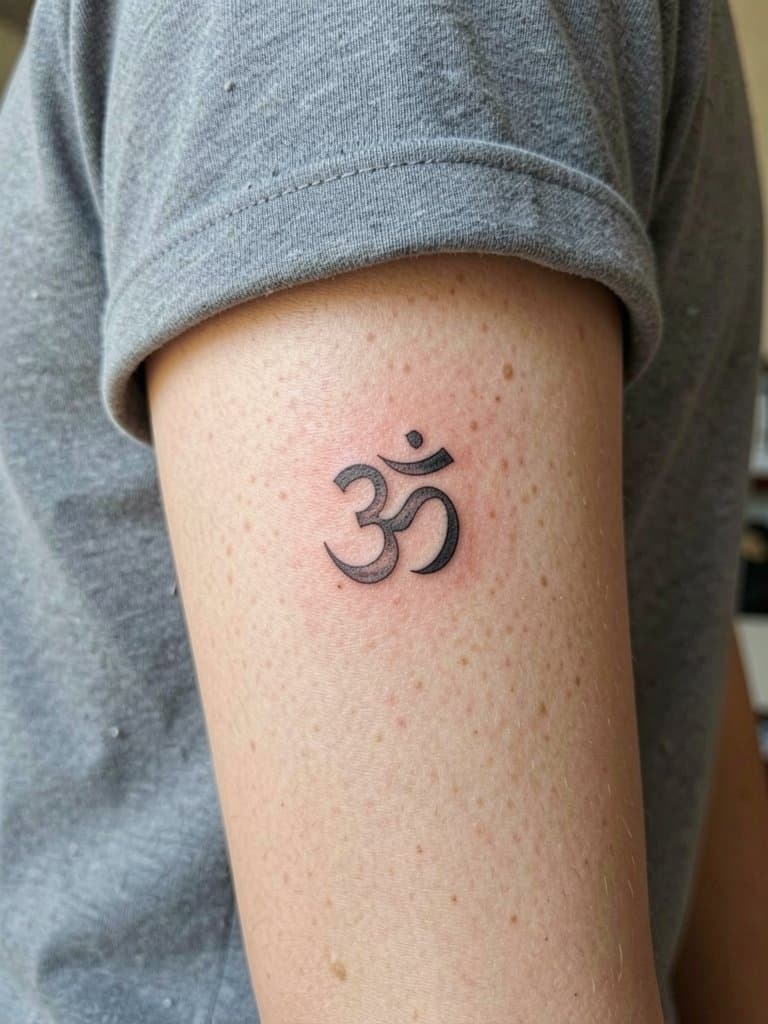
Sanskrit tattoos can feel profound on their own, but once mandalas, symmetry, and radiating geometry enter the design, the visual balance starts to matter as much as the words. The best pieces make the script readable first and ornamental second, because a tattoo that looks elegant on day one can lose its clarity fast if the letters are too tight, too small, or too thin.
When geometry frames the script
Mandalas are not just decorative circles. Encyclopaedia Britannica describes them as symbolic diagrams used in sacred rites and meditation, and in Hindu and Buddhist Tantrism they are understood as representations of the universe. Britannica’s entry on yantras pushes that idea even further, calling yantras linear ritual diagrams in Tantric Hinduism and Vajrayana Buddhism, with their more elaborate pictorial form becoming a mandala.
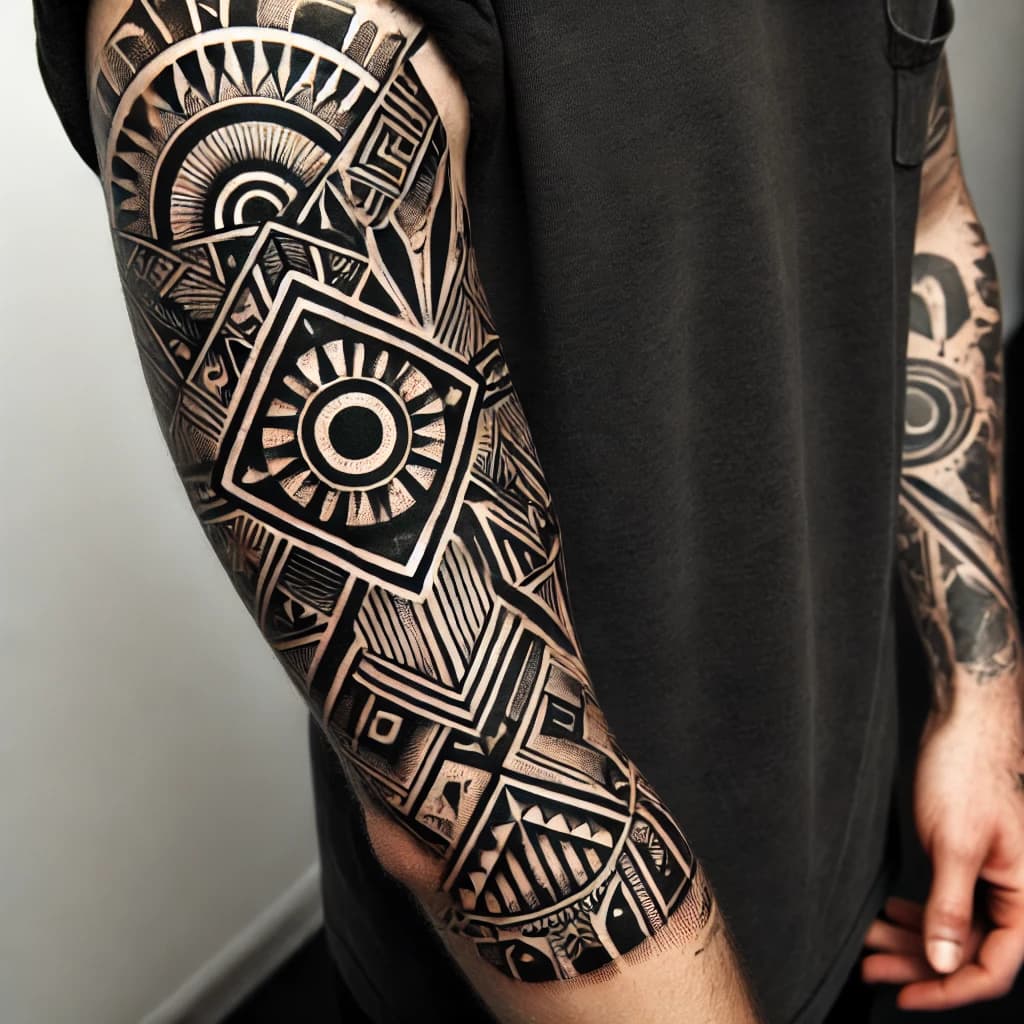
That matters for Sanskrit tattoos because the frame is never just a frame. A circular or radiating composition can make a mantra or single phrase feel anchored, but it can also crowd the letters if the structure gets too dense. When the geometry is doing too much work, the eye lands on the symmetry before it lands on the language, and the script starts to read like decoration instead of text.
Why legibility has to come first
The cleanest-looking Sanskrit tattoo is not always the most durable one. A 2024 review in the *Journal of Clinical Medicine* notes that single-needle tattoos are typically small, intricate, and monochromatic, which is exactly why they can look so precise at first. The catch is that fine linework leaves very little room for error once healing, movement, and time start working on the skin.
That is where spacing becomes non-negotiable. Cramped lettering can fill in even when the original linework looks immaculate, and the article’s core warning is simple: the syllables need breathing room. If the characters are packed too tightly, the tattoo may read beautifully in a stencil and badly on the body, especially on softer skin where heavier single-needle work can blur faster.

There is also a bigger legibility lesson here that applies beyond tattooing. Broader text-readability research consistently shows that size, contrast, and type design affect how easily words can be read, and tattoos are no exception. In practice, that means the most important question is not whether the design fills the space perfectly, but whether the letters still separate cleanly after the skin settles.
- Translation accuracy, including the exact spelling and the intended meaning.
- Orientation, so the script reads in the correct direction and does not flip awkwardly around a curve.
- Spacing, so every syllable keeps enough air to stay legible as the tattoo ages.
A quick check before you commit should cover three things:
What Sanskrit carries beyond the design
Sanskrit has a weight that most ornamental scripts do not. Encyclopaedia Britannica identifies it as an Old Indo-Aryan language, with its earliest Vedic forms dating to the late 2nd millennium BCE. Britannica also notes that the Rigveda is commonly dated to around 1500 BCE in its earliest layers, and that Pāini codified late Vedic Sanskrit around the 5th century BCE.
That history explains why Sanskrit tattoos are often treated as more than style choices. They can function as visible links to religious, philosophical, and literary traditions that have been preserved for millennia, which raises the bar for both accuracy and respect. If the text is wrong, the problem is not only visual, it cuts against the very thing that makes the tattoo meaningful in the first place.
Respecting the source tradition
The caution around Sanskrit tattoos is not just about spelling. The Conversation has argued that cultural appropriation becomes a problem when an element is taken from a marginalized group without respect for its cultural meaning or significance, especially when it is used for social or economic gain. That is why a clever collage of sacred symbols is not automatically a thoughtful tattoo.
This is where consultation matters. Before you lock in the design, ask whether the phrase is culturally and linguistically appropriate, whether the text is being used in a way that honors its source, and whether the surrounding geometry strengthens the meaning instead of flattening it into aesthetic wallpaper. A mandala can support the script beautifully, but an unrelated ornamental layer can turn a considered piece into borrowed atmosphere.
The broader history of tattooing makes that caution feel even more relevant. Smithsonian coverage notes that tattoos have long served religious, protective, medicinal, and status-related purposes, which means sacred or symbolic ink is part of a much older human pattern, not just a modern trend. Sanskrit fits naturally into that lineage, but only when the design respects both the language and the body carrying it.
How to read the final design
The strongest Sanskrit tattoo reads like a system, not a collage. The geometry should guide the eye toward the text, not trap it inside decorative noise, and the script should remain legible whether it is centered in a mandala, set on a spine line, or wrapped into a symmetrical frame. If the composition feels tighter than the message, the design is already telling you something is off.
That is the useful tension in this style: Sanskrit can bring depth, but precision decides whether that depth survives skin time. When the translation is right, the spacing is generous, and the geometry knows its place, the tattoo keeps its meaning instead of letting the mandala steal the scene.
This article was produced by Prism’s automated news system from verified source data, official records, and press releases, then run through automated quality and moderation checks before publishing. The system is built and supervised by the people who set the standards it runs under. Read our full AI policy.
Did this article answer your question?