Tattoodo spotlights dotwork as the precision engine behind geometric tattoos
Dotwork becomes the backbone of geometric tattoos here, splitting into geometric, mandala, stipple, and ornamental forms that shape symmetry, contrast, and depth.

Dotwork is the grammar that lets geometric tattoos hold their shape. Built entirely from individual dots, it gives mandalas, ornamental frames, and pattern-heavy pieces their crisp symmetry, soft gradients, and graphic contrast without depending on traditional shading.
Dotwork is the structure under the image
Tattoodo’s dotwork page makes the style easy to read as both method and family: geometric dotwork, mandala dotwork, stipple shading, and ornamental pointillism all sit under the same umbrella. That matters for geometric tattoo readers because each lane changes the way a piece behaves on skin. Dotwork is not the subject itself, but the way the subject gets built, and that distinction decides how much visual weight the tattoo carries, how it ages, and whether it reads as architectural or atmospheric.
The clearest takeaway is that dotwork favors precision over blunt coverage. Where bold linework locks a design into hard edges, dot-based construction can open space inside the form, soften transitions, and keep the eye moving through the pattern. In geometric tattoos, that makes dotwork especially useful when the goal is structure first and imagery second.
Geometric dotwork, mandala dotwork, stipple shading, ornamental pointillism
Geometric dotwork is the most direct fit for readers who want symmetry to lead the design. It turns circles, grids, angles, and repeating motifs into clean pattern work, so the tattoo feels engineered rather than illustrated. The effect is usually crisp and disciplined, with the dots acting like measurements that keep the geometry stable across the body.
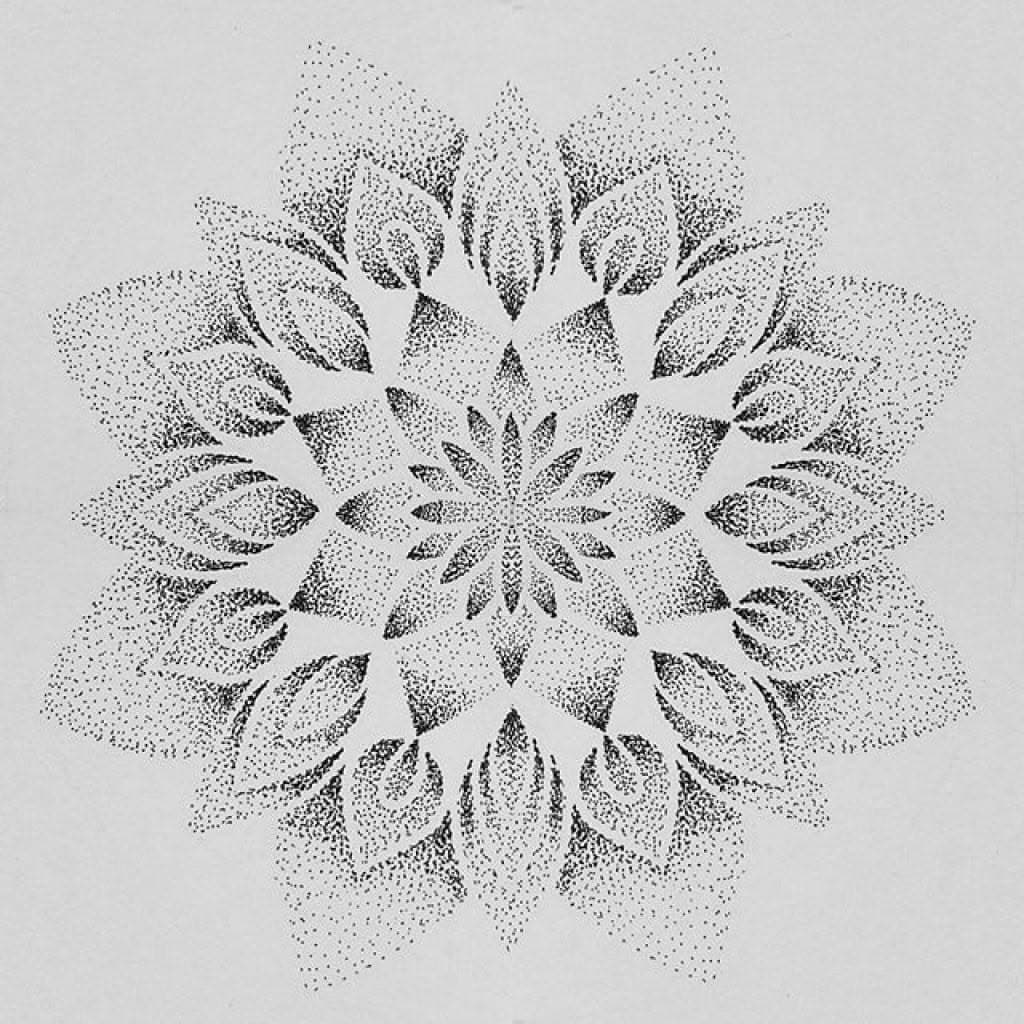
Mandala dotwork pushes that logic into radial order. Because mandalas already depend on symmetry, dotwork reinforces the circular flow and adds depth without crowding the center. The result is a piece that feels meditative and balanced, but still carries enough texture to keep the pattern from flattening out.
Stipple shading is the softer end of the spectrum. Instead of building a design around fully defined motif lines, it uses dots to create gradients, shadow, and surface texture. That makes it a strong choice when the tattoo needs contrast but not a heavy outline, especially in pieces where breathing room is part of the design.
Ornamental pointillism sits closest to geometric ornamentation. It uses the same stippling language to form frames, filigree-like borders, and decorative structures that feel elegant rather than rigid. For readers deciding between a straight geometric tattoo and something more decorative, this is where the divide often becomes clear: geometric dotwork emphasizes order, while ornamental pointillism emphasizes pattern flow and visual embellishment.
Why dotwork bridges geometry and ornament
Dotwork works so well across these styles because the same technique can create very different visual effects. In one piece it can sharpen symmetry, in another it can deepen contrast, and in another it can build a delicate halo of texture around a central form. That flexibility is why dotwork bridges geometric and ornamental aesthetics so naturally.
The overlap is not accidental. Ornamental tattoos sit close to geometric design because both rely on repeatable structure, balance, and placement discipline. Dotwork gives both of them a shared visual language: radial organization, measured spacing, and a rhythm that the eye can follow. When the dots are tight, the tattoo reads denser and more graphic; when they are spread out, the design gains air and softness.
That difference is practical as well as stylistic. Dotwork can make a tattoo feel lighter on the skin even when the composition is complex, which is part of why it works so well for pattern pieces. It also helps the viewer see the framework before the subject matter, which is exactly what geometric tattooing is trying to do.
A modern style with deep roots
The style may feel current in today’s blackwork and mandala scene, but dot-based body marking has older precedent. Smithsonian Magazine notes that the earliest known tattoos on actual bodies were long thought to be Egyptian, but the Iceman pushed that record back to about 5,200 years old. His tattoos consisted of dots and small crosses, a detail that makes the relationship between ancient mark-making and modern dotwork hard to miss.
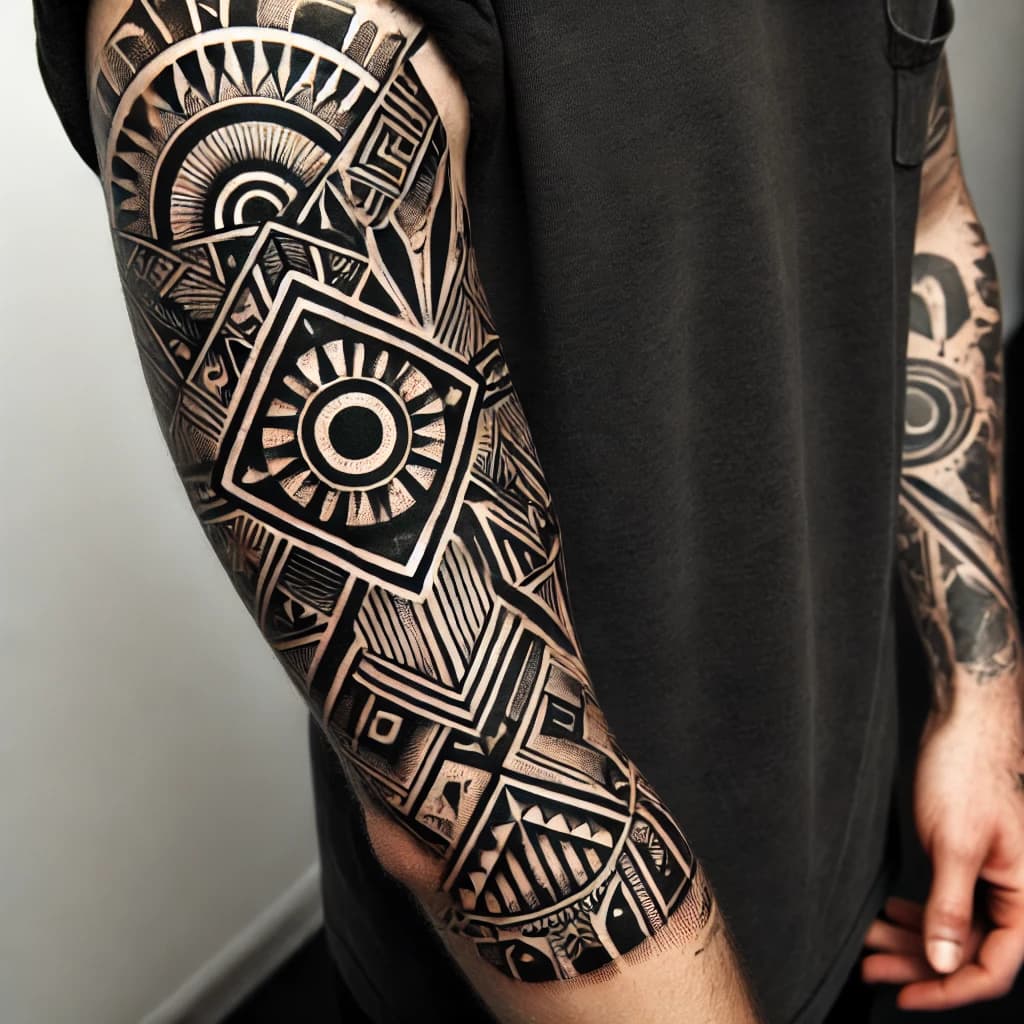
Polynesian tattoo traditions add another layer to that history. Smithsonian Magazine describes them as developing over millennia and often featuring highly elaborate geometric designs. That lineage gives today’s dotwork a bigger frame: it is not just an Instagram-era aesthetic, but part of a much older visual tradition in which geometry, pattern, and the body have always been linked.
There is also a fine-art connection that helps explain why the style reads as both technical and artistic. Tattoo-history sources commonly compare modern dotwork to pointillism, the dot-based image-making method associated with fine art. That comparison fits because both approaches build the image through accumulation, not through a single stroke, which is exactly why dotwork can feel so controlled and so alive at the same time.
How the style shows up in the tattoo search landscape
Tattoodo’s own scale shows how strongly dotwork is embedded in the contemporary tattoo search economy. The platform describes itself as the world’s #1 tattoo community, and its London directory alone lists 571 tattoo artists and 7,868 reviews. That kind of volume matters because style-specific discovery is no longer casual browsing; it is how people sort through geometric, ornamental, and dotwork-heavy work in real time.
The discovery layer also points to how international the style has become. Dotwork-related artists and tattoos appear across London, Sacramento, Bussum, Goa, Brighton, Roskilde, and other hubs, which reinforces that this is not a single-scene language. Dotwork travels well because its logic is visual rather than regional: symmetry, spacing, and dot-built texture read clearly whether the piece is a mandala, a frame, or a more abstract composition.
For anyone choosing between line-heavy geometry and softer pattern work, that global spread is part of the clue. Dotwork does not replace geometric tattooing, it refines it. It is the precision engine that lets a design feel structured without becoming stiff, detailed without becoming crowded, and ornamental without losing its mathematical backbone.
In the end, dotwork’s real strength is that it lets geometric tattoos keep the promise made in the opening lines: the structure comes first, and the subject follows. That is why the style keeps showing up wherever symmetry, depth, and clean visual rhythm matter most.
This article was produced by Prism’s automated news system from verified source data, official records, and press releases, then run through automated quality and moderation checks before publishing. The system is built and supervised by the people who set the standards it runs under. Read our full AI policy.
Did this article answer your question?