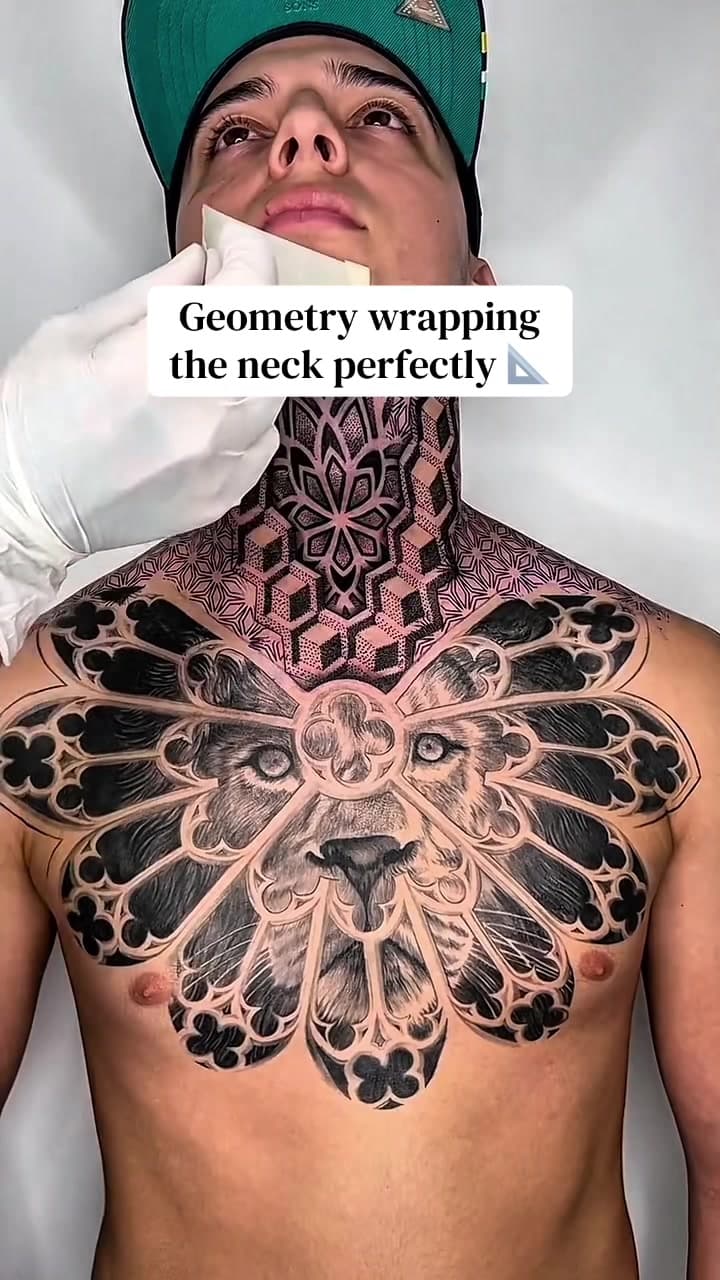
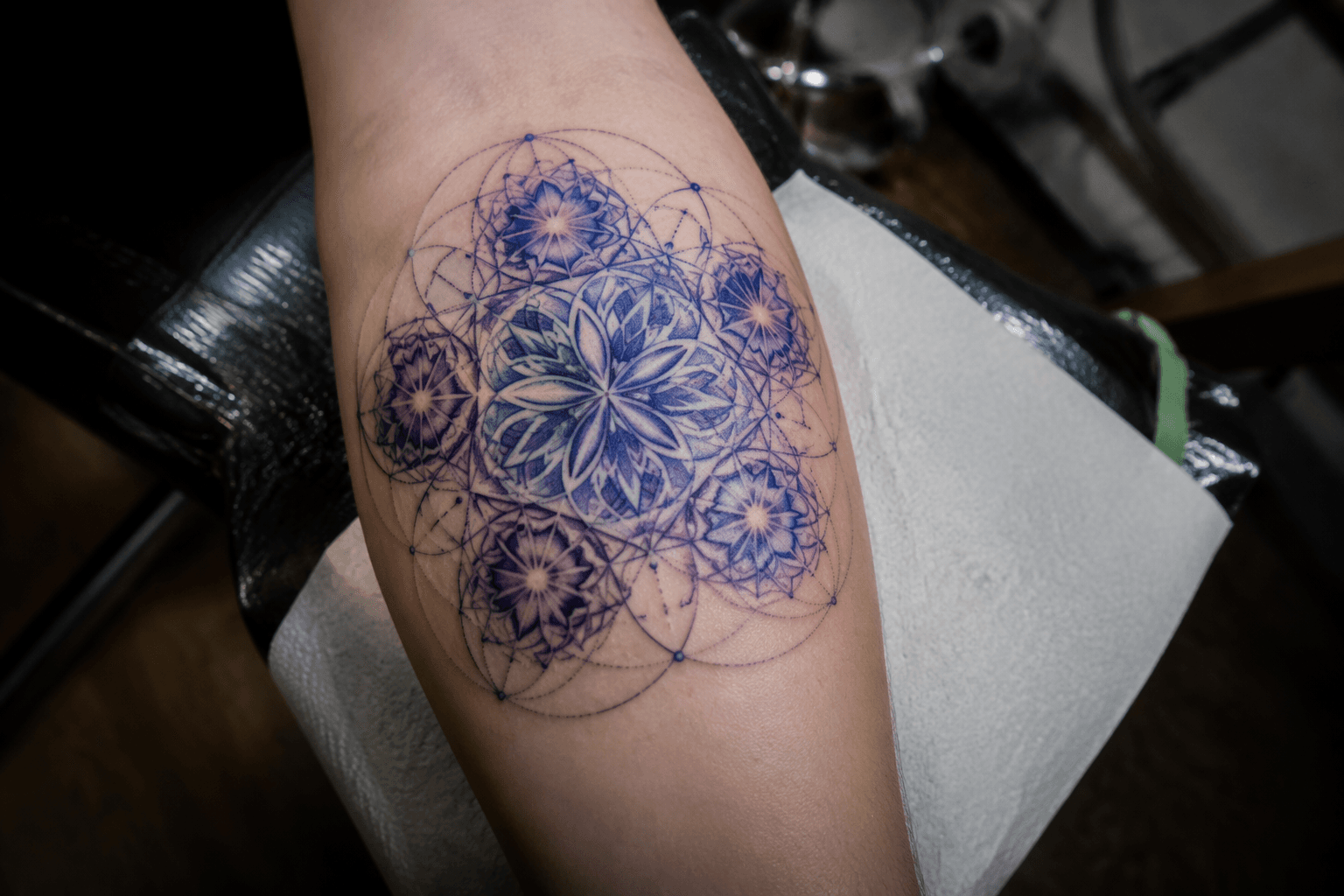
Toronto artist Jblessink explores endless possibilities in geometric tattoos
Jblessink’s Toronto practice shows how symmetry, stacking, and negative space can keep geometric tattoos fresh without losing control. His custom-first setup points to a method built for precision.
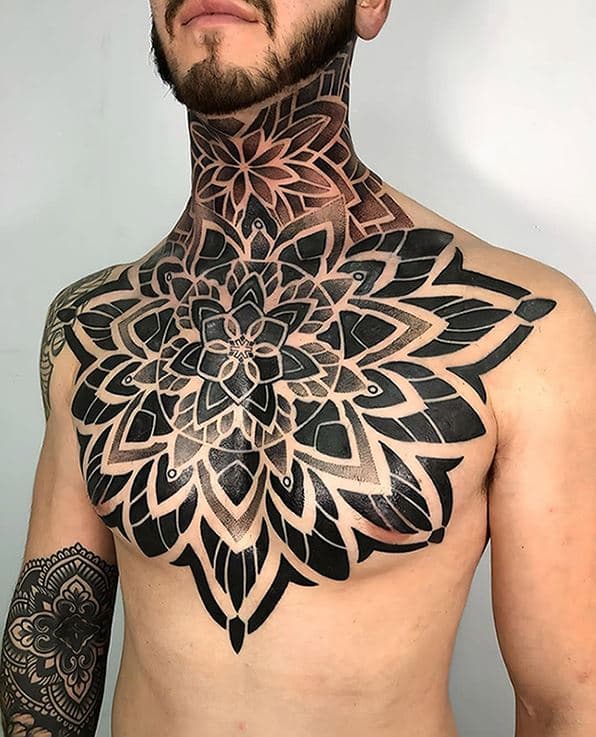
Juan Pablo, known professionally as Jblessink, is a Toronto-based geometric tattoo artist featured in the interview “Juan Pablo • Mastering the Infinite Combinations of Geometric Tattoos.” That title gets straight to one of the hardest problems in geometric tattooing: how to keep a design disciplined while making it feel new every time.
What “infinite combinations” really means in geometric work
The phrase sounds broad, but in geometric tattooing it comes down to repeatable design choices. A piece can share the same visual language, yet still look completely different depending on symmetry, how patterns are stacked, where the body carries the design, and how much line weight is used to hold everything together. That is the real engine behind variation: the artist is not inventing a new alphabet every time, but rearranging the same geometric vocabulary with enough control to make the final piece feel personal.
Geometric tattoos can become repetitive fast if the design is handled like a pattern sheet instead of a composition. Jblessink’s appeal sits in the opposite approach, where structure is the starting point and every decision has to answer a simple question: does this still read cleanly once it sits on skin?
Why symmetry is only the starting point
Symmetry gives geometric tattoos their visual authority, but it is not the whole story. A tattoo can be perfectly mirrored on paper and still fail once it lands on a shoulder, forearm, ribcage, or thigh, where the body’s curves change the way the eye reads the forms. That is why body-flow placement is so important in this discipline, and why precision artists have to think beyond a flat stencil.
The strongest geometric pieces tend to balance strict alignment with small adjustments that keep the tattoo alive on motion and contour. If the structure is too rigid, it can feel pasted on. If it is too loose, the geometry loses the clarity that makes the style work in the first place. Jblessink works in that narrow lane, where symmetry is respected but not treated as the only measure of success.
Pattern stacking and negative space do a lot of the heavy lifting
One of the most useful ideas in geometric tattooing is pattern stacking, the way repeated motifs build density without turning into visual noise. When stacked well, the layers create movement and depth while still preserving the clean edges that clients want from the style. That is also where negative space becomes essential, because blank skin is not empty in this language, it is part of the drawing.
Geometric tattooing is versatile and timeless, and negative space uses blank skin to create contrast and depth. That is what makes this work so adaptable: the artist is not only drawing lines, but deciding where not to draw. That restraint is what keeps a mandala, sleeve segment, or stand-alone shape from becoming overbuilt.
Line weight decides whether the tattoo stays readable
Geometric tattoos rely on line-weight control more than many other styles, especially when the design includes micro details or tight patterning. Thin lines can look elegant at first, but they also need enough support to stay legible as the tattoo settles. Heavier line decisions can anchor the piece, but overdoing them can flatten the composition and erase the subtlety that gives the work its structure.
The difference between a crisp piece and one that softens too quickly often comes down to how the artist uses spacing, contrast, and density together.
Toronto is part of the story
Geometric tattoos have exploded in popularity among younger generations in urban centers like Toronto, which helps explain why an artist like Jblessink can build around custom geometry rather than one-off novelty. In a city where clients often want pieces that feel minimal, structured, and personal at the same time, geometric work has room to grow.

World Tattoo Events identifies him as a Toronto-based artist and places his work within a convention and interview platform that brings together 500+ tattoo artists from around the world. Tattoodo also lists Jblessink, Juan Pablo Montecino, at ANATOMY OF INK in Toronto, placing his practice in the city’s tattoo scene.
A custom-first setup fits the style
His website includes sections for portfolio, general information, available designs, and tattoo aftercare. In geometric tattooing, the drawing stage has to account for placement, scale, and how a design will age on the body.
His Instagram bio identifies him as “JUAN PABLO | GEOMETRIC TATTOO ARTIST” in Toronto, Canada, says he is taking appointments for Toronto 2026, notes that appointments were available for 2024-2025, and mentions his first tattoo convention.
The bigger design lesson
Geometric tattooing has roots that trace back to ancient civilizations and sacred geometry traditions.
This article was produced by Prism’s automated news system from verified source data, official records, and press releases, then run through automated quality and moderation checks before publishing. The system is built and supervised by the people who set the standards it runs under. Read our full AI policy.
Did this article answer your question?