Why cartridge precision matters more for geometric tattoos in 2026
Crisp geometry now lives or dies on cartridge behavior: wobble, chatter, flow, and corner fill decide whether a mandala stays sharp after healing.

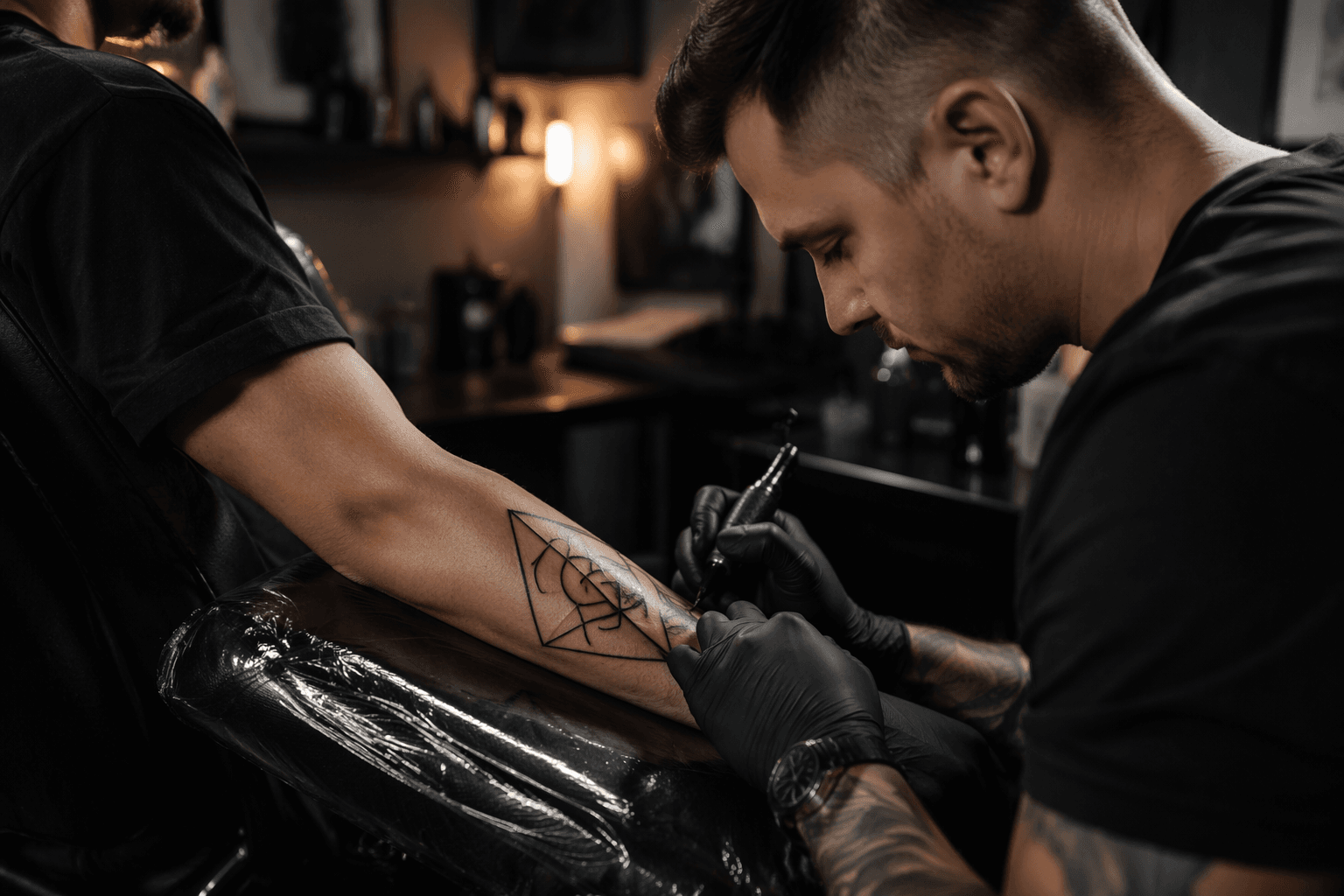
Geometric tattoos leave nowhere to hide. A line that wanders through a hex grid, a micro-mandala that overfills at the corners, or a curved sleeve panel that loses its symmetry on the turn all point to the same weak link: the cartridge was not stable enough for the drawing it had to carry.
That is why fine-line tattooing has become such a demanding corner of the market. BigWasp’s June 10 guide makes the case plainly: the gap between a cartridge that merely gets the job done and one built for precision is wider now than it used to be, because clients know what clean linework should look like and spot inconsistency fast.
Why geometry is such a cartridge stress test
Geometric tattoos are built on clean lines, balance, symmetry, and repetition. Whether the design pulls from sacred geometry, mandalas, natural patterns, or architectural forms, the entire image depends on the certainty of each stroke. If one segment wobbles or feathers, the structure reads as off, even if the rest of the piece is technically neat.
That is also why this style exposes hardware flaws so quickly. A line can look acceptable when it is first laid down, then soften at the edges if the cartridge is not stable enough to hold its course. Since tattoos are permanent and difficult to remove, the margin for “close enough” is far smaller here than in many other kinds of body art.
The cartridge traits that actually change the result
BigWasp’s fine-line breakdown centers on four things that matter in real sessions: tight needle grouping, low vibration, membrane consistency, and tip geometry. Tight grouping keeps ink from spreading too widely, which helps preserve the crisp edge that geometry depends on. Low vibration reduces wobble, and wobble is exactly what turns a clean line into a line that looks nervous.
Membrane consistency matters too, because flow that changes mid-session can leave one pass looking clean and the next one looking tired or uneven. Tip geometry rounds out the picture by shaping how confidently the artist can place the stroke exactly where the stencil says it should go. In geometric work, those details are not abstract equipment talk, they are the difference between a structure that reads as deliberate and one that starts to blur at the edges.

Match the setup to the failure you are trying to prevent
- For hex grids and other hard-edge patterns, a tighter needle grouping and precise tip geometry help keep corners from blooming. Those designs punish spread immediately, especially where lines meet at sharp angles.
- For micro-mandalas, low vibration is the quiet hero. Repeated spokes and concentric loops expose chatter faster than a looser ornamental line ever would, so a steadier cartridge keeps the rhythm intact.
- For ornamental-geometric hybrids, consistency across the whole pass matters more than a flashy claim on the box. These pieces often look fluid and decorative up close, but they still rely on geometric thinking, which means the same line control rules apply.
- For curved placements like shoulders, ribs, and forearms, hardware stability matters because the stencil is being translated onto a moving surface. A cartridge that tracks cleanly helps keep the geometry legible even when the skin is not flat.
Where the brand conversation has moved
BigWasp’s comparison of fine-line cartridges against Kwadron, Bishop, and Cheyenne shows how the conversation has shifted. The question is no longer whether cartridges belong in professional work, because they do. Cheyenne says it introduced the first tattoo cartridges, and safety cartridges are now the industry standard, which tells you how central this format has become to modern tattooing.
The useful comparison now is about which design best supports precision under pressure. Artists looking at clean geometry tend to care less about marketing language and more about whether a cartridge stays quiet, feeds consistently, and keeps the needle grouping stable enough to protect the line. That is a long-term technical decision, not a one-session purchase.

Safety and precision are tied together
The safety side of the cartridge story is not separate from the aesthetic side. The U.S. Food and Drug Administration says tattoos are created by inserting colored ink into the skin using needles or other skin-piercing equipment, and it has warned that tattoo inks contaminated with microorganisms can cause serious injury. In 2019, the agency issued a Safety Alert about contaminated inks and later moved to final guidance aimed at preventing contamination.
That matters in daily practice because membrane quality affects more than line performance. Public Health Ontario notes that when a public health inspector is satisfied a needle cartridge is effectively sealed by a membrane, cartridge grips may be treated differently for cleaning and disinfection purposes. The Alliance of Professional Tattooists also keeps bloodborne-pathogen training and health-and-safety information in the professional conversation, which is a reminder that cartridge choice sits inside a hygiene-sensitive workflow, not outside it.
What to test in your own fine-line workflow
The clearest way to think about cartridge precision is to treat the cartridge as part of the drawing tool, not just the machine setup. On paper, a geometric piece may look like a matter of spacing and symmetry. On skin, especially on curved skin, the work is really about whether the cartridge can keep the line obedient when the design asks for repeated precision over and over again.
That is why the best cartridge for a geometric tattoo is the one that solves the specific failure you are trying to avoid. If the problem is wobble, prioritize low vibration. If the problem is ink spread, prioritize tighter grouping. If the problem is flow inconsistency or backflow anxiety, membrane reliability becomes part of the conversation. Geometry only looks effortless when the hardware is doing disciplined work behind it.
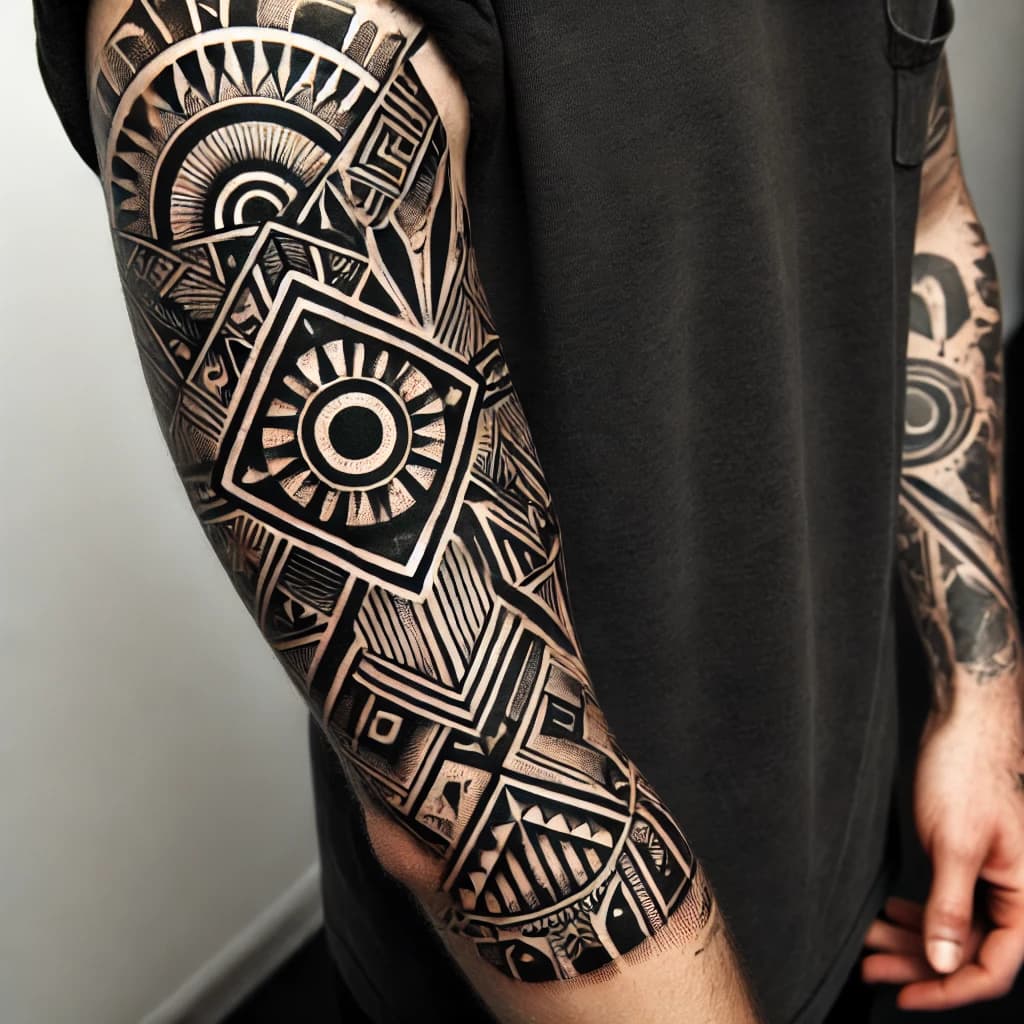
A clean hex grid, a sharp micro-mandala, or a sacred-geometry sleeve that heals without losing its edges all depend on the same thing: a cartridge that keeps its nerve when the line has to stay exact. In geometry, the smallest hardware decision is often the one that decides whether the structure stays legible for years.
This article was produced by Prism’s automated news system from verified source data, official records, and press releases, then run through automated quality and moderation checks before publishing. The system is built and supervised by the people who set the standards it runs under. Read our full AI policy.
Did this article answer your question?