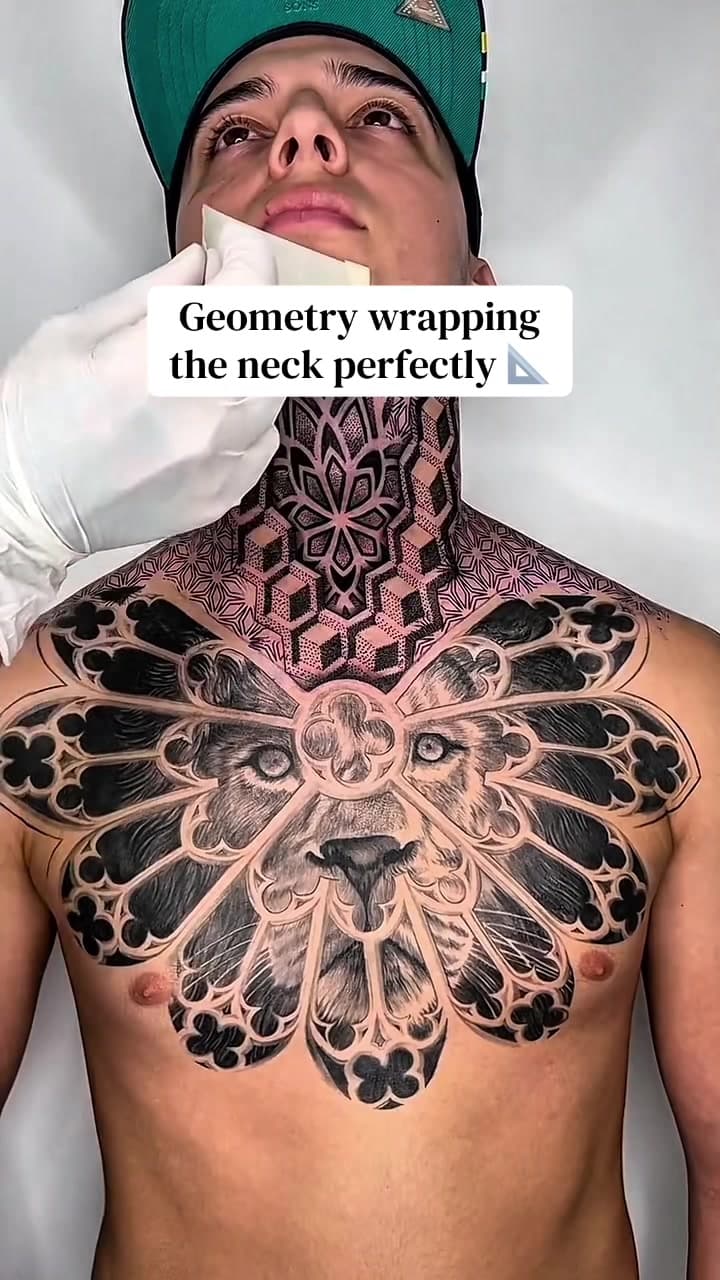
Why geometric tattoos cost more than their minimal look suggests
Geometric tattoos look spare, but the quote climbs with every line that has to stay perfect. Size, symmetry, stencil time, and correction risk turn minimalism into premium work.

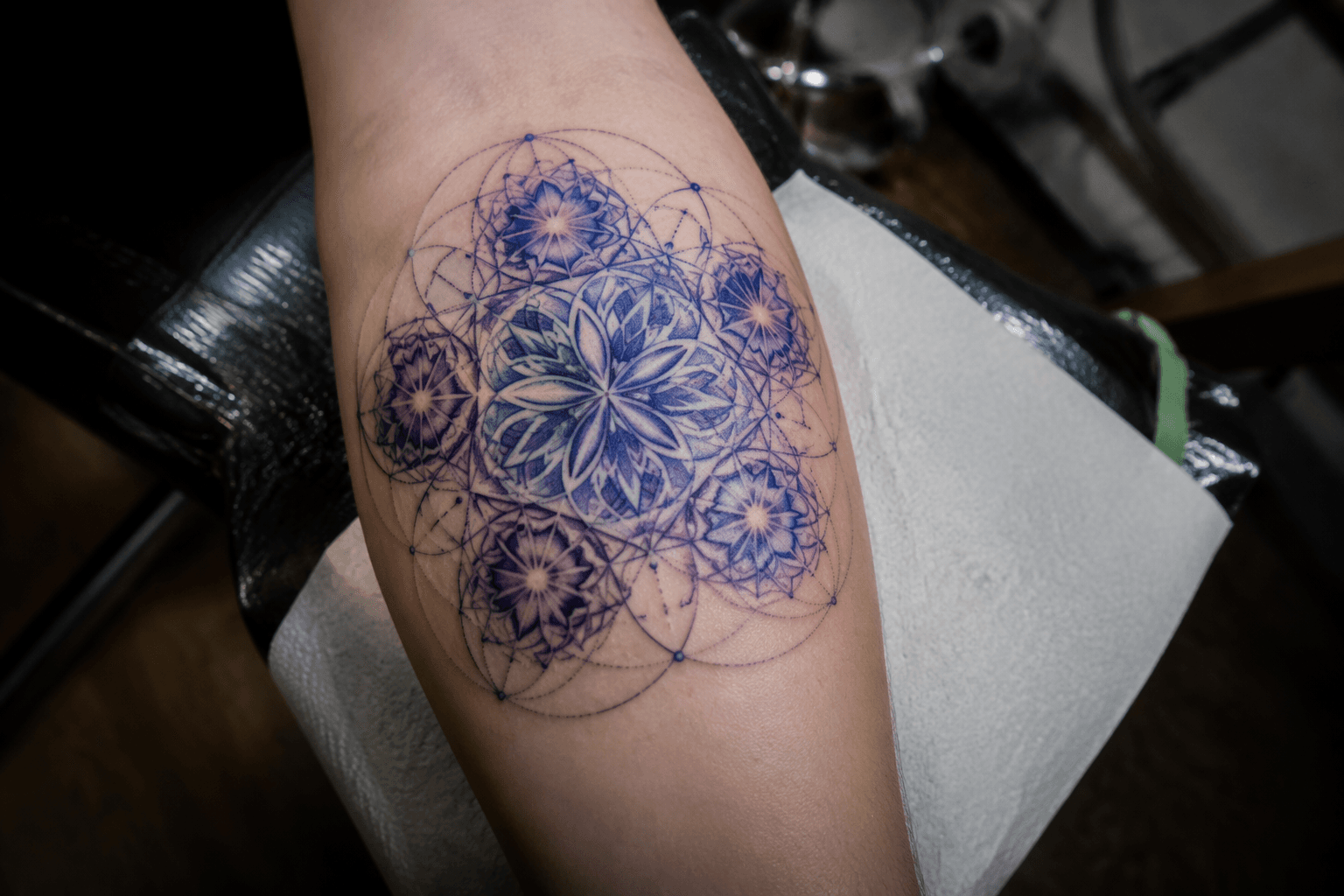
A hexagon cluster on the wrist can look almost stubbornly simple in the chair, then reveal its real cost the moment the skin bends. One line that is slightly off-center, one angle that does not mirror cleanly, and the whole design stops reading as precision. Geometric work is priced less like a quick line tattoo and more like a controlled technical project.
Why the minimal look hides the work
Geometric work needs impeccable placement, flawless lines, and a design that sits naturally on a moving body, not just on a flat sketch. Good tattoo design has to fit the body’s curves and flow with the muscles. That matters even more with geometry, where the eye notices the smallest break in symmetry faster than it would on a looser ornamental or illustrative tattoo.
The style looks sparse, but the planning burden is heavy. Every repeated form has to match, every parallel line has to stay parallel, and the composition has to hold together across a wrist, shoulder, forearm, chest, or back panel that is never still.
What size changes, and why the quote jumps
Size is the easiest place to see the price ladder. In 2026, reputable shops commonly quote about $120 to $250 for small geometric tattoos, such as a tiny dot-and-line piece behind the ear. Medium work, roughly palm-sized to half-forearm, usually lands around $300 to $700. Large projects like sleeves, back panels, or chest pieces can move into the $1,800 to $6,500 range.
Those numbers only make sense when you think about how much of the design has to be solved before the machine starts. A small geometric tattoo can still demand a careful setup, because a tiny shift in placement changes the whole read of the piece. A larger sleeve or chest composition raises the stakes again, because the design has to stay aligned across multiple body sections and keep its structure when the arm rotates or the chest expands.
A small geometric tattoo can cost more than a larger conventional design. A bigger floral or illustrative piece may allow more visual softness, more shading, and more forgiveness in the composition. Geometry does not give you that cushion.
The stencil can take as long as the tattoo
Sleeve layouts are often mapped in separate body sections so the artist can line everything up properly on the body. For complex mandalas or sacred geometry compositions, the prep can take an hour or more before the machine even starts. Some studios also add a separate design fee of $50 to $200 depending on complexity.
That design time keeps circles from reading as ovals and radiating forms from drifting off-axis once they land on skin. Artists are rethinking stencil technology as realism, fine-line work, and digital tattooing evolve.
The quote often changes from affordable to premium once a simple-looking idea needs custom drafting, repeated alignment checks, and a stencil system that accounts for body flow.
Needles, dotwork, and the pace of precision
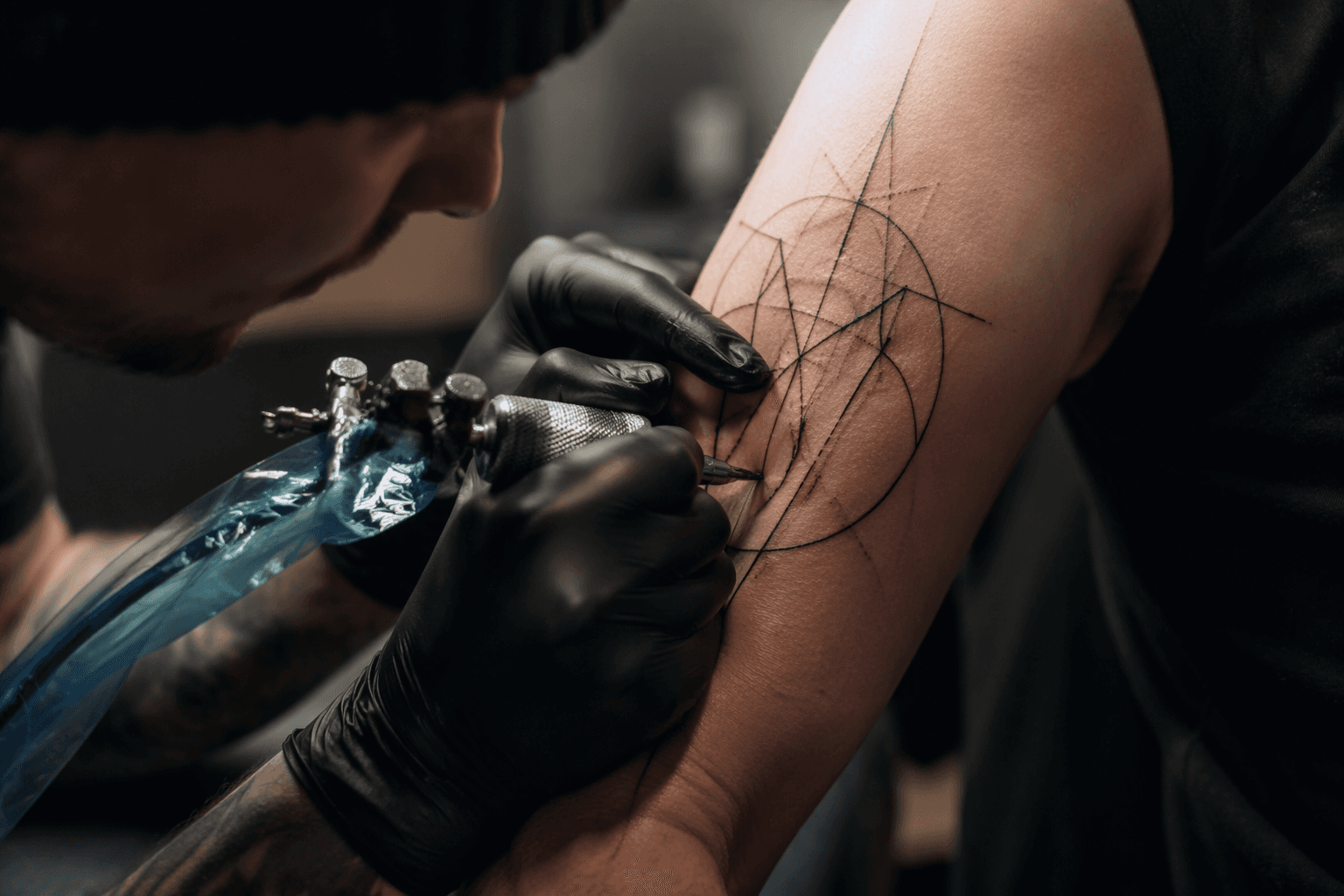
Needle choice affects both speed and cost. Fine-line geometric work often uses 3RL or single-needle setups, which move more slowly than shading needles. Slower application means more time under the machine for the same amount of visual impact, especially when the design depends on sharp edges and delicate dotwork rather than broad fill.
That pace becomes even more important in larger sacred geometry sleeves. Pieces built around mandalas, blackwork, and interlocking pattern structures can require four to eight sessions spread over months. The final bill reflects not just the hour count, but the repeated appointments, the concentration needed to keep the geometry consistent, and the added risk of small corrections when a line does not land exactly right the first time.
Professional rates in 2026 run from $50 to $300 per hour, depending on experience, location, and design complexity.
Why sacred geometry keeps the premium tier
Geometric tattooing is tied to fibonacci sequences, mandalas, blackwork, and sacred geometry. These pieces are rarely generic filler tattoos. They are composition-heavy, symbol-driven, and often highly individualized, which is why they are priced like custom art rather than a standard linework session.
California’s Dillon Forte is one of the leading tattooers in the sacred geometry style, and that level of specialization helps explain the market. Artists known for this work are being paid for consistency across complex patterns, not just for clean execution in one isolated area.
What to watch in the quote
- the design grows from a small motif into a palm-sized or larger composition
- the layout needs multiple body sections to align correctly
- the stencil requires extended placement time before tattooing starts
- the artist uses slower fine-line or 3RL-style work
- dotwork density, sacred geometry detail, or correction risk increases the session count
When a geometric tattoo quote starts to climb, it usually changes for a few concrete reasons:
A geometric tattoo can look minimal from across the room and still ask for a day’s worth of drafting, an hour of placement, and multiple passes to keep the structure aligned.
This article was produced by Prism’s automated news system from verified source data, official records, and press releases, then run through automated quality and moderation checks before publishing. The system is built and supervised by the people who set the standards it runs under. Read our full AI policy.
Did this article answer your question?