Why geometric tattoos keep returning to tattoo culture
Geometric tattoos last because the best ones obey the body, not just the sketch. Off-axis placement, crowded micro-lines, and cramped mandala spokes are what make a clean design age badly.

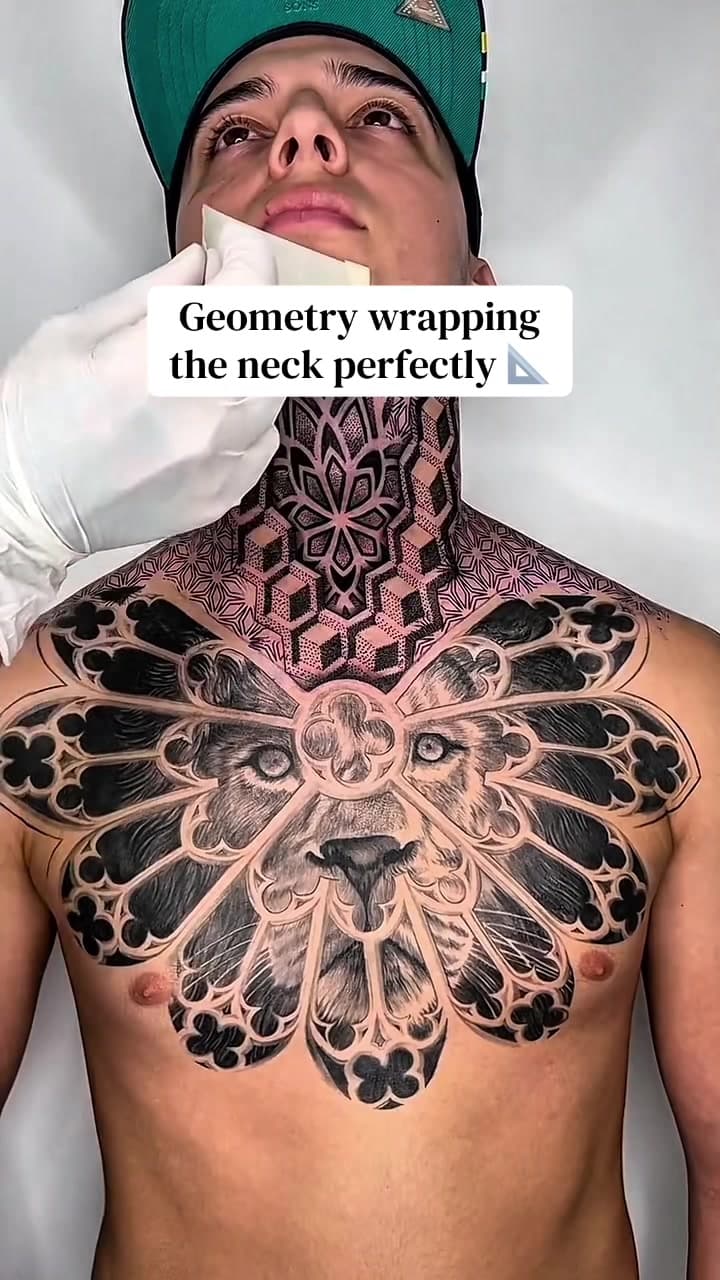
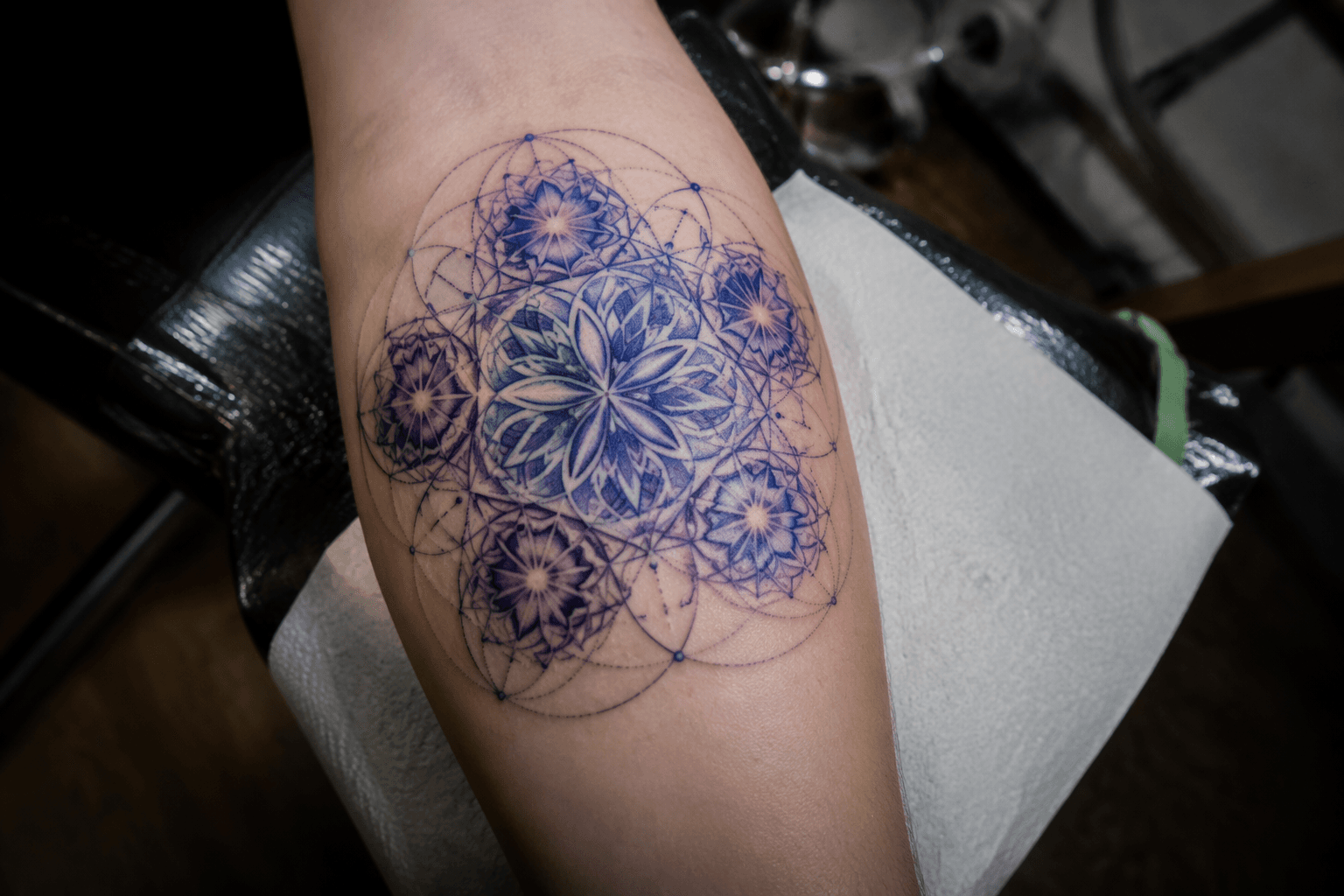
A mandala can look perfect on a tablet and still miss the mark the moment the stencil lands on rounded muscle. That gap between digital symmetry and living anatomy is the real reason geometric tattoos keep cycling back through tattoo culture: when the proportions are right, they look disciplined and sharp; when they are off-axis, the error reads immediately and usually turns into cover-up work. The style survives because it is built from shapes that still make sense on skin, from tiny forearm pieces to full sleeves and backs.
A style with older roots than the trend cycle
Geometric tattooing keeps returning because its visual language predates the current wave of tattoo trends. The style draws on repeated shapes, radial symmetry, measured spacing, and the same clean structure that shows up in line-based abstracts, dotwork, mandalas, polygons, compasses, and sacred-geometry-inspired compositions. CO:CREATE traces geometric tattoo art to ancient civilizations; in ancient Egypt, geometric shapes carried cultural and spiritual weight.
Corey Divine connects the look to the intricate mandalas in Hindu temples and the precise pyramids of ancient Egypt. Scene360 links modern dotwork to evidence that Egyptians used simple stippling. Business Insider's coverage of sacred geometry as a rising motif in permanent-ink culture included tattoo artists warning clients to understand the meaning before committing to the look.
The body is part of the design
Geometric tattoos demand drafting, not improvisation. The linework has to stay even, the composition has to balance, and the artist has to decide where symmetry can survive the body’s curves and where it will naturally break. Kevin Ligabue’s geometric-and-dotwork work follows the natural shape of the body, and Letícia’s geometric dotwork is custom design built to follow that same flow.
That is why the old-school drawing tools still matter. A Reddit discussion aimed at tattoo apprentices recommended a ruler, compass, and protractor for building geometric dotwork by hand, which is exactly the kind of precision the style demands before ink ever hits skin. At Amir Forutan’s London studio, dotwork and pointillism require immense patience, precision, and artistic discipline, and that description fits the whole process: tight spacing, steady line weights, and a clear plan for how circles, triangles, and hexagons will behave over muscle and bone.
Dotwork is especially useful when the goal is to keep geometry crisp without making it look rigid. It can soften hard edges, create gradients, and add depth while preserving the clarity that makes the style read so fast from across the room. Dillon Forte’s sacred-geometry tattoo video for Inked shows how these elaborate yet simple designs depend on that balance between structure and softness.
What ages well, and what starts looking tired
The geometric pieces that hold up best are the ones with breathing room. Larger line-based abstractions, clean polygons, compass motifs, and mandalas with measured negative space usually age better than designs that try to cram every inch of skin with micro-lines and dense spokes. Black ink also helps, because contrast keeps the structure readable long after the smallest details start to soften.
The parts that date fastest are the ones built on overprecision. Tiny mandala spokes, crowded dot shading, and ultra-fine internal lines can lose their separation as skin moves, ink settles, and the eye stops seeing each segment cleanly. A design that looks balanced on a flat screen but ignores the turn of a shoulder cap, the bend of a bicep, or the rounding of a forearm is the one most likely to drift out of shape first.
Placement matters as much as the motif. A small forearm piece can stay elegant if the spacing is generous and the circle is mapped to the limb, while a larger sleeve or back panel gives an artist more room to preserve symmetry without forcing it.
- Classic elements that usually age well: mandalas with open spacing, compass forms, polygons, black-ink linework, and dotwork that supports the structure instead of crowding it.
- Modern adaptations that can date quickly: fine-line-only geometry, overloaded micro-patterns, and compositions that depend on perfect screen symmetry rather than real anatomy.
Why the style keeps finding new clients
The audience for tattoos is large enough to keep geometric work in circulation. Pew Research Center data by Katherine Schaeffer and Shradha Dinesh found that 32% of Americans have a tattoo, including 22% who have more than one. Repeat collectors tend to look for styles that can scale, and geometry does that easily, from a minimal symbol to a full sleeve or back piece.
Geometric patterns appeared in NAAMA Studios’ 2024 tattoo trends, and shop explainers from Mantra Tattoo & Piercing, Chronic Ink, TattoosWizard, Empire Ink, Tattoo Smart, and Fitzroy position geometric and sacred-geometry work among the designs clients still ask for.
This article was produced by Prism’s automated news system from verified source data, official records, and press releases, then run through automated quality and moderation checks before publishing. The system is built and supervised by the people who set the standards it runs under. Read our full AI policy.
Did this article answer your question?