Why spine tattoos are becoming a geometric design favorite in 2026
Spine tattoos are winning geometric fans because the body’s midline gives symmetry, rhythm, and structure room to breathe. The catch is that the same axis that makes them striking also makes them unforgiving.

The spine as a built-in design axis
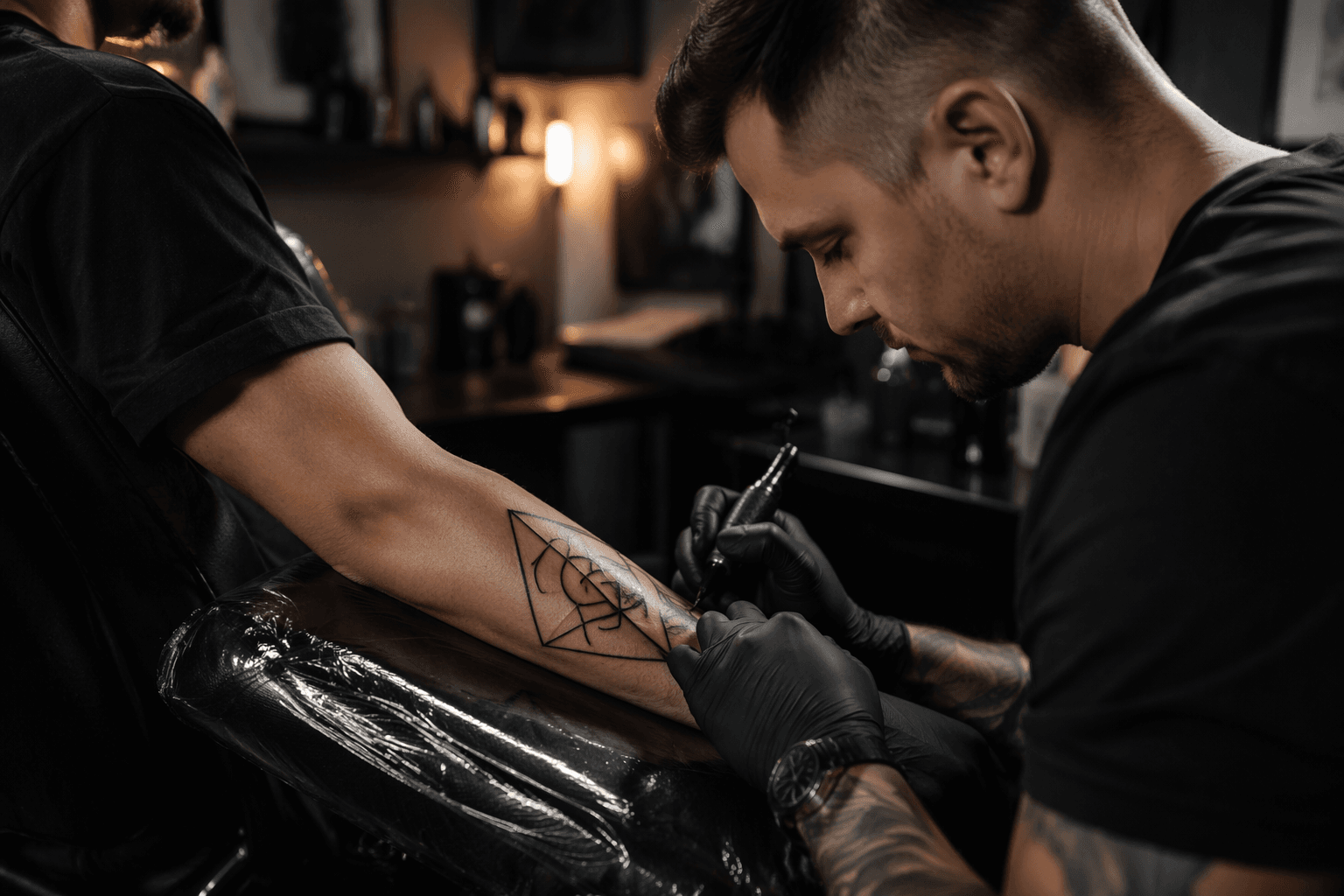
The spine is one of the rare places on the body where geometry feels native. A design doesn’t have to invent symmetry here, because the body already gives you a vertical axis to work with, and that changes everything for mandalas, stacked linework, repeating motifs, and compositions that need to travel cleanly from neck to lower back. The strongest spine pieces respect that center line instead of treating the back like empty space.
That is why spine tattoos are pulling so much interest from geometric tattoo readers right now. The best ones are not just decorative objects placed down the middle of the back. They are compositions that use the body’s structure the way a draftsperson uses a ruler: to control spacing, reinforce balance, and make the eye move in a deliberate path.
Why the placement reads as geometric even when the motif is not
Spine work is often grouped with florals, quotes, butterflies, dragons, roses, and lilies, but the reason it lands so well in geometric circles is the underlying order. A floral spine tattoo can still function like a measured grid if the petals repeat with discipline and the spacing stays consistent from one segment to the next. A quote can feel geometric when the letterforms track the spine’s vertical line with precision.
That overlap matters because placement is doing part of the design work. A simple sequence of elements can become more striking than a single oversized motif when it is choreographed along the midline. The result is less about filling skin and more about mapping rhythm, which is exactly why so many spine designs feel intimate, intentional, and controlled rather than loud.
Why the spine rewards precision and punishes improvisation
The spine is not a forgiving canvas. Cleveland Clinic describes it as a load-bearing structure made up of vertebrae, disks, joints, soft tissues, nerves, and the spinal cord, and notes that a healthy spine has three natural curves that create an S-shape and help absorb shock. That anatomy is part of the appeal, because those curves give a tattoo natural movement and visual flow. It is also part of the challenge, because the same terrain makes placement technically demanding.
The body does not stay still, and spine tattoos have to survive that fact. A design may look perfectly centered when the wearer is upright, then shift visually when shoulders roll forward, the back bends, or posture changes. Fine-line artists often plan with that in mind, building compositions that still feel balanced when the spine flexes rather than depending on a static pose to hold the whole image together.
Pain and healing are part of the design conversation
Any artist working on the spine has to factor in pain from the beginning. Healthline puts the spine among the more painful tattoo locations because it is bony, thin-skinned, and close to nerve-rich tissue. That does not make the placement off-limits, but it does mean the technical side of the conversation matters as much as the concept.
Healing is another reality clients sometimes underestimate. The visible outer layer of a fresh tattoo usually looks healed in 2 to 3 weeks, but deeper layers can take up to 1 year to fully heal. Larger or more intricate spine pieces can take even longer, which is one reason delicate geometric work often makes sense here: it can deliver strong visual impact without forcing the body through an unnecessarily heavy rebuild.
Why fine-line and personal compositions are rising
The strongest current spine tattoos lean toward fine-line work and more personal, intentional compositions. That shift fits a broader body-art mood toward tattoos that feel meaningful without being oversized. Spine pieces thrive in that space because the placement already creates drama through symmetry, so the design does not need to shout to be noticed.
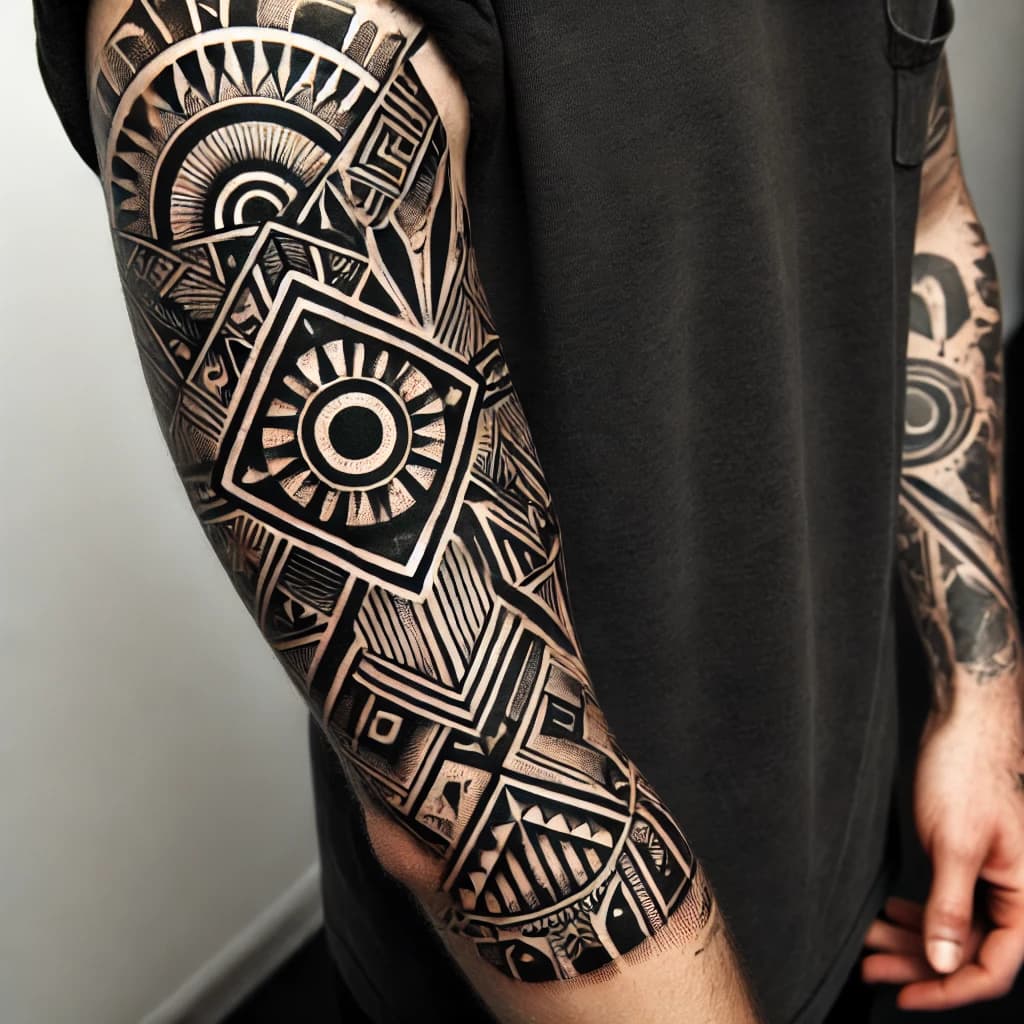
For geometric tattoo readers, the lesson is simple: the spine is ideal when the composition has a clear internal logic. Repeating dots, stacked segments, mirrored petals, centered ornament, and clean negative space all benefit from a body line that behaves like a spine-shaped ruler. Designs that ignore that structure can look crowded or adrift, while the best ones feel almost inevitable once they are centered.
A long history of marking the body’s midline
The current popularity also sits inside a much older tattoo story. Smithsonian Magazine has pointed to the 5,200-year-old Iceman, whose tattoo patterns on the lower spine and joints may have been applied for therapeutic purposes, with dots and small crosses placed near areas of strain-induced degeneration. That gives spine placement a deep historical echo: people have been using this part of the body as a meaningful surface for thousands of years.
Smithsonian also notes that tattoos became increasingly fashionable in the Victorian era, and by 1902 even “the most delicate ladies” were said to tolerate tattooing. That detail matters because it shows how the idea of tattooed skin has kept shifting from subculture marker to mainstream fashion without losing its edge. Spine tattoos today carry that same blend of visibility and restraint, which helps explain why they feel so current.
Who is embracing multiple tattoos now
The spine’s rise also fits the broader normalization of tattoo culture in the United States. Statista reports that in 2021, 29% of Millennials had multiple tattoos, compared with 19% of Gen Z, 18% of Gen X, and 7% of Baby Boomers. That spread suggests that multi-tattoo collectors remain especially active in the age group most likely to share, save, and adapt placement-specific ideas online.
That audience is part of why spine work travels so well on social platforms. A clean midline design photographs with strong symmetry, and the vertical composition reads instantly even in a quick scroll. The placement does some of the marketing on its own.
What makes a spine tattoo succeed
The best spine tattoos are the ones that understand restraint. They work with the body’s natural centerline, use the S-curve of the back to their advantage, and keep spacing disciplined enough to survive movement. Whether the motif is ornamental, floral, celestial, or strictly geometric, the design succeeds when it feels mapped to anatomy instead of simply laid over it.
That is the real reason spine tattoos have become a geometric favorite. They turn structure into style, and they make symmetry feel personal rather than rigid. When the line down the back is used well, the result is not just a tattoo on the spine, but a composition the spine was always waiting to support.
This article was produced by Prism’s automated news system from verified source data, official records, and press releases, then run through automated quality and moderation checks before publishing. The system is built and supervised by the people who set the standards it runs under. Read our full AI policy.
Did this article answer your question?