Why symmetry makes geometric tattoos work on real bodies
Symmetry is the secret sauce, until a curved shoulder or rib cage turns a flawless stencil into a visual mismatch. The smartest geometric tattoos are the ones engineered for motion.
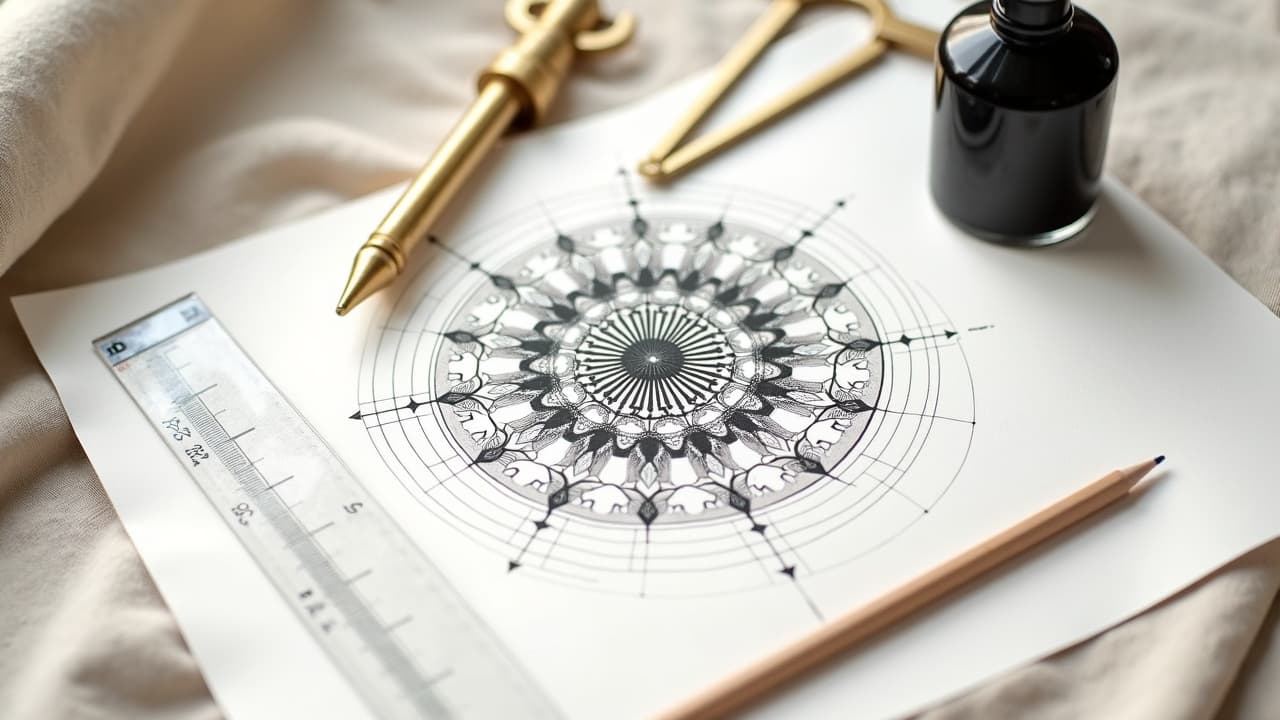
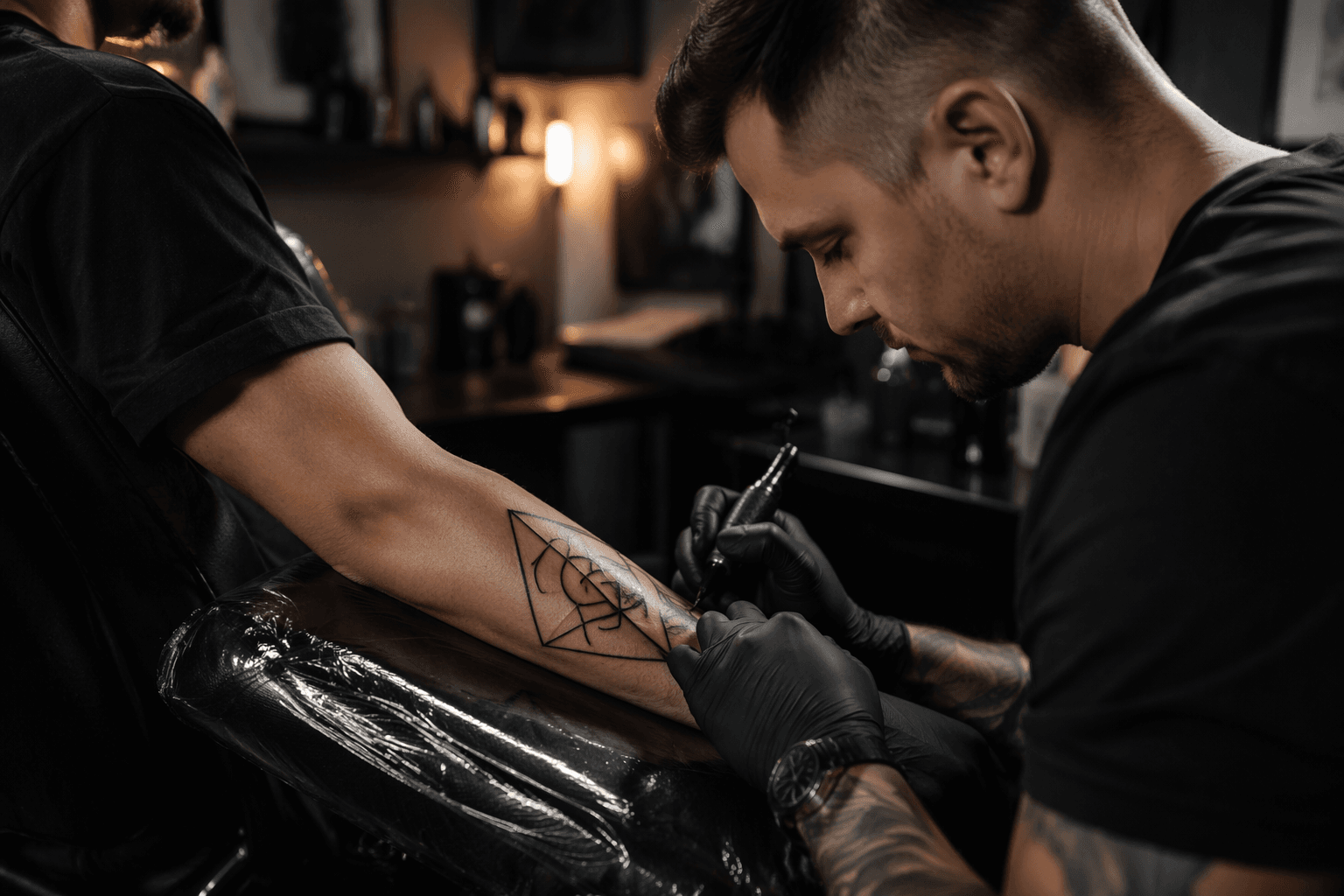
A geometric tattoo can look mathematically perfect on paper and still miss the mark on skin. The real trick is not drawing a flawless grid, it is translating that grid onto a body that bends, twists, and measures differently from side to side. That is why the strongest geometric work feels calm at a distance: symmetry gives the eye a fast read, then the artist adapts it to anatomy so the design still holds together when the wearer moves.
Why symmetry reads so fast
Symmetry is one of the visual system’s quickest shortcuts. Research on perception has shown that symmetry can be detected by low-level visual mechanisms, and other work found that symmetry preference can operate even without conscious detection. In plain tattoo terms, that means a balanced piece often feels immediately legible before a viewer has time to inspect the details.
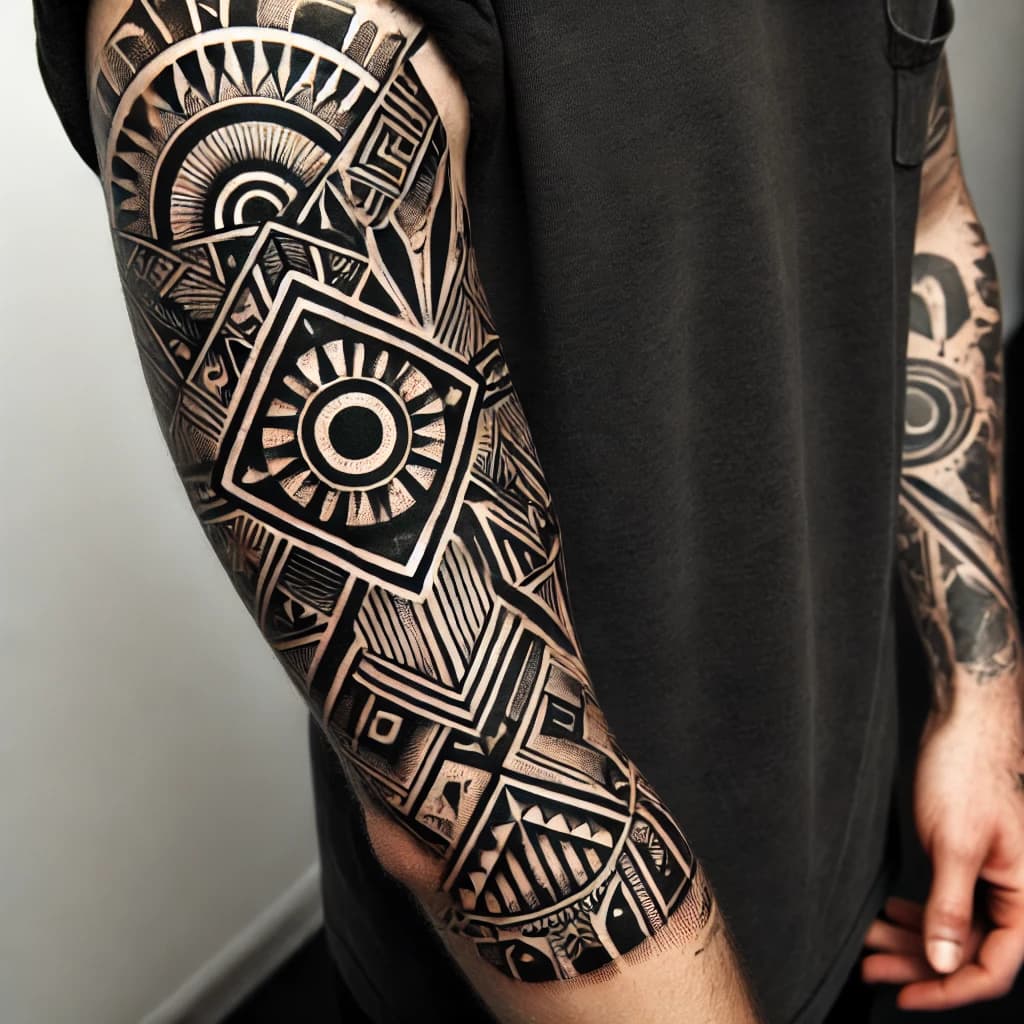
That speed is part of why geometric tattoos stay so persuasive. Repeating forms, precise shapes, and mirrored structure cut visual noise, especially in dense designs with mandala or sacred-geometry influence. A well-balanced stencil lets the eye settle, which is exactly what makes these pieces feel intentional instead of busy.
The problem: skin is not a flat page
The complication starts the moment the design leaves the sketchbook. Bodies are not symmetrical in the strict sense, and they are definitely not flat. A 2017 study concluded that mild asymmetry in torso measurements such as shoulder, axilla, and waist position is normal, while a 2024 rib-cage geometry study found substantial variation across adult rib cages even among people with similar height and weight.
That matters because geometric tattoos are unforgiving. A line that looks centered on tracing paper can drift off-center on a shoulder that sits a little higher, or on a rib cage that flares differently from one side to the other. The same design can also read differently standing, sitting, or turning, which is why placement risk is really a geometry problem, not just an art-choice problem.
Where symmetry holds up best
Some placements are naturally friendly to symmetry because they give the design a clear anchor. Tattoo-placement guidance says long ornamental, botanical, geometric, and mandala-based designs often fit especially well along the body’s center line. That is where the spine, sternum, throat, and navel create stable reference points for mirrored work.
Radial symmetry also has a natural home around joints such as elbows and knees, where circular or rotating forms can follow the body instead of fighting it. In these areas, a design does not have to behave like a strict mirror image to feel balanced. It only needs to keep its visual weight even as the body changes shape.
Flat surfaces usually hold detail better than highly curved or high-movement areas, which is why placement guides keep steering artists back toward calmer zones when precision matters. If a piece is meant to stay crisp, the body part has to cooperate.
Where symmetry warps
The most common trouble spots are the places where the body turns three-dimensional fast: shoulders, ribs, chest edges, and joints. Anatomy-focused tattoo writing keeps repeating the same warning because it is true in practice as well as in theory: the body is a three-dimensional form, and the artist has to understand the muscle structure underneath the skin.
That becomes obvious on the sternum and rib cage. A clean centerline can still feel skewed if the chest expands differently on each side or if the ribs flare unevenly. Even a subtle posture change can make a design drift, which is why a stencil that looks exact on a table may need to be adjusted before it touches skin.
How artists keep balance without forcing false symmetry
The best geometric work usually starts with anchors, not guesses. The spine, navel, and jugular notch give the design something stable to lock onto, and that is especially important when the piece has to sit cleanly through breathing, posture shifts, or arm movement. Once those landmarks are set, the artist can decide whether the tattoo needs strict bilateral symmetry, a softer rotational pattern, or a repeated form that tolerates slight anatomical differences.

That flexibility is what separates a tattoo that looks engineered from one that looks copied onto a body that was never meant to hold it. CO:CREATE and Alien’s Tattoo both frame geometric tattoos around precise shapes, repeating systems, and sacred-geometry or mandala influence, but the stronger pieces are the ones that let the pattern breathe. In other words, the geometry stays disciplined while the placement stays human.
Questions to ask before you approve the stencil
Before the stencil is locked in, the smartest check is not “Does this look symmetrical on the table?” It is “Does it stay symmetrical on me?”
- Where is the centerline, and what body landmark is it actually aligned to?
- Does the piece still read evenly when I sit, stand, and twist slightly?
- Is this placement on a flat enough surface to keep the detail crisp?
- If one shoulder, rib, or hip sits differently from the other, has the design been adjusted for that?
- Would strict mirror symmetry help here, or would a repeated or rotational pattern survive the body better?
- Does the stencil follow the movement of the muscle underneath, or is it fighting it?
Those questions matter because a geometric tattoo is not just a drawing. It is a fitted object.
Why the style keeps meaning something bigger
The symmetry conversation is also part of why geometric tattoos carry so much cultural weight. Style guides describe the form as rooted in precision, repetition, and sacred-geometry or mandala traditions, and mandala tattoo lineages are often linked to ancient Hindu and Buddhist symbolism. That gives the structure more than visual order: it gives it lineage.
So when symmetry works, it does more than make the piece look neat. It connects meaning, placement, and anatomy into one system. The design feels calm because the eye can read it quickly, but it feels lasting because the artist respected the fact that real bodies bend, breathe, and shift.
In the end, the strongest geometric tattoos are not the ones that pretend the body is flat. They are the ones that make symmetry answer to anatomy, so the balance still holds when the person wearing it moves through the world.
This article was produced by Prism’s automated news system from verified source data, official records, and press releases, then run through automated quality and moderation checks before publishing. The system is built and supervised by the people who set the standards it runs under. Read our full AI policy.
Did this article answer your question?