Why tiny zodiac tattoos need more room to age well
Tiny zodiac tattoos look crisp on the save screen, but the body blurs weak lines fast. The fix is simple: give the glyph more air, stronger contours, and smarter placement.
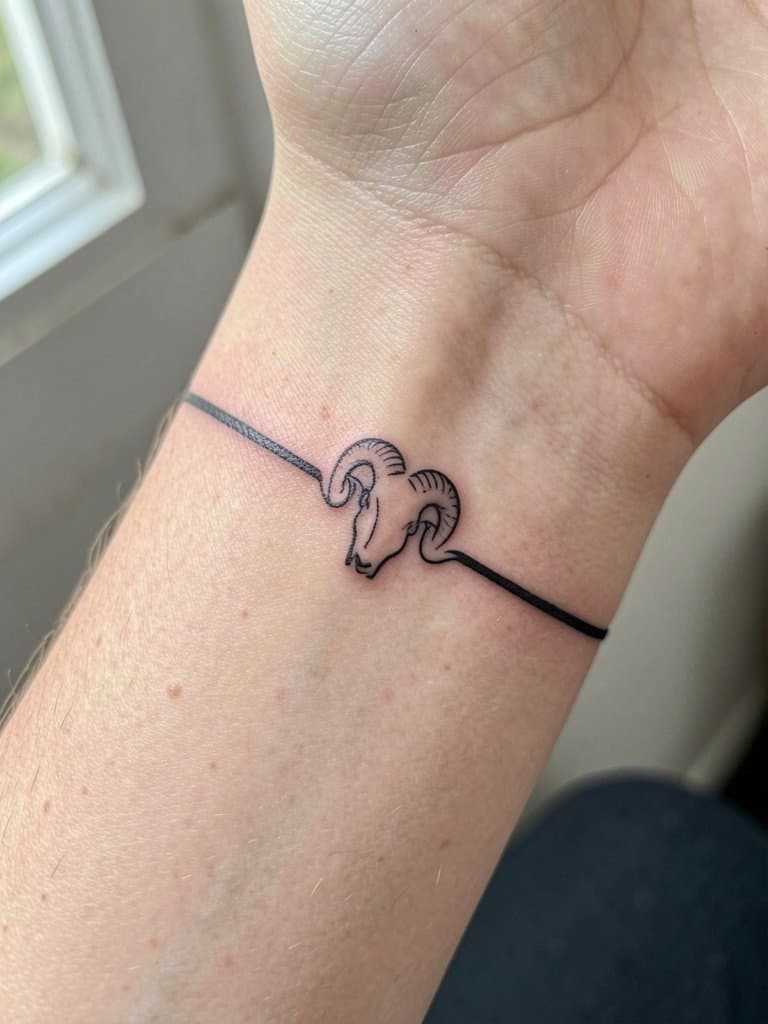
The smallest zodiac tattoos can be the hardest to keep readable. What looks clean in a saved post often turns fragile once it meets moving skin, sun, and friction, which is why the best tiny glyphs are the ones built with a little extra room.
The hidden problem with micro zodiac work
Tiny zodiac marks sit right at the edge of geometric tattooing: they are symbolic, but they are also structural. A sign with a few thin strokes can stay elegant for years, yet the same design can lose its edges if every line is pushed too close together or packed too tightly into a curved area. The real question is not whether the symbol is pretty in the moment, but whether it still reads as a zodiac sign after the ink softens a little.
That is where the caution from fine-line tattoo practice becomes useful. Ultra-thin work uses minimal pigment, so it is more vulnerable to fading and blur than bolder tattooing, especially in high-friction areas. Fingers, palms, and feet are the classic trouble spots, while outer arms, upper back, and thighs are usually cited as safer choices for longevity.
How much room a tiny zodiac tattoo needs
The practical threshold is simple: if the sign depends on hairline spacing between its strokes, it probably needs to be scaled up. Single-needle linework can remain graceful, but only if it is slightly larger and given breathing room so the symbol keeps its shape as the skin moves.
For a zodiac glyph, that means thinking like a designer rather than a collector of symbols. The lines need enough separation that they do not merge into one another, and the negative space has to stay visible so the eye can still decode the mark at a glance. If the design is so small that one softened edge can swallow the whole form, it is too small.
Where the body helps the design, and where it fights it
Placement matters as much as line weight. Areas that bend, stretch, and rub are harder on micro tattoos, because the motion changes how the lines sit over time. A tiny zodiac mark on a finger, ankle, or other high-use zone may start as a crisp little emblem and end up looking vague much faster than the same design on the outer arm or upper back.
Thigh placement can also work well for small geometric symbols because it gives the artist more room to keep proportions open. The point is not to make the tattoo huge, but to place it where the skin is less likely to constantly compress the design. That extra stability is what lets a minimal sign keep its geometry.
When framing geometry saves the piece
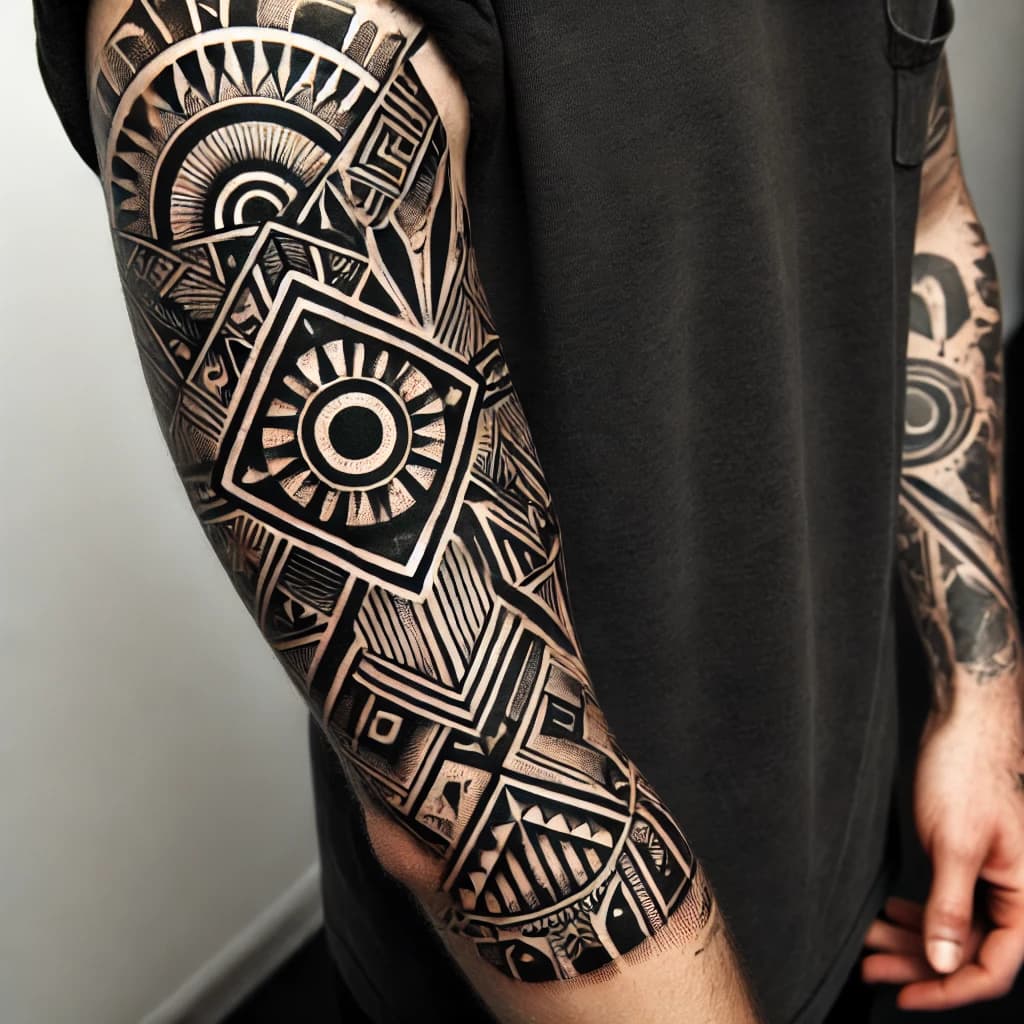
If the glyph alone feels too delicate, framing geometry can do a lot of quiet work. A small circle, a faint orbit line, or a few measured dots can give the symbol structure without making it heavy. That kind of support helps the eye understand the tattoo even if the central mark softens slightly over time.
This is where negative-space tattooing becomes especially useful. By letting the skin participate in the design, the artist creates contrast between inked and uninked areas, which keeps the composition readable without crowding it. For zodiac tattoos, that can mean a sign floating inside a loose geometric frame or a constellation pattern that uses dot accents to map the shape instead of overfilling it.
Why zodiac imagery works so well in geometric form
The reason zodiac tattoos keep returning in geometric circles is that the system already behaves like a diagram. Britannica describes the zodiac as a belt of 12 constellations, and it notes that the Babylonian zodiac was divided into 12 signs, each taking up 1/12 of the circle, about 30 degrees, around 500 BCE. That circular logic is built for clean lines, simple spacing, and symmetry.
The imagery also has deep visual precedent. The Metropolitan Museum of Art notes that zodiac imagery appeared in medieval Islamic art, including objects like inkwells decorated with the twelve signs of the zodiac. That history matters because it shows the symbols were never just decorative shorthand, they were part of a long tradition of pattern, order, and ornament.
What protects a tiny tattoo after it heals
Longevity does not stop with placement and line choice. The American Academy of Dermatology says UV light can fade tattoo ink, tanning beds and sunlamps can also fade tattoos, and sunscreen should be applied 15 minutes before going outside and reapplied at least every two hours. That makes daily sun exposure part of the design equation, not an afterthought.
Aftercare choices matter too. A peer-reviewed case report found that a scented lotion caused allergic contact dermatitis, scarring, and premature fading in a new tattoo. For a tiny zodiac mark, that kind of damage is especially punishing because there is less ink and less structure to absorb the blow.
The safest path is the one that respects the tattoo as a small architectural object. Keep the lines simple, let the symbol breathe, and choose a placement that will not grind the design down every day. Tiny zodiac tattoos can age beautifully, but only when they are given enough room to remain what they were meant to be: a readable little map, not a shrinking blur.
This article was produced by Prism’s automated news system from verified source data, official records, and press releases, then run through automated quality and moderation checks before publishing. The system is built and supervised by the people who set the standards it runs under. Read our full AI policy.
Did this article answer your question?