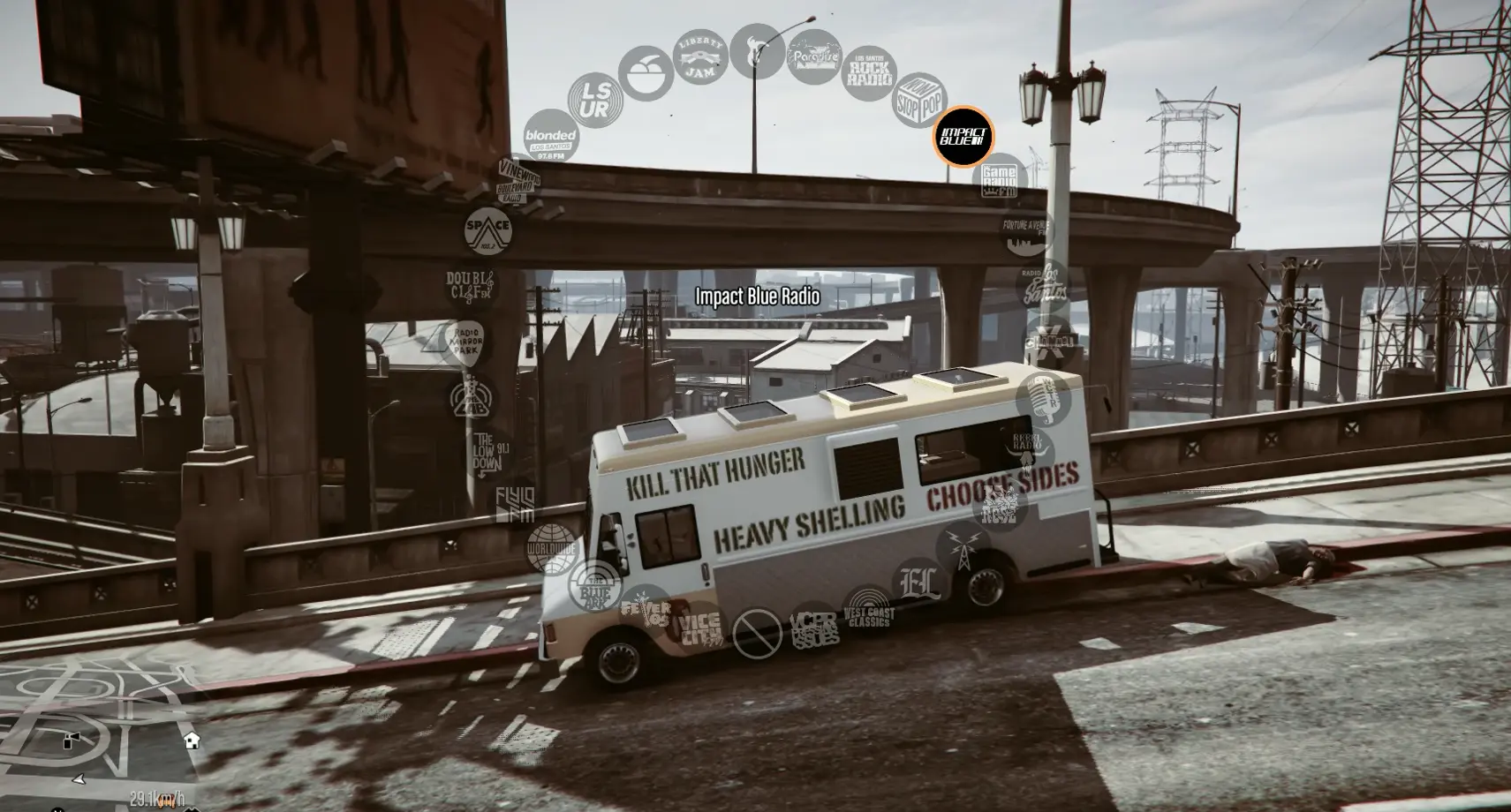
EngineKey mod lets GTA V players preserve engine state
EngineKey gave GTA V roleplay builds a cleaner way to keep engine state locked in, with a U key default, INI rebinding, and a tiny 3.94 kB footprint.
When a GTA V roleplay setup is tuned for realism, the missing piece is often not another vehicle pack or siren script. It is control over the engine itself, and EngineKey aimed straight at that gap by letting players switch a vehicle’s engine on or off and preserve that state until they changed it again.
The mod came from winter7 and arrived as a compact standalone plugin, with the download packaged as EngineKey_v1.0.1704.16.zip. The file page listed a 3.94 kB footprint, compatibility across all versions, and a straightforward install path: drop the scripts folder into the game directory. It also set the default toggle to U, with an INI file available for rebinding.
That simplicity made the mod easy to place into immersion-heavy GTA V builds. Police patrol setups, tow work, service roles, and civilian RP scenes all benefit when a car can stay idling, remain shut down at a stop, or hold the exact engine state a scene calls for. In practice, that means less fiddling with the same detail every time a player exits and re-enters a vehicle, and more consistency in how a build behaves from one session to the next.
EngineKey also fit into the usual GTA V scripting stack. It required Script Hook V, ScriptHookVDotNet, and an original copy of Grand Theft Auto V. Script Hook V is the library that lets custom .asi plugins use GTA V script native functions, while ScriptHookVDotNet runs under Script Hook V and hosts .NET Framework scripts for Story Mode. That made the mod useful for offline play only, since Script Hook V does not work in GTA Online and closes the game if a player enters multiplayer.
For players already running heavy mod stacks, the keybinding setup mattered as much as the feature set. EngineKey’s INI rebinding gave it a cleaner shot at fitting alongside other patrol tools, traffic mods, and hotkey-driven scripts without forcing awkward control clashes. The result was a utility that solved one specific realism problem without adding much overhead.
EngineKey did not invent the idea. Engine Hotkey (With Animation) had already offered engine on-off control, kept the engine running when players stepped out, and allowed its standard N key to be changed in an INI file. A newer option, Engine State Manager, pushed farther by advertising persistent engine-state handling across vehicle entry, exit, seat shuffling, and aircraft support. Even so, EngineKey’s appeal was its minimalism: a tiny tool that made a common RP frustration disappear the moment the engine needed to stay exactly where the player left it.
This article was produced by Prism’s automated news system from verified source data, official records, and press releases, then run through automated quality and moderation checks before publishing. The system is built and supervised by the people who set the standards it runs under. Read our full AI policy.
Did this article answer your question?