Rockstar revisits GTA III rumors, mysteries, and myths in Q&A series
Rockstar’s GTA III Q&A cuts through the game’s biggest myths and shows why Liberty City became a rumor factory after the first 3D Grand Theft Auto.
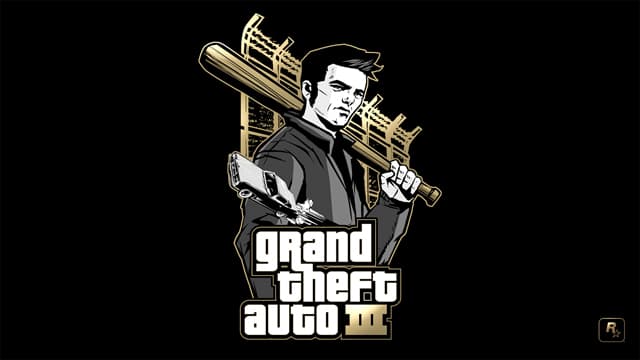
GTA III did not just change how Grand Theft Auto played, it changed how fans talked about the series. Rockstar’s Q&A on long-standing rumors, mysteries and myths about the game gave the community something rare: a place where developer intent, player speculation, and pure playground folklore all had to sit in the same room.
Why GTA III became a rumor machine
Grand Theft Auto III arrived on October 22, 2001, as the first 3D game in the series, and that alone gave Liberty City a different kind of gravity. The shift from a top-down world to a fully navigable city on PlayStation 2 made every alleyway, dock, tunnel, and rooftop feel like it might hide something meaningful. When a game invites you to poke around every corner, it also invites you to invent stories about what those corners are for.
The timing made the effect even stronger. GTA III landed 41 days after the September 11, 2001 attacks, which later became part of the game’s mythology and development lore. That proximity pushed some players to read the city and its changes through a post-9/11 lens, while others focused on the far simpler fact that early 3D open-world design still left plenty of room for mystery. A game that big, that early, and that visually suggestive was never going to stay quiet for long.
The other reason the rumors stuck is the era in which they spread. GTA III arrived before every hidden detail had a wiki page, a clipped video, or a guide thread waiting to confirm it. If you saw a strange pedestrian behavior or an odd environmental detail, the gap between observation and explanation was wide enough for community folklore to move in and furnish the place.
What Rockstar’s Q&A actually did
Rockstar’s January 5, 2012 Newswire post, Grand Theft Auto III: Your Questions Answered - Part Two, was explicit about what it wanted to cover: long-standing rumors, mysteries and myths about GTA III, plus a few behind-the-scenes images. By then the series was already split into at least Part One and Part Two, which tells you something important about the appetite around this game. Rockstar was not treating the chatter as background noise. It was treating it as part of the record.
That matters because the Q&A format sits right between confirmation and legend. Some things the studio could settle cleanly, while other bits of fan imagination were never going to be pinned down by a single answer. The result is a useful map of GTA culture: what was deliberate, what was misunderstood, and what grew legs because the game world was dense enough to support a hundred different readings.
The behind-the-scenes images are part of that too. They turn the Q&A into more than a trivia dump. They show a studio aware that fans were already treating GTA III like a place to investigate, not just a game to complete. That is the whole early GTA feedback loop in one move: Rockstar builds ambiguity into the world, players turn ambiguity into myth, and the studio later steps in to separate design from wishful thinking.
The 9/11 shadow and the one-percent claim
One of the most enduring pieces of GTA III lore is how little changed after 9/11. On January 5, 2012, Game Informer highlighted Rockstar’s claim that it changed only 1 percent of GTA3 after the attacks. That number became its own kind of shorthand, because it suggested the game remained largely intact despite the charged atmosphere around its release.
That tiny percentage also explains why the myths around GTA III never really died. A game altered so little after such a major real-world event was always going to attract speculation about what was removed, what was left in, and what people were meant to notice. In practice, though, the more revealing point is not the size of the change. It is how much debate a small change could generate once players started treating development history like another hidden layer of the map.
Liberty City was never just a setting in that conversation. It became a test case for reading intent into details. A blocked passage, a weird skyline, a strangely behaving crowd member, a hard-to-reach rooftop: each could become a rumor seed if enough people repeated the same story in enough places. That is how technical limits and community storytelling blend together. Sometimes the mystery is real. Sometimes the mystery survives because nobody had the tools to disprove it quickly.
Why the myths lasted longer than the game’s release window
GTA III’s commercial reach helped keep the myths alive. One widely cited sales estimate puts the game at about 14.5 million copies sold, which is the kind of number that turns private obsession into mass culture. A smaller game can have secrets. A hit like this gets a whole mythology built around it.
That scale also explains why early fan culture around GTA III felt so different from later, more documented eras of the series. When millions of players are all exploring the same city with limited outside reference, rumor becomes a feature of the experience. People trade stories before they trade proof, and that is exactly how obscure references, environmental jokes, and deliberately ambiguous details turn into community canon.
Rockstar’s own framing in 2012 showed that the studio understood the pattern. The point was never only to answer questions. It was to acknowledge that the questions themselves had become part of GTA III’s identity. The game’s world was open, but the conversation around it was even looser, which is why the myths outlived the console generation that created them.
How later retrospectives locked in the legacy
By the time The Ringer revisited GTA III on October 22, 2021, the verdict was hard to miss: open-world games were never, and always, the same after it. Inverse’s anniversary piece pushed the same idea through Aaron Garbut’s line that GTA III felt like the team had built “the foundation, the ruleset, the blueprint.” Those are not the words you use for a curiosity. They are the words you use for a template.
That is the real answer to the rumor problem around GTA III. The game’s mysteries lasted because the world was designed to feel bigger than its explanations, and because early fan culture was perfectly built to amplify uncertainty into legend. Rockstar’s Q&A did not erase that energy. It preserved it, and that is why GTA III still reads like the place where the series learned that every corner might hide a story.
This article was produced by Prism’s automated news system from verified source data, official records, and press releases, then run through automated quality and moderation checks before publishing. The system is built and supervised by the people who set the standards it runs under. Read our full AI policy.
Did this article answer your question?