ASBC tests yeast strains to improve nonalcoholic beer flavor at Surly Brewing
Surly’s NA beer push got a yeast-level upgrade, and the goal is simple: keep alcohol down without stripping out the body, bitterness, and beer-like finish drinkers want.
Surly’s NA beer push gets more serious
Nonalcoholic beer has always had the same problem: it can hit the style marks on paper and still taste like something is missing in the glass. Surly Brewing Co. in Minneapolis is tackling that head-on with a yeast strategy that could make the category taste more like real beer, not a compromise.
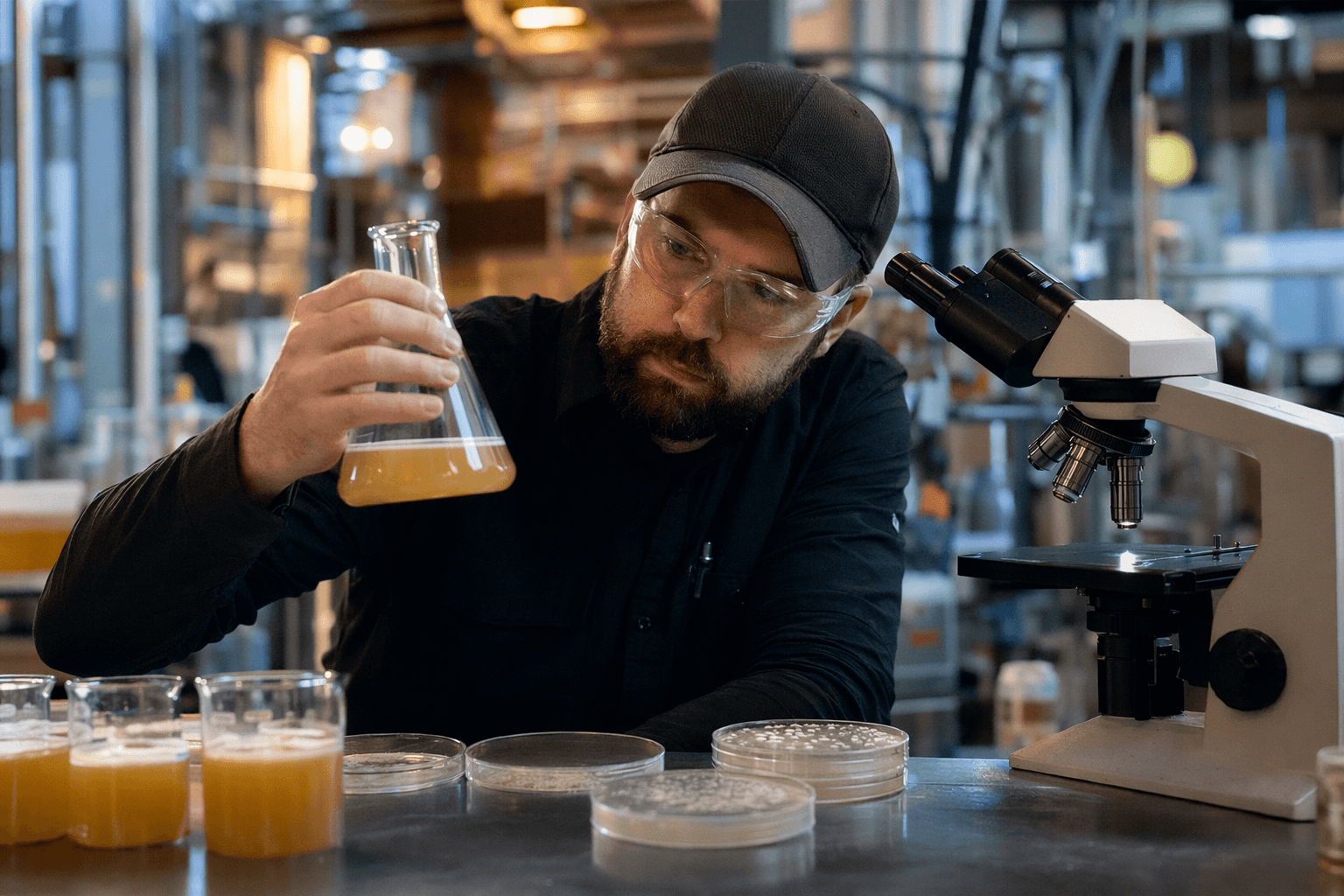
The American Society of Brewing Chemists put the work front and center in this month’s Buzz Feature, “Evaluating a Maltose-Negative Yeast for NA Beer Production: A Practical Trial.” In the feature, Ryan Bross and Tess Peacock cover a recent trial at Surly that tested maltose- and maltotriose-negative yeast strains, with the focus squarely on ABV control, diacetyl risk, and flavor outcomes. That is the right set of questions, because NA beer lives or dies on whether the process can hold alcohol in check without flattening the beer.
Why these yeast strains matter
The basic trick is elegant: if the yeast does not ferment maltose and maltotriose, it leaves more of the beer’s extract behind while limiting alcohol production. That matters because those sugars are a big part of what gives beer weight, rounded mouthfeel, and the sense that there is something substantial in the glass. Take them away too aggressively and you get thin, watery beer; leave enough structure behind and the beer can still drink like beer, even when the ABV stays low.
That is why ASBC frames the problem as more than a simple alcohol-reduction exercise. Brewing nonalcoholic beer that still tastes like beer is hard, and yeast selection is one of the sharpest tools in the box. The Surly trial is useful precisely because it treated the question like a brewing problem, not a marketing one.
What Surly is doing differently
Surly is not treating NA beer like a side project. The brewery has a dedicated non-alcoholic beer page and says its current beer program in Minneapolis includes NA offerings. More importantly, Surly says its team used advances in brewing technology and ingredients, plus R&D solutions, to arrive at Outlook Good Hoppy Pale, its first ever nonalcoholic beer.
That detail matters. A lot of NA beers get built around one big compromise, whether that is arrested fermentation, vacuum de-alcoholization, or heavy flavor correction afterward. Surly’s approach points to a more iterative model: use the brewery’s technical resources, test yeast behavior, and build the recipe and process around the beer you want at the end. Outlook Good Hoppy Pale is the proof point, not the afterthought.
For drinkers, that should translate into a beer that keeps more of the hop character and malt presence that make a pale ale recognizable in the first place. For brewers, it shows that NA beer development is becoming a real R&D lane, not a novelty shelf item.
What the ASBC trial actually measured
The practical value of the Surly trial is in the metrics. ASBC says the team evaluated ABV control, diacetyl risk, and flavor outcomes, which is exactly where NA brewing gets tricky. Low-alcohol beers can expose flaws that would otherwise be hidden by ethanol, and diacetyl is one of the biggest land mines because buttery off-notes stand out fast in a beer that is supposed to taste clean and crisp.
That evaluation set tells you the trial was not just about whether the yeast would ferment less sugar. It was about whether the beer would stay stable, taste clean, and still deliver enough sensory depth to satisfy someone drinking it next to a standard-strength beer. That is the real benchmark now. Not whether a beer can technically call itself nonalcoholic, but whether it still feels like a finished product.
Why this is bigger than one brewery
ASBC has already treated this as a practical brewing-process issue beyond Surly. In an Alternative Beverage webinar, Kevin Lane discussed utilizing a maltose-negative yeast strain for low or nonalcoholic beer production, along with sensitivities of cross-contamination, critical measurements, and critical control points. That is the kind of language brewers use when a technique moves from curiosity to something that can actually touch production floors.
Cross-contamination is especially important here. Once a brewery starts working with specialized NA yeast strains, it has to think about how those cultures move through the brewhouse, how they are isolated, and where contamination could change the outcome of another batch. The fact that ASBC is discussing control points suggests this is no longer just a flavor tweak. It is a process discipline problem, which is usually the sign that a brewing technique is maturing.
What the latest yeast research adds
The broader science backs up the idea that strain choice changes the beer in ways you can taste. A 2025 comparative study found that certain maltotriose-negative Saccharomyces cerevisiae strains produced beers perceived as more bitter, largely because they left less residual sugar. That is a useful reminder that yeast selection does not just decide how much alcohol ends up in the tank. It can also shift the balance of sweetness, bitterness, and perceived dryness in the finished beer.
For brewers, that means one strain may give you cleaner attenuation and a tighter alcohol target, while another may lean drier and make hops seem sharper. For drinkers, it explains why some NA beers taste closer to a pale ale or lager while others come off sweet, soft, or oddly empty. The strain is not just a fermentation engine. It is part of the flavor architecture.
Where NA beer quality goes next
Surly’s trial, ASBC’s webinar work, and the newer strain-comparison research all point in the same direction: NA beer quality is getting more precise. The next wave is not about proving that beer can be made without much alcohol. That part is already old news. The real question is how close brewers can get to full-strength flavor, body, and finish while keeping the beer firmly in the nonalcoholic lane.
That is why the Surly project matters. It shows a brewery using yeast as a flavor tool, not just a fermentation choice, and it shows a trade group treating low- and no-alcohol production as a technical specialty with real control points. If the results hold up in broader use, maltose- and maltotriose-negative strains could become one of the key tools that lifts NA beer out of the thin, sugary middle ground and into something drinkers actually seek out on purpose.
Surly’s Outlook Good Hoppy Pale may be the first example on the shelf, but the bigger story is what it signals for the rest of the category: better NA beer will come from better process control, and yeast is now one of the most important levers in the brewhouse.
This article was produced by Prism’s automated news system from verified source data, official records, and press releases, then run through automated quality and moderation checks before publishing. The system is built and supervised by the people who set the standards it runs under. Read our full AI policy.
Did this article answer your question?