Brewers Predict Future Craft Beer Classics
Nine brewers reveal which craft beers could join Samuel Adams Boston Lager as future classics, as the industry shrinks for the first time since 2005.
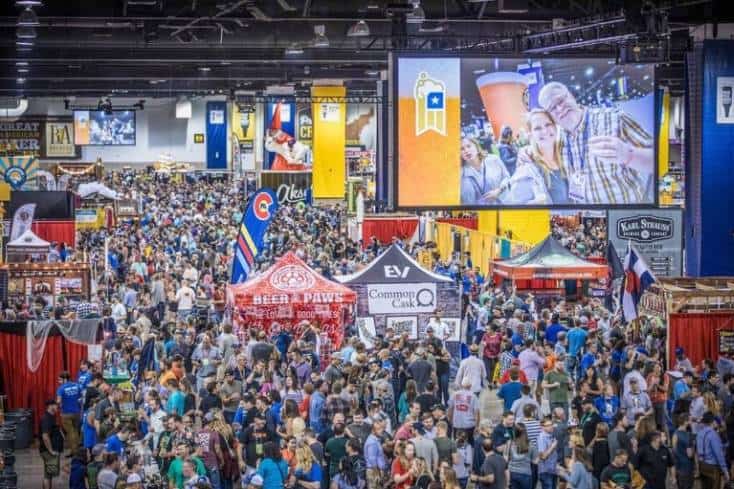
Jim Koch launched Samuel Adams Boston Lager on Patriots' Day in April 1985, and by the end of that year it had been named the best beer in America at the Great American Beer Festival. By 1988 it was the largest-selling craft beer in the United States. That single lager helped ignite a revolution: the country went from just 8 craft breweries in 1980 to 537 by the early 1990s. Every serious conversation about what defines a craft beer classic has to start there. So when VinePair asked nine working brewers to name the beers most likely to earn that same status decades from now, the answers landed with both conviction and urgency.
The urgency is real. According to the Brewers Association's 2024 annual report, U.S. craft brewers produced 23.1 million barrels last year, down 4% from 2023 and the steepest volume decline since the pandemic year of 2020. The total number of active U.S. craft breweries fell to approximately 9,612 by year's end, the first overall drop in brewery count since 2005. Within that number sit 1,934 microbreweries, 3,389 brewpubs, 3,695 taproom breweries, and 266 regional craft breweries. Volume is shrinking, but value is climbing: craft beer retail dollar sales actually rose 3% to $28.8 billion, representing 24.7% of the $117 billion total U.S. beer market. That divergence tells you something important. Drinkers aren't leaving craft beer; they're getting more selective. Into that climate, nine brewers made their picks.
Firestone Walker's Pivo Pils
Aaron Juhnke, owner of Junkyard Brewing Company in Moorhead, Minnesota, put his money on pilsner as the style most likely to produce a future classic, and on Firestone Walker's Pivo Pils as the specific beer carrying that torch. Pivo is a dry-hopped lager built around German Saphir hops, checking in at 5.3% ABV and 40 IBUs, with floral aromatics, spicy herbal nuances, and lemongrass notes. Inspired by Birrificio Italiano's Tipopils and developed by Firestone Walker brewmaster Matt Brynildson, it helped reframe what American pilsner could be. Juhnke argues that pilsners are being fundamentally reimagined by modern craft brewers, delivering real hop character alongside the drinkability and lower alcohol that today's consumers increasingly want.
The Pilsner Style Writ Large
Juhnke's prediction is less about one bottle and more about a cultural correction. For years, craft beer ran toward extremity: imperial stouts pushing 14%, double IPAs saturated with tropical hop oil, pastry beers leaning on adjuncts to hit dessert-tier sweetness. Pilsner punches back against all of that. The style rewards precision over aggression. A well-made craft pilsner asks for deceptively skilled brewing and delivers clean bitterness, herbal depth, and the kind of refreshment that keeps a glass from sitting still. That combination of technical challenge and consumer-friendly output is exactly what produced classics before.
West Coast IPA Revival
Theo Castillo, founder and brewer at No Seasons in Miami, sees the next classic emerging from a very different direction: a reinvigorated West Coast IPA. His argument centers on a consumer base that started its craft journey on hazy, soft, low-bitterness New England-style IPAs and is now ready for more. A new-school West Coast IPA bridges those drinkers toward resinous bitterness and drier finishes while preserving the tropical aromatics they already love. After years of the hazy IPA dominating shelf space and tap lists across the country, Castillo reads the room as one primed for that kind of pivot.
English Ales
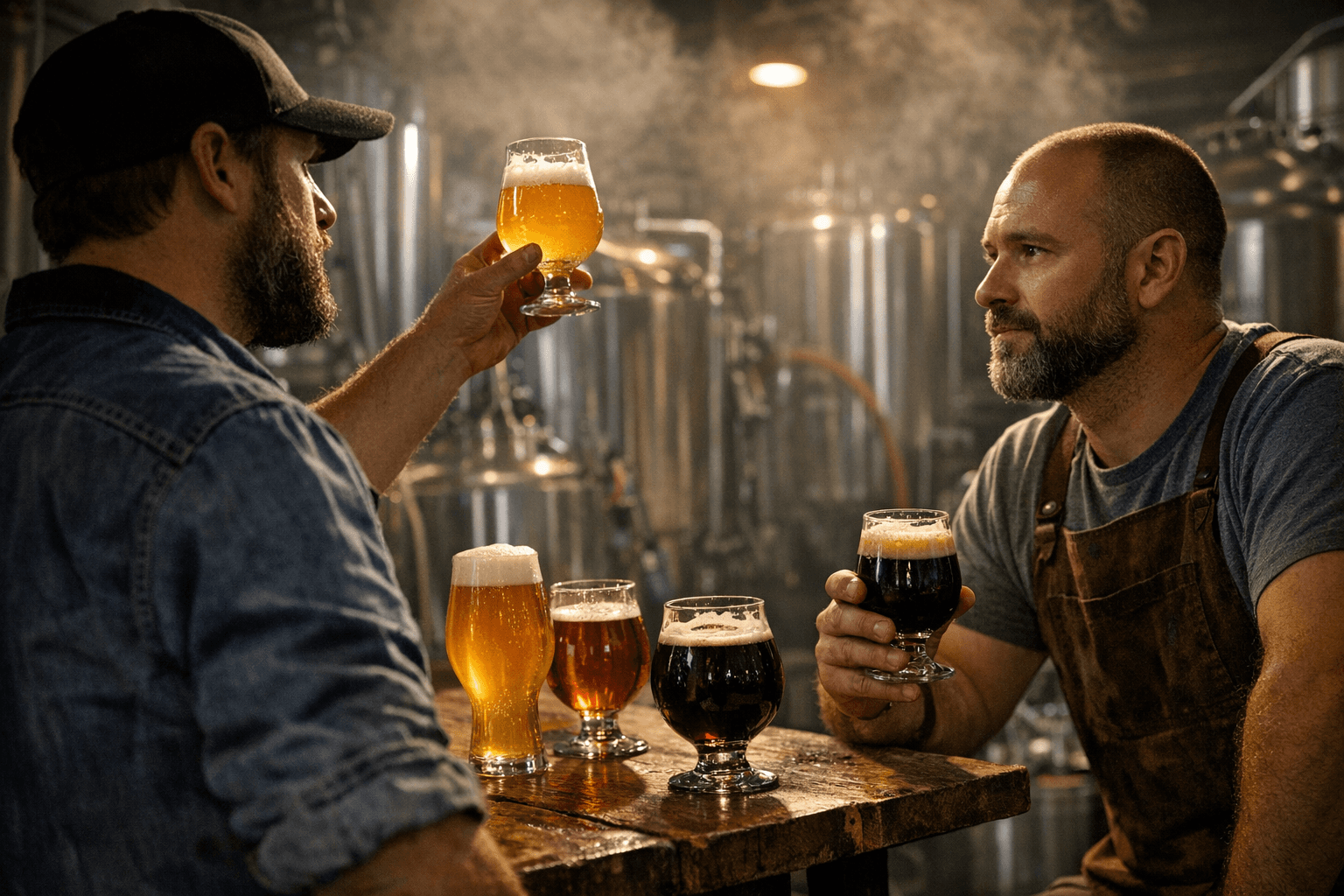
Richie Tevlin, owner and brewmaster at Space Cadet Brewing Co. in Philadelphia, is betting on English ales as the next major wave. His reasoning tracks alongside one of the more specific consumer behavior shifts in recent years: a growing fascination with foam and a preference for reduced carbonation. English ales, served at lower pressure with a thick, persistent head, speak directly to that obsession. The style category encompasses bitters, milds, and ESBs that prioritize malt complexity and restraint over the intensity that defined craft beer's previous decade. Tevlin sees a drinker who has burned through the extremes and is now reaching for nuance.
Historical Techniques: Decoction and Open Fermentation
Chris Lohring, founder and brewer at Notch Brewing in Salem, Massachusetts, frames his prediction less around a specific style and more around a return to process. He sees brewers going back to decoction mashing and open fermentation, two techniques largely abandoned by the industry for reasons of cost and efficiency. Decoction mashing involves boiling a portion of the mash repeatedly to develop rich malt character that modern single-infusion systems simply cannot replicate. Open fermentation exposes the fermenting beer to ambient conditions, producing yeast-driven complexity that closed vessels suppress. Lohring's position is that the beers produced through these labor-intensive methods will stand apart from the commodity-scale output that now crowds the market.
Saisons and Wheat Ales
Molly Flynn, a brewer at Tripping Animals Brewery in Miami, echoes the broader pivot toward restraint from a different angle. She points to growing consumer openness to saisons and wheat ales, styles defined by their calmer yeast profiles, moderate carbonation, and food-friendly character. Saisons in particular occupy an interesting position: they are historically rooted European farmhouse ales, but their dry, spicy, complex character fits comfortably alongside the food-pairing conversations that premium craft beer increasingly drives. American Wheat Ale, Pale Ale, Saison, and Pilsner all surfaced in VinePair's survey as candidates for future classic status, with each representing a move toward sessionability and palate refinement rather than intensity.
Allagash Brewing Company
Among the brands repeatedly cited by the nine brewers as having genuine classic-in-the-making credentials, Allagash Brewing Company keeps surfacing. The Portland, Maine brewery built its identity around Belgian-inspired brewing at a time when that approach was considered eccentric in the American market. Allagash White, the brewery's flagship witbier, has sustained relevance across decades and style cycles in a way that few craft brands have managed. Its continued presence on VinePair's expert panels as a touchstone reflects a durable reputation earned through consistency rather than novelty.
Dogfish Head Brewery and Sierra Nevada Brewing
Both Dogfish Head and Sierra Nevada carry the kind of origin-story gravity that makes classic status plausible. Sierra Nevada Pale Ale launched in 1980 and helped define what American craft beer could taste like, with its intense Cascade hop aromatics of pine and citrus balanced against smooth caramel malt. It was unusual enough to shock palates at the time and durable enough to still rank at the top of consumer lists nearly five decades later. Dogfish Head's 60 Minute IPA brought a different kind of ambition: a continuously hopped IPA with over 60 hop additions across a full 60-minute boil, registering 6% ABV and a flavor profile its brewery describes as "bold and timeless." Both brands appear in VinePair's survey as benchmarks against which future classics will be measured.
Tree House Brewing Company
Tree House Brewing Company occupies a singular place in the conversation because its flagship Julius IPA represents the fullest expression of the hazy New England IPA style that dominated the last decade of craft beer. Julius, a world-renowned hazy IPA developed in a kitchen in Ware, Massachusetts by co-founder Nate Lanier, delivers mango, peach, passionfruit, and citrus with a soft, pillowy mouthfeel that made it the defining reference point for the style. The central question VinePair's brewers are grappling with is whether the hazy IPA era ultimately produces a classic or merely a trend. Julius is the test case. If the style endures and the beer's reputation survives the current market contraction, Tree House may already have its classic on tap.
The industry contraction gives all of these predictions sharper edges. When dollar sales climb 3% even as volume falls 4%, the market is effectively self-selecting for quality. Craft brewing still employs 197,112 people and commands nearly a quarter of all U.S. beer retail dollars. The breweries and beers that survive this consolidation period will likely be the ones writing the next chapter of craft beer history, the way Samuel Adams wrote the first.
This article was produced by Prism’s automated news system from verified source data, official records, and press releases, then run through automated quality and moderation checks before publishing. The system is built and supervised by the people who set the standards it runs under. Read our full AI policy.
Did this article answer your question?