Double Mountain ties Love Shed IPA to watershed protection and hop farming
Love Shed IPA is a hop-forward reminder that the Gorge's beer identity starts with clean water, protected forests, and the farms that feed the brewhouse.
Water is the real starting point
Love Shed IPA makes the water-to-beer connection plain instead of ornamental. Double Mountain is using the beer to link watershed protection, hop farming, and the Columbia River Gorge’s brewing identity, which is exactly where this kind of story should begin in the Pacific Northwest.

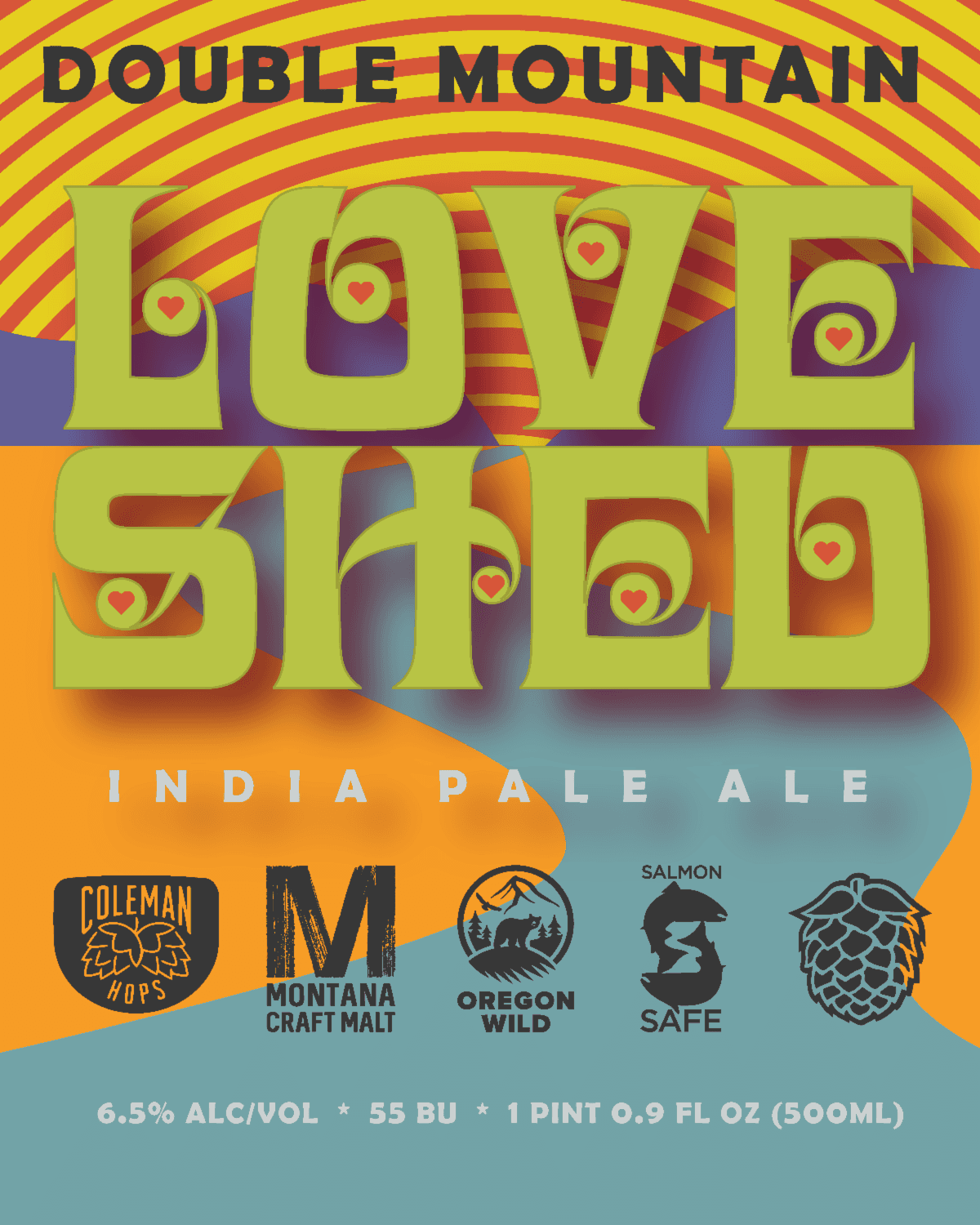
The beer is built as a collaboration with Coleman Hop Farms, Montana Craft Malt, and Oregon Wild’s Oregon Brewshed Alliance, so the conservation message is not hanging by itself. It sits alongside actual farming, sourcing, and advocacy relationships, which gives the release more weight than a standard seasonal IPA with a green label.
A Northwest IPA with old-school instincts
Double Mountain describes Love Shed as a PNW IPA built around Citra hops and a throwback malt-forward grain bill. That combination matters, because it places the beer squarely in the region’s hop-forward tradition while still aiming for modern aroma and flavor.
The beer comes in at 6.5% ABV and 55 IBUs, which tells you what kind of pint this is before you even pour it. The hop bill includes Strata, Simcoe, Citra, Estate Cascade, and more Citra in the main build, then a dry-hop mix of Citra, Simcoe, and Galaxy. The flavor read is the part IPA drinkers will recognize immediately: resinous citrus, pineapple, mango, orange marmalade, and a dry, bitter finish.
That is a smart lane for a Columbia River Gorge brewery. It nods to the classic Northwest IPA structure, but the fruitier modern hops keep it from feeling like a museum piece.
The release has to work in the glass, not just on the label
A conservation-themed beer only lands if the beer itself feels worth seeking out. Love Shed does that by leaning into a familiar, high-confidence profile rather than trying to turn the environmental message into the whole story.
Double Mountain says the beer is meant to protect Hood River water and celebrate what is good in the world, and that framing fits the flavor brief. This is not a subtle, quiet lager with a social mission attached later. It is an IPA with enough bitterness, enough hop expression, and enough malt structure to stand on its own.
That matters because the craft beer crowd can smell a forced tie-in fast. Here, the release’s identity lines up with the beer style, the place, and the brewing culture it is trying to represent.
Why the environmental message feels credible
The strongest part of Love Shed is that Double Mountain is not asking anyone to take a sustainability claim on faith. The brewery says the beer is available on tap at all three of its locations and in 500 mL refillable bottles, which connects the release to an existing packaging choice rather than a one-off gesture.
Double Mountain says its refillable glass bottle can be reused up to 30 times. It also says the life-cycle carbon of that reusable bottle is 69 times less than a recycled aluminum can. Nearly all of the brewery’s beer and cider goes into those bottles today, so the packaging story is baked into the business, not invented for this release.
That is the model more breweries should study. If you want conservation messaging to sound real, the beer, the packaging, and the sourcing have to point in the same direction.
A brewery identity shaped by place
Double Mountain’s history helps explain why this release feels so rooted. The brewery opened in Hood River on St. Patrick’s Day in 2007, founded by Matt Swihart and Charlie Devereux after the two met while working at Full Sail Brewing. Swihart took the reins in 2013, and the brewery has kept its identity tied to the Gorge ever since.
That local grounding is important because Love Shed is not trying to borrow a sense of place from the outside. It comes from a brewery that already lives inside the landscape it is celebrating, and the beer reads like a continuation of that relationship rather than a branding exercise.
When Swihart talks about the Gorge’s brewing water and the good fortune of brewing in a place with such strong natural resources, he is pointing at the core of the story. The water is not a backdrop here. It is the reason the beer exists, the reason the region’s brewing culture took shape, and the reason conservation language can carry real meaning when it is attached to a pint.
The Brewshed Alliance gives the story a longer arc
Oregon Wild’s Brewshed Alliance provides the wider frame for why this kind of beer campaign works. The alliance launched in April 2015 as a coalition of brewing businesses and community partners focused on clean water and protected forest watersheds, and Oregon Wild says that matters because beer is over 90% water.
That simple fact is doing a lot of work here. If beer starts with water, then watershed health is not an abstract environmental issue, it is an ingredient issue, a quality issue, and a business issue. The Brewshed concept turns that into a language brewers can actually use without sounding preachy.
The alliance also has a track record of collaboration beer releases that stretch beyond one brewery. Oregon Wild says its 2026 Wild & Scenic Earth Day Collaboration Series included 17 brews and partners such as Coleman Hops, Yakima Chief Hops, Indie Hops, Country Malt Group, Montana Craft Malt, and Admiral Maltings. That makes Love Shed part of an established Oregon brewing habit: use beer releases to raise awareness, support partners, and keep conservation tied to the industry’s daily work.
What breweries can learn from Love Shed
Love Shed works because the message is not floating above the beer. The hops come from real farms, the malt comes from a named supplier, the packaging fits a long-running refillable system, and the conservation pitch is tied to an organization that has spent years talking about water and forests.
That is the practical lesson for any brewery that wants to make environmental messaging credible. Start with the ingredients, show the partnerships, and make sure your operational choices back up the cause you are celebrating. In Love Shed, the Gorge’s water, the hop farms, and the refillable bottle all tell the same story, and that is why the release feels less like a slogan and more like the brewery’s actual identity.
This article was produced by Prism’s automated news system from verified source data, official records, and press releases, then run through automated quality and moderation checks before publishing. The system is built and supervised by the people who set the standards it runs under. Read our full AI policy.
Did this article answer your question?