Geisthaus Brewing finds creative freedom by focusing on lagers
Geisthaus proves that a lager-only brewery can still feel expansive when every recipe, yeast choice, and carbonation detail is treated like a decision, not a compromise.
Geisthaus did not chase breadth when it opened in Sacramento County. Ben Allgood and Brady Jones built the brewery around lagers on purpose, turning what could have been a constraint into a clean, unmistakable identity. That choice shows up everywhere, from the beer list to the tank schedule to the way the brewery talks about itself.
A focused brewery with a clear point of view
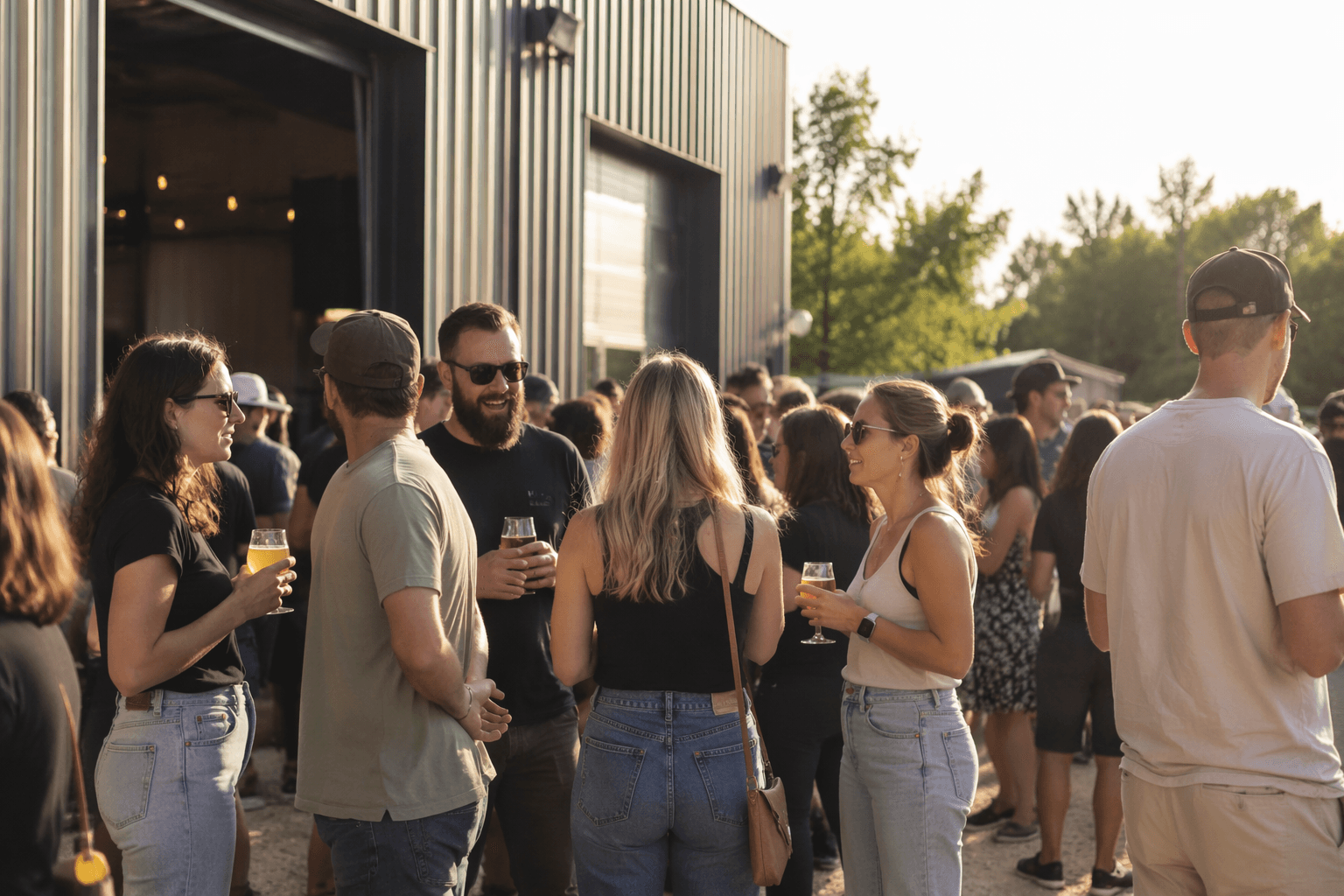
Geisthaus opened on Wednesday, Feb. 5, 2025, along Micron Avenue between Sacramento and Rancho Cordova, in a space that had been vacant for nine years. Local reporting described it as an all-lager brewery, and the owners framed it as community-oriented from the start. At opening, the taproom had cornhole and a promise of more events and activities, which matters because the brand is not only about what is in the glass but also about how the room feels when you walk in.
That kind of clarity is rare in a market where many newer breweries try to cover every possible style. The lager-only decision gives Geisthaus a strong shorthand: if you want crisp, technically precise beers, this is the place. If you want a tap list that swings from pastry stout to hazy IPA to fruited sour, this is not that brewery, and that is exactly the point.
Less breadth, more precision
The practical payoff of the Geisthaus model is that the brewery can spend its energy on the small things that make lagers sing. Its own site already shows a range inside the lane, with beers like Czech Pils at 4.8 percent ABV and German Pils at 5.1 percent ABV. That is the right kind of variety for a lager house: different expressions, same technical discipline.
The brewery also leans hard into process. Its beers are brewed with floor-malted Bohemian malts, Czech Saaz hops, Weyermann Pilsner malt, house lager yeast, spunding for natural carbonation, and horizontal tank lagering. That is not marketing fluff. It is a brewing program built around texture, malt character, sulfur cleanup, and the kind of cold-side patience that separates a sharp lager from a merely cold ale.
What the podcast reveals about the brewing philosophy
Craft Beer & Brewing Podcast episode 487 makes the strategy even clearer. For brewing veterans Ben Allgood and Brady Jones, opening Geisthaus in Sacramento meant endless possibility, but they intentionally limited themselves to lagers. The conversation is not about narrowing the menu for convenience. It is about finding creative freedom inside a style family that punishes sloppy decisions and rewards exacting ones.
The episode’s topic list reads like a brewhouse notebook rather than a branding deck. They talk through seven different pils recipes, which tells you right away that they are not treating pilsner as a single checkbox style. They also dig into hop choices such as Spalt Select and Mittelfrüh, along with the role of local and regional craft malts, which is exactly where a lager house can build character without drifting into gimmick territory.
The helles discussion is especially telling because it uses the phrase rustic robustness. That is a useful target for homebrewers too: helles should be soft and drinkable, but not thin or anonymous. Geisthaus appears to be chasing depth without losing restraint, which is harder than making a loud beer and much more useful over the long haul.
Yeast, carbonation, and the part most breweries rush past
The most practical part of the conversation is the yeast talk. Allgood and Jones compare White Labs WLP833 German Bock strain with the better-known 34/70, and they consider how different strains change lager character. That is exactly the kind of decision that separates a house lager program from a one-size-fits-all approach, because yeast choice changes malt expression, attenuation, and the final snap in the finish.
They also talk about carbonation levels, which homebrewers often treat as an afterthought until a beer feels flabby or overeager in the glass. Geisthaus seems to treat carbonation as part of the recipe, not a last-minute adjustment. That lines up with the brewery’s use of spunding and horizontal lagering, both of which point to a deliberate effort to shape mouthfeel and polish before the beer ever hits a tap handle.
Even the hazy lager conversation stays technical
Geisthaus is not pretending lager-only means only one texture or one visual profile. The podcast discussion of hazy pale lager shows the brewery testing how New Zealand hops can help with haze stability, then comparing recipes head-to-head to see how the house yeast performs. That is the right way to push a style boundary: change one variable, then actually pay attention to what it does.
For homebrewers, that is the real lesson hidden inside the brewery model. If you want to understand lager development, do not stack ten variables at once and hope the result feels cohesive. Brew the same base beer with small changes in hop variety, yeast strain, or carbonation, then taste the difference before you change the next thing.
A simple discipline falls out of Geisthaus’s approach:
- Build a base pils or helles you can repeat cleanly.
- Change one malt, one hop, or one yeast at a time.
- Track carbonation separately, because it changes perception more than people admit.
- Judge the beer cold, after enough lagering time to let the edges settle.
Recognition came fast, but it fits the model
The approach has already earned outside validation. Geisthaus won Best in Show at the 2025 Brewers Cup of California for Progenitor, a Kellerbier, and Beer Pros named it one of the 30 Best Breweries in the Country Right Now in 2025. Those honors make sense because they reward exactly what Geisthaus is selling: restraint, consistency, and a technical point of view that reads as confidence rather than limitation.
The timeline matters too. California business filing data shows Geisthaus Brewing Company LLC was filed on March 10, 2021, and the lager-only concept had been publicly discussed by at least 2022. This was not a knee-jerk market pivot after opening day. It was a slow-build brewery identity, shaped before the doors opened and then reinforced by the beers once the taps started flowing.
Geisthaus is proof that a brewery does not need to be everything to everybody to feel alive. By committing to lagers, Allgood and Jones gave themselves fewer style distractions and more room to get the hard stuff right, which is exactly how a focused brewery turns precision into character.
This article was produced by Prism’s automated news system from verified source data, official records, and press releases, then run through automated quality and moderation checks before publishing. The system is built and supervised by the people who set the standards it runs under. Read our full AI policy.
Did this article answer your question?