How brewing water chemistry shapes flavor, mash pH, and beer style
A few water tweaks can strip out harsh bitterness, sharpen hops, and rescue a thin malt profile, often with nothing more than salts, acid, or RO water.
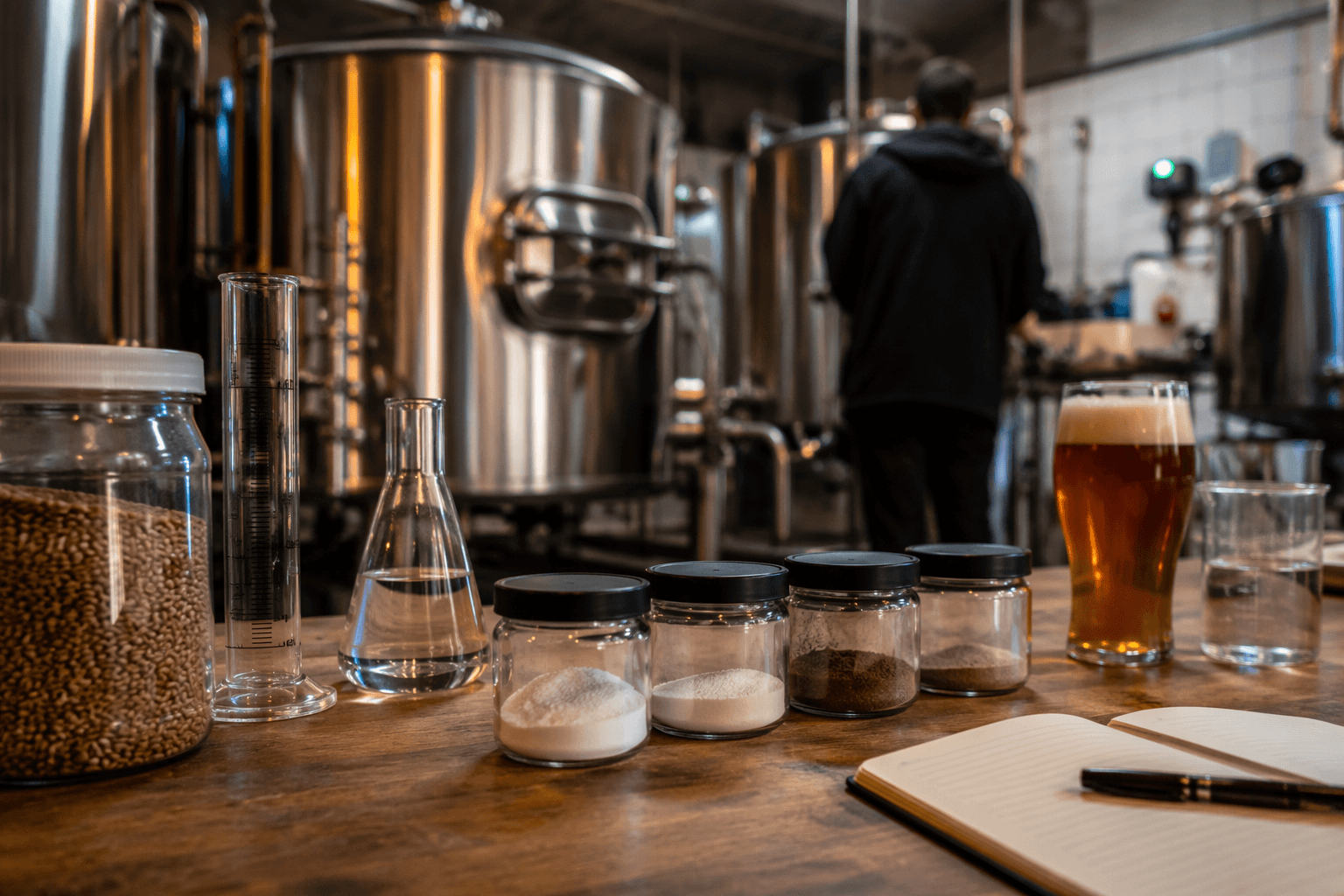
A pale lager, an imperial stout, and a hop-forward pale ale can all start with the same malt bill and still finish very differently once you change mineral content, mash pH, and the balance between sulfate and chloride.
Why water is the highest-ROI adjustment
At NanoCon 2020, John Palmer said brewers adjust water to improve beer yield by hitting target mash pH, improve beer flavor, and prevent carbonate scale. Once water is treated as part of the recipe, it becomes a design variable, just like grain choice or hop selection.
The gains are often obvious. Harsh bitterness can soften, muddy hop character can snap into focus, and a thin malt profile can gain roundness with the right mineral balance.
Read your source water before you reach for salts
Not all brewing water behaves the same way. Some tap water is naturally soft and mineral-light, while other water carries enough bicarbonate or hardness to push mash pH upward and make pale beers taste dull or edgy. That difference matters most when you brew across styles, because a pale lager asks for a very different water profile than an imperial stout.
If your starting water is already close to the profile you want, leaving it alone is often the smartest move. If it is heavy in alkalinity or mineral content, building from reverse osmosis or distilled water gives you a blank slate and keeps the recipe from fighting the water supply.
Mash pH is the control center
The most commonly discussed mash pH range sits around 5.2 to 5.6, and the key control point is the mash. That is where enzyme performance, extraction, and balance are set up, so water treatment before or during the mash has the biggest effect. If the mash lands in the right range, the rest of the brew day usually feels easier.
This is also why water chemistry is not just about flavor impression. Palmer’s presentation ties the adjustment process to yield and carbonate-scale prevention as well as taste, which is exactly how serious brewers use it in practice.
Sulfate, chloride, and the Burton lesson
For homebrewers, the sulfate-to-chloride conversation is still one of the most useful shortcuts. Sulfate tends to sharpen hop bitterness and give beer a drier impression, while chloride rounds out malt character and softens the palate. That simple framework is often enough to decide whether a recipe should lean crisp and snappy or smooth and full.
Burton-on-Trent is the classic reminder of how much water can shape style. The town’s sulfur aroma is tied to sulfate ions in its natural water supply, and the water rises through a sandstone aquifer with high sulfate content. That mineral signature helped make Burton synonymous with assertive English pale ales, especially when brewers wanted hop bitterness to stand forward rather than blend into the malt.
When RO water makes sense
Reverse osmosis and distilled water are the cleanest starting points when tap water is too mineral-heavy or too unpredictable for the beer you want. Palmer lists ion-removal processes, including reverse osmosis, alongside salt additions and acid additions as the three broad ways brewers adjust brewing water. In practical terms, RO is the move when you want total control over sulfate, chloride, calcium, and alkalinity from the ground up.

That said, classic styles are not brewed with water “as-is” by default. Historic city profiles, including Burton-on-Trent, are now better treated as guides than as strict specifications, because modern water targets are usually built around the beer you want rather than copied line for line. A pale continental lager, for example, usually wants a much cleaner mineral profile than a dark stout, which can tolerate and sometimes benefit from more alkalinity.
The simplest additions that actually move flavor
You do not need a cabinet full of reagents to make a meaningful difference. The most common tools are gypsum, calcium chloride, baking soda, lactic acid, and phosphoric acid, plus dilution with RO or distilled water when the base water needs a reset. Those additions are not magic flavor powders, they are levers for calcium, sulfate, chloride, and alkalinity.
A good working sequence is simple: 1. Estimate or test your source water. 2. Pick the style target. 3. Decide whether the water needs less alkalinity, more calcium, more sulfate, or more chloride. 4. Make the smallest adjustment that gets the mash into range and the flavor where you want it.
That workflow keeps water treatment grounded in brew-day decisions instead of turning it into guesswork.
Treat style profiles as targets, not scripture
Burton-like water can be a useful reference for a bitter English ale, but it should not be treated as a law. The same is true for low-mineral water in pale lager brewing and for higher-alkalinity water in darker beers, where the grain bill can absorb more mineral character without throwing the mash out of balance.
This article was produced by Prism’s automated news system from verified source data, official records, and press releases, then run through automated quality and moderation checks before publishing. The system is built and supervised by the people who set the standards it runs under. Read our full AI policy.
Did this article answer your question?