New Homebrewing Guide Reveals the Essential Gear Beginners Actually Need
Most homebrewers waste money on the wrong upgrades. Ron Silberstein's gear guide reframes the buying decision around measurable impact, not shiny hardware.
The $150 Foundation That Actually Matters
Most brewers who've made ten batches of drinkable beer share a common problem: a cluttered shelf of gear they bought in the wrong order. Ron Silberstein's recently published equipment guide cuts straight to the decision that separates brewers who improve from those who plateau: spend on what changes the pint, not on what looks impressive on a brewing shelf.
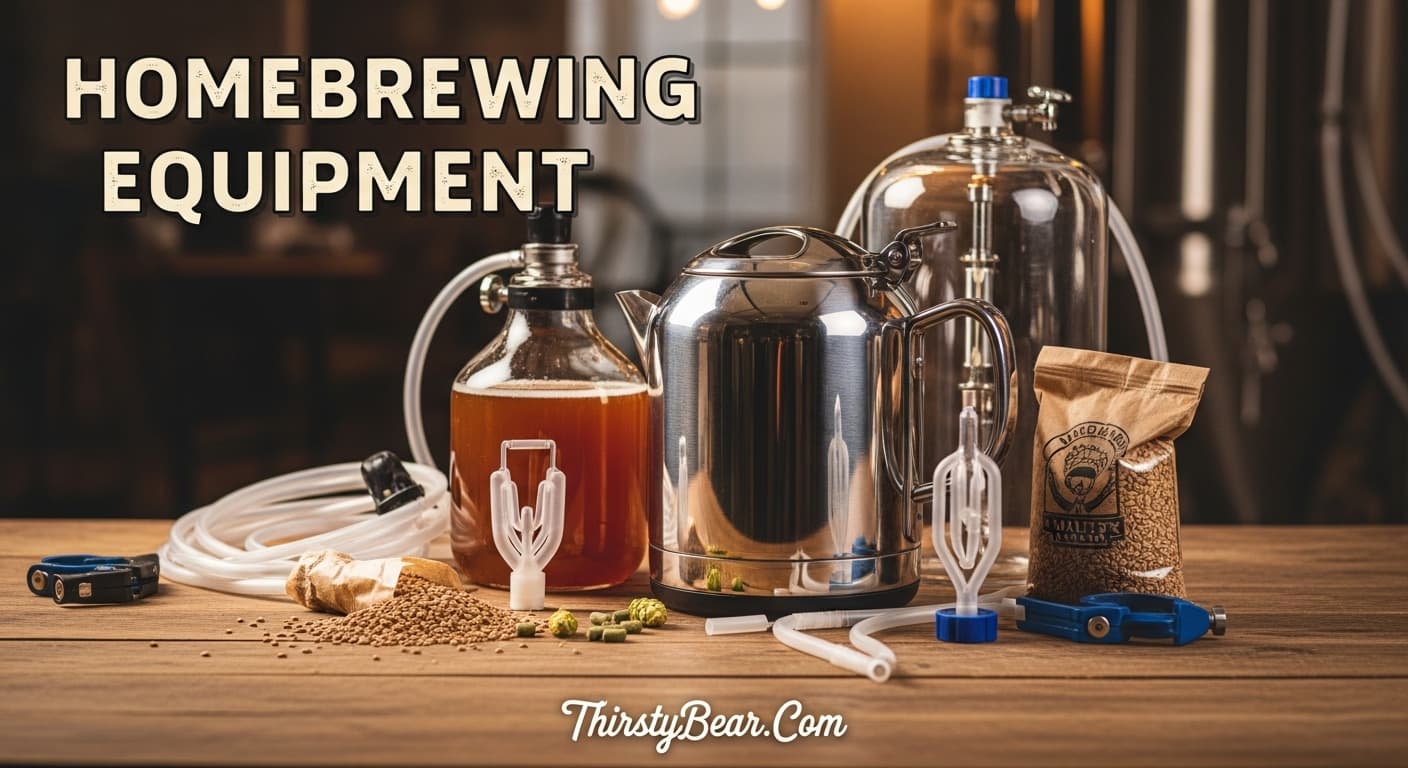
The baseline list Silberstein outlines is deliberately lean. A 5-gallon fermenter with airlock, an 8-gallon minimum brew kettle (sized for five-gallon batches to prevent boilovers), a no-rinse sanitizer like Star-San, a digital thermometer, a hydrometer, an auto-siphon and racking cane, a bottling bucket with spigot, 48 bottles, a capper, and crown caps. That full setup lands under roughly $150, which is the guide's central, pushback-worthy claim: most of what determines whether your beer is good or bad is already in that list.
Understanding why requires thinking about the three failure modes that kill early batches: infection, temperature swings, and missing gravity readings. Star-San directly addresses the first. The digital thermometer and hydrometer together address the second and third. Everything else on the starter list is logistics.
Rank Your Next Purchase by Measurable Impact
Once you're consistently hitting your target gravities and finishing fermentation without off-flavors, the upgrade ROI conversation can start. Silberstein's guide frames this as a progression, and the order matters more than most buyers realize.
Temperature control is the single highest-ROI upgrade for brewers who aren't using it yet. Ale yeasts perform best in a window as tight as 60°F to 70°F; lager yeasts want 40°F to 50°F. Fermentation happening in a room that swings ten degrees overnight will stress yeast and generate fusel alcohols, acetaldehyde, or phenolic off-flavors regardless of how good the recipe is. A temperature-controlled fermentation chamber, whether a converted chest freezer with an Inkbird controller or a purpose-built cabinet, addresses a real, measurable source of variation. If you brew lagers, hefeweizens, or any clean ale where yeast character is the point, this purchase belongs before everything else on the upgrade list.
Wort chilling sits close behind. Getting boiling wort to pitching temperature below 80°F quickly minimizes bacterial contamination exposure and promotes cold break, the precipitation of proteins and tannins that cause chill haze. An immersion chiller can move a five-gallon batch from boil to pitching temperature in roughly 20 to 30 minutes; a plate chiller cuts that further. Silberstein's guide explicitly weighs the immersion-versus-plate-chiller decision as part of the upgrade calculus, and for most home setups, a quality copper immersion chiller is the more practical first step at a lower entry cost and easier cleaning overhead.
The Extract-to-All-Grain Transition: What It Actually Costs
The jump from extract to all-grain is where brewers most commonly overspend in the wrong direction. All-grain brewing unlocks full control over the grain bill and mash chemistry, but the equipment investment is real: a mash tun, a larger kettle, a wort chiller if you don't already have one, and potentially an induction or propane burner capable of handling larger volumes.
Silberstein frames two paths worth evaluating:
- Piecemeal: Adapt existing equipment with a dedicated mash tun (often a modified cooler), add a larger kettle, and integrate the chiller you should already have. Lower upfront cost, more flexibility.
- Turnkey all-grain system: A small induction all-in-one system (like a Robobrew or Grainfather-style unit) combines mashing, boiling, and chilling in a single vessel. Higher entry cost, but it compresses the learning curve and reduces the number of individual pieces to manage.
The guide's investment calculus here is practical: if you're brewing more than once a month and you've already mastered extract, a turnkey system's consistency benefits can justify the spend. If you're brewing six times a year, piecemeal is the smarter path.
Conical Fermenter vs. Carboy: The Numbers Behind the Decision
The conical fermenter upgrade is probably the most misunderstood purchase in homebrewing. The pitch is compelling: easy yeast harvesting, bottom dump for trub removal, pressure transfer to eliminate oxygen pickup. The cost is also significant, with quality stainless conicals starting several hundred dollars above a glass or PET carboy.
The ROI case for a conical makes sense in two specific scenarios: you're repitching yeast regularly (which saves real money on liquid yeast over time) or you're doing dry-hop additions and transfers where oxygen management is a priority. For styles like IPAs and hazy New England-style beers, where even minor oxidation causes rapid aroma degradation, a pressurizable conical is a legitimate flavor-impact upgrade. For a brewer primarily making stouts, porters, ambers, or Belgian ales, a quality glass carboy with careful siphoning practices delivers comparable results at a fraction of the cost.
Buy This Next: Style-Specific Scenarios
The upgrade decision gets sharper when it's anchored to what you actually brew:
- Brewing hop-forward IPAs or hazies: Prioritize oxygen management first, whether through a pressurizable fermenter or a closed-transfer setup. Temperature control second.
- Brewing lagers, Kölsch, or hefeweizen: Temperature control is non-negotiable and should be your very next purchase. Nothing else matters as much for these styles.
- Brewing stouts, porters, or Belgians: A quality wort chiller and reliable fermentation temperature monitoring will move the needle more than any vessel upgrade.
- Moving to all-grain: Get water chemistry dialed in before investing in the all-grain system. A basic water report and mineral additions cost almost nothing and will improve your extract beers immediately while you save for the bigger gear.
The Anti-Shopping List
Not every piece of homebrewing gear earns its shelf space. A few common splurges that rarely improve the actual beer:
- Automated brewing systems for beginners: The process discipline that makes a great brewer comes from hands-on brewing, not automation. Buying a $600 all-in-one system on your second batch means you're learning the equipment instead of learning fermentation.
- pH meters before water chemistry basics: A pH meter is useful, but only once you understand mash chemistry well enough to act on the reading. Many brewers buy one, calibrate it twice, and never use it meaningfully.
- Expensive grain mills before going all-grain: No point owning a precision mill while still brewing extract.
- Multi-vessel setups scaled for 10-gallon batches before you've optimized the five-gallon process. Volume amplifies problems; it doesn't solve them.
Process Over Hardware
The core argument running through Silberstein's guide deserves emphasis because the homebrewing market relentlessly pushes the opposite message: process fundamentals, specifically sanitation discipline, temperature control, and consistent gravity tracking, determine more of your beer's quality than the hardware holding it. A brewer who hits proper fermentation temperature with a chest freezer and an Inkbird controller and reads gravity carefully will consistently outperform a brewer with a $1,200 conical who pitches without temperature management.
The $150 foundation is not a compromise. It is the proof-of-concept stage. Every upgrade after it should answer one question: which specific flaw in my last batch does this fix?
This article was produced by Prism’s automated news system from verified source data, official records, and press releases, then run through automated quality and moderation checks before publishing. The system is built and supervised by the people who set the standards it runs under. Read our full AI policy.
Did this article answer your question?