Thiol-Enhancing Yeast Gives Homebrewers New Control Over IPA Aroma
Thiol yeast can make a hazy IPA smell louder and fruitier, but it only pays off when the hop bill and fermentation are built to unlock it.
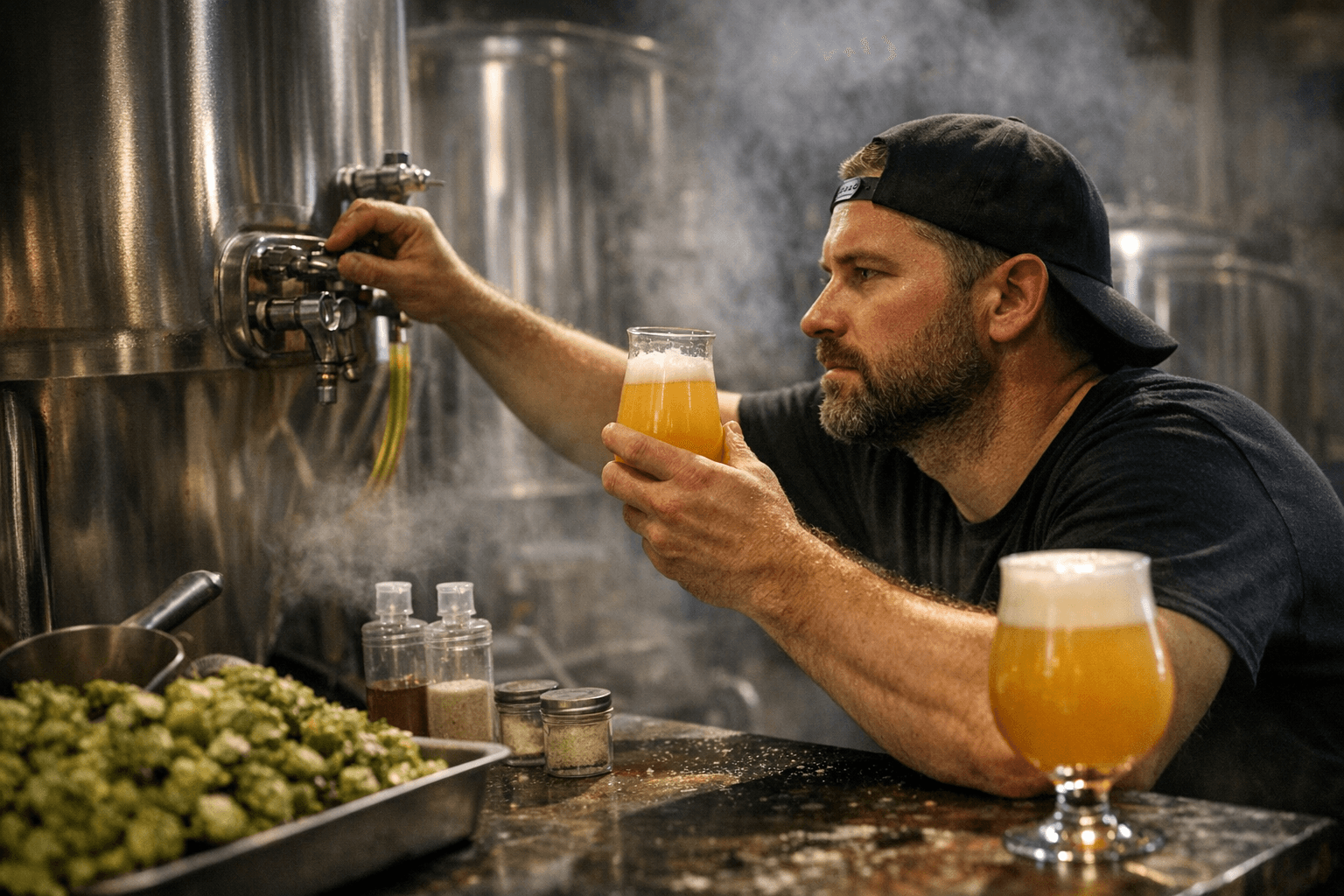
What thiol-enhancing yeast actually changes
If you brew IPAs, this is the kind of yeast that can change how a beer reads before the first sip. IPAs still account for more than half of U.S. craft beer production, so it makes sense that brewers keep obsessing over aroma chemistry, especially in a market where craft volume fell 4% in 2024 even as retail dollar sales reached $28.8 billion. In a crowded field with 9,736 U.S. craft breweries and 335 openings against 399 closings, a beer that smells louder, brighter, and more distinct has real value.
Thiol-enhancing yeast is about that aroma lift. Thiols are tiny parts of hop-derived aroma compounds, but they can swing a beer toward citrus, white grape, gooseberry, rhubarb, black currant, passion fruit, or guava. In some beers, they can also bring a sulfur-adjacent edge that feels less like fruit and more like sharpness, which is why this yeast is not a magic wand. It is a tool for pushing IPA aroma in a specific direction, not a guarantee that every hop bill turns tropical.
How the yeast does the work
The chemistry behind thiolized strains comes out of yeast-genome research that started roughly 20 years ago. BeerSmith’s guide points to the IRC7 gene as central to the process, and Lallemand’s brewing materials tie thiol release to IRC7-linked beta-lyase activity. That matters because yeast is not just fermenting sugar here. It is helping unlock aroma material that was already in the beer, just not fully available yet.
That locked-up material comes in two main forms. Free thiols are ready to smell and taste, while bound precursors still need to be released. Lallemand notes that cysteine-bound thiols are easier for yeast to access than glutathione-bound thiols. The glutathione-bound pool is the largest set of bound thiol precursors contributed by hops, but it is also the harder one for yeast to release efficiently. For a brewer, that means yeast choice is not only about attenuation or ester profile anymore. It can decide how much of the hop bill actually becomes aroma.
When thiol yeast makes sense in a recipe
This is where the purchase decision gets practical. Thiol-enhancing yeast makes the most sense when you are building a bright hazy IPA or a fruit-forward modern pale ale and you want the aroma to feel more saturated without simply throwing more hops at the kettle or dry hop. If your goal is a more expressive nose, especially one that leans into citrus, white grape, gooseberry, or guava, this yeast can be a meaningful upgrade.
It is less convincing if your recipe already depends on a conventional hazy strain for soft ester character and predictable juiciness. In that case, a thiol-focused yeast can be redundant or even distracting if the result starts drifting toward sulfur-adjacent notes instead of the saturated fruit you wanted. The yeast is also not a shortcut around recipe balance. If the hop bill is thin, stale, or mismatched, there is not much for the yeast to unlock.
A useful way to think about it is this: thiol yeast can amplify good raw material, but it does not create quality out of nowhere. A clean hazy IPA base with well-chosen hops and tight fermentation control gives it something real to work on. A sloppy beer just gets a different kind of sloppy.
Why fermentation control matters more than ever
The strongest practical lesson in the current brewing conversation is that thiol release is not fixed. A 2025 study of pilot-scale beers made with Cascade hops found that fermentation temperature and yeast strain changed 3SH release by 33% to 72%. That is a huge swing, but the same study also found that higher thiol levels did not automatically translate into a stronger tropical aroma in sensory analysis. In other words, more thiol chemistry did not always equal a better-smelling beer.
That should make every homebrewer pause before treating thiol yeast as a one-step upgrade. Temperature, strain choice, and the rest of the fermentation environment all matter. If you want the benefit, you need to give the yeast a setup that lets it do the job consistently, not just hope the packet does the heavy lifting. This is the part that separates an interesting batch from an overhyped one.
What to look for before you buy
Before you switch from a conventional hazy IPA strain, ask what you actually want the glass to do. Thiol-enhancing yeast is worth the money when the target is a more deliberately aromatic IPA, especially one you want to read as vivid, juicy, and modern. It is also a smart move if you like the idea of getting more aroma impact from the same hop load, which matters more in a mature market that keeps rewarding differentiation over brute-force volume.
A conventional haze strain still makes sense when you want familiar fruit esters, easy repeatability, and less risk of drifting into odd sulfur territory. It is the safer call for brewers who want the yeast to stay in the background and let hops and dry hopping carry the beer. If your process is still getting dialed in, conventional may be the better buy because it gives you fewer variables to manage.
The bottom line
Thiol-enhancing yeast is not hype if you want to control IPA aroma with more precision. It gives you a new lever, but it only works when the recipe, hop precursors, and fermentation all line up. Used well, it can make a hazy IPA smell more vivid and taste more intentional. Used carelessly, it is just another expensive way to miss the mark.
This article was produced by Prism’s automated news system from verified source data, official records, and press releases, then run through automated quality and moderation checks before publishing. The system is built and supervised by the people who set the standards it runs under. Read our full AI policy.
Did this article answer your question?