Why homebrewers make yeast starters before brew day
A yeast starter is the small wort step that can save a shaky pitch, but modern dry yeast often makes it unnecessary for simple beers.
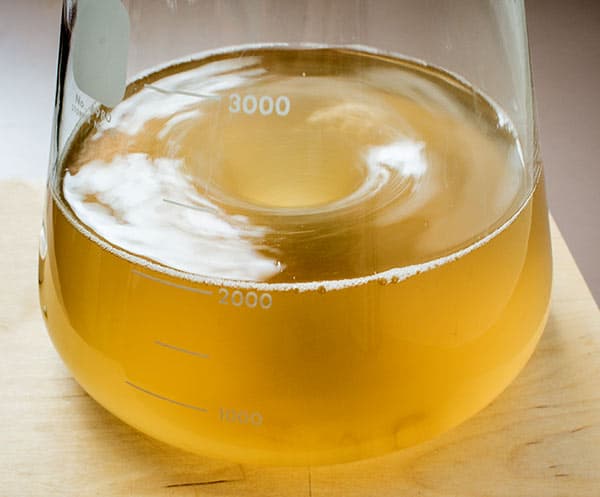
Before brew day, you build a small batch of low-gravity wort, let the yeast multiply, and then pitch that healthier culture into the main batch with more cells and less stress.
When a starter actually earns its place
Yeast starters increase cell counts from an initial lab-grown pitch, and the American Homebrewers Association says a properly made starter may double the growth in 24 hours. That matters most when you are using liquid yeast, repitching saved slurry, or brewing anything beyond a simple low-gravity ale. Starters may also be useful with an older package or when you are brewing a bigger beer.
If you are brewing a fresh, straightforward beer with modern dry yeast, the case for a starter gets weaker fast. Dry yeast is already packaged at a usable cell count, and White Labs’ pitchable yeast products are designed to give you a known cell count and a more foolproof fermentation.
Where the starter changes the outcome
Faster starts mean the culture spends less time lagging and more time working, which lowers stress on the yeast and improves the chance of a clean fermentation. Starter culture before brew day is an economical way to increase pitching rate and ensure consistent results, which is why experienced brewers keep using it for larger or more demanding beers.
The risk of getting the pitch wrong shows up before you ever taste the finished beer. Too little healthy yeast can leave you waiting on a sluggish fermentation, while the right pitch gives you a more reliable start and a better shot at the beer finishing the way you planned. That matters in cold fermentations too, where yeast needs more help waking up and staying active.
Why dry yeast changes the equation
Today’s dry yeast has made many starters unnecessary for everyday brewing. When the package is fresh and the beer is modest in strength, the cell count is often already where you need it, which saves time, gear, and one more thing to sanitize.
Pitchable yeast products work on the same logic. A known cell count gives you a clearer baseline than an old liquid pack whose viability is no longer obvious. If you are brewing something stronger, colder, or more delicate, the starter becomes the insurance policy that dry yeast often makes redundant in simpler beers.
How brewers build one
The workflow is straightforward. Start with a sanitized vessel, make starter wort with dry malt extract, cool it, pitch the yeast, and give the culture oxygen and motion so the cells can grow. Brew Your Own recommends dry malt extract for starter wort because it is readily available, easy to measure, and the leftovers store well for future starters.
The gear is familiar to most homebrewers: an Erlenmeyer flask, foil cover, airlock, or stir plate all fit naturally into the process. A stir plate is not mandatory, but motion and oxygen are part of why starters work so well. Growth is usually maximized within 24 to 36 hours, so the timing needs to fit your brew day instead of being tacked on at random.
The parts that experienced brewers pay attention to
Once the culture has finished and chilled, many brewers decant the starter beer so they are not carrying unnecessary liquid into the main batch. That step is part of the workflow for reducing unwanted starter beer in the final fermenter, and it is one reason the process stays useful even for brewers who are comfortable stepping up cultures.
American Homebrewers Association forum discussions keep circling back to starter measurements, stir plates, and decanting.
The practical line to draw
If you are brewing a bigger beer, using an older package, repitching slurry, or working with liquid yeast that needs a boost, a starter can make the difference between hoping and knowing. If you are brewing a simple low-gravity ale with fresh dry yeast, the starter step often adds effort without adding much value.
This article was produced by Prism’s automated news system from verified source data, official records, and press releases, then run through automated quality and moderation checks before publishing. The system is built and supervised by the people who set the standards it runs under. Read our full AI policy.
Did this article answer your question?