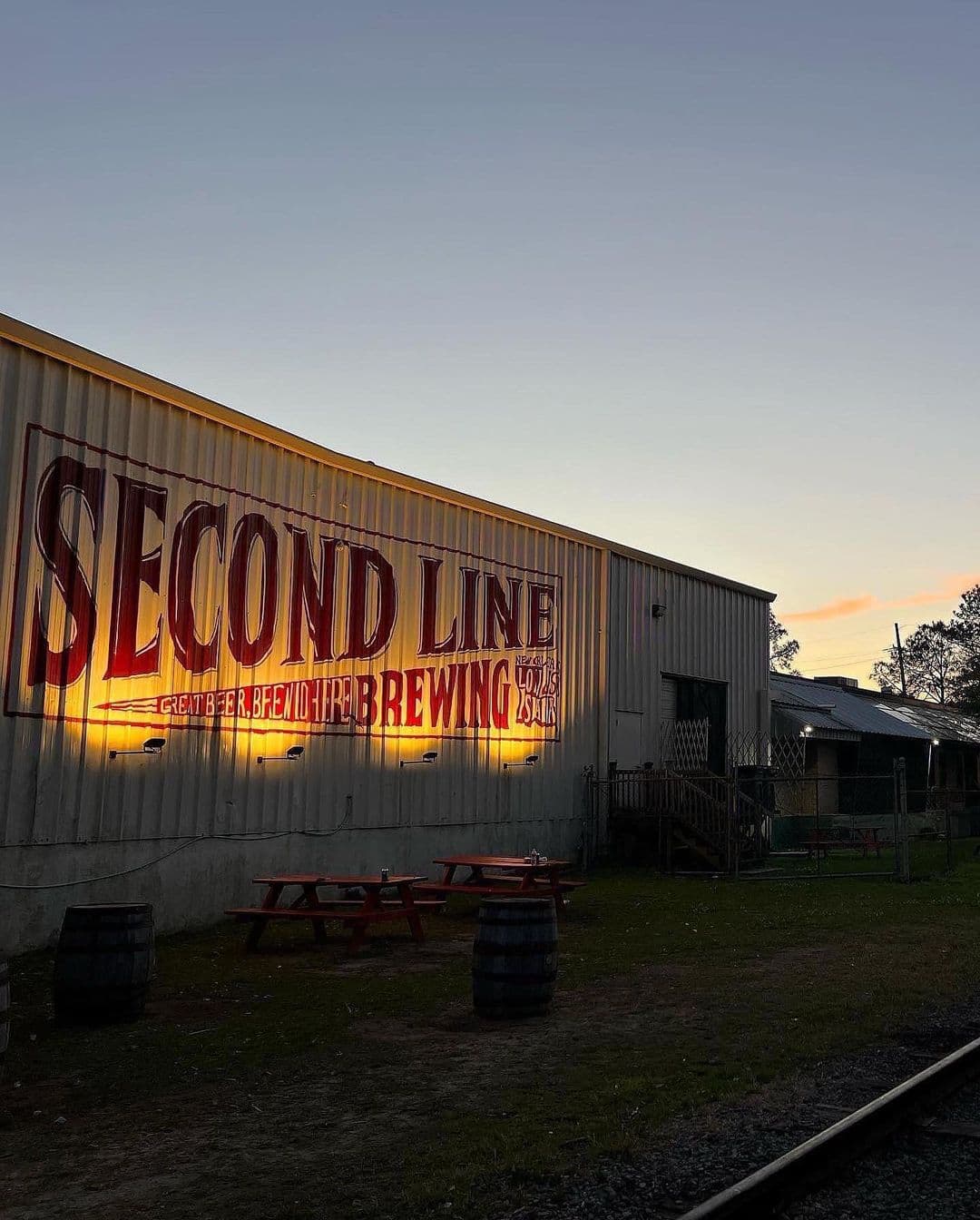
Yards Brewing Crafts Official Commemorative Lager for 2026 Craft Brewers Conference
Yards Brewing's official CBC lager uses only Spalter Select hops and Bestmalz Heidelberg malt, a SMaSH format that doubles as a quiet manifesto on where craft palates are heading in 2026.
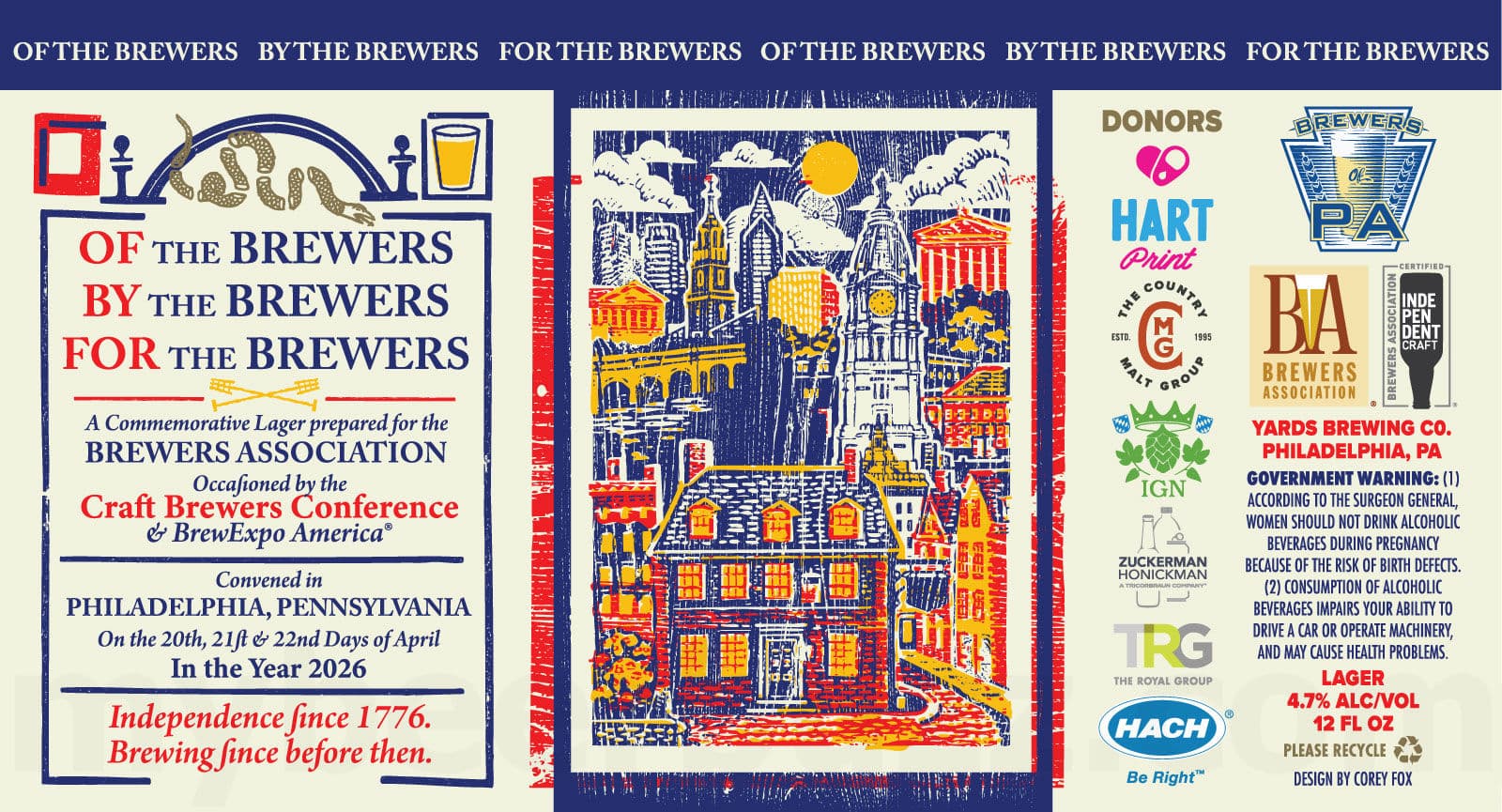
The Brewers Association's choice to build the official 2026 Craft Brewers Conference commemorative beer around a single malt and a single hop is not accidental minimalism. It's a statement. When the organization tapped Philadelphia's Yards Brewing Company to produce "Of the Brewers. By the Brewers. For the Brewers." at its Northern Liberties facility on 500 Spring Garden Street, the SMaSH format was already baked into the brief: a 4.7% ABV pale lager where every flaw in process or ingredient has nowhere to hide.
The name, lifted from Lincoln's Gettysburg Address, lands cleanly in a year when Philadelphia is marking America's 250th anniversary. Yards brewed the batch on February 27 alongside members of the Brewers of Pennsylvania, the state trade organization representing more than 300 member breweries, turning the brew day itself into a civic event. Every registered CBC attendee will receive a commemorative can when the conference opens April 20 at the Pennsylvania Convention Center; the general public can get in on first-come, first-served draft and package at the Yards taproom during CBC week, April 20-22.
The ingredient sourcing reads as an industry supply chain showcase in miniature. IGN Hopfen donated Spalter Select, a Bavarian noble-heritage cross of Spalt and Hallertau Mittelfrüh that delivers low alpha acid (roughly 3-6.5%), with floral, spicy, and lightly herbal character suited to a clean lager. The Country Malt Group supplied Bestmalz Heidelberg malt, a pale German two-row base known for high enzyme activity, low protein, and a gentle malt sweetness that keeps the grain bill luminous rather than doughy. Hart Print handled the can, using digital printing to render a woodblock-inspired design featuring a colonial-era tavern bracketed by Philadelphia landmarks. The label was built to push Hart Print's digital capabilities on texture and contrast within the woodblock visual language.
The SMaSH pale lager format is doing real cultural work in 2026. After several years of craft tap handles dominated by hazy double IPAs, pastry stouts, and adjunct-laden everything, the industry is visibly pivoting back toward technical lager brewing as the prestige flex. A clean pale lager with a single noble hop variety demands precise fermentation control and honest water chemistry; it exposes process gaps that a pound of Galaxy dry hops or a vanilla addition will happily mask. Choosing this format for the conference commemorative beer signals where a meaningful segment of serious craft brewers want to take the conversation.
<b>Clone It: Homebrewer's Sidebar</b>
Reverse-engineering this one at home is straightforward because there are no secrets. The grain bill is 100% Bestmalz Heidelberg malt, a pale base you can source from The Country Malt Group or most well-stocked homebrew suppliers. For a 5-gallon batch targeting 1.047 OG, plan on roughly 9-9.5 lbs. Mash at 149-150°F for 60 minutes to keep body dry and fermentable, which is what a 4.7% ABV finish requires.
Hops: Spalter Select, all the way through. At 3-6.5% alpha acid, you will use more of it by weight than you would a higher-alpha variety. A 60-minute bittering addition targeting 18-22 IBUs, with a small late addition at flameout or whirlpool for the floral, spicy top note, stays true to the style. Do not dry hop this beer. That is the point.
Fermentation is where the work lives. Pitch a clean German or Bohemian lager strain (White Labs WLP830, Wyeast 2124, or Fermentis W-34/70 rehydrated) at 48-50°F. Hold fermentation at 50°F until terminal gravity is approached, then run a diacetyl rest at 60-65°F for 48 hours. Cold crash to 32-34°F and lager for at least three weeks, ideally four to six. Rushing this step is the single most common mistake in homebrewed lagers.
Water profile: aim for soft, low-sulfate water similar to Munich or a Northern German profile. Target roughly 50 ppm calcium, 10 ppm sulfate, 60-70 ppm chloride, and 100 ppm bicarbonate. Philadelphia tap water leans moderately mineralized, so Yards likely treated down. If your local water is hard, a partial RO dilution plus a small calcium chloride addition gets you close.
The "official" status matters for sharing this one with your brew club. Yards brewed it. The Brewers Association sanctioned it. It will be poured in the Grand Hall of the Pennsylvania Convention Center on April 20. If your homebrew version is ready around the same time, you have a legitimate conversation starter.
This article was produced by Prism’s automated news system from verified source data, official records, and press releases, then run through automated quality and moderation checks before publishing. The system is built and supervised by the people who set the standards it runs under. Read our full AI policy.
Did this article answer your question?