12 Vet-Reviewed Essentials for Hiking With Dogs — Hepper publishes gear and safety guide (updated March 26, 2026)
When a high-drive dog hits the trail, a heat index above 75°F already puts most dogs at risk. Hepper's updated vet-reviewed checklist organizes the 12 kit essentials every handler needs.
A Border Collie or Vizsla that hasn't burned enough energy by noon will find its own outlet, and on a trail that usually means lunging at wildlife, blowing past recall, or running hard enough in summer heat to push body temperature above 104°F, the clinical threshold for heatstroke. Hepper's veterinarian-reviewed gear and safety guide, updated March 26, 2026, gives handlers of high-drive breeds a concrete 12-item checklist organized around the actual problems these dogs create in the backcountry. Here's what's on it, organized by the four hazards that sideline hyperenergetic dogs most often: pulling and terrain control, overheating, paw wear, and off-leash temptation.
The Share Hook: One Number to Screenshot
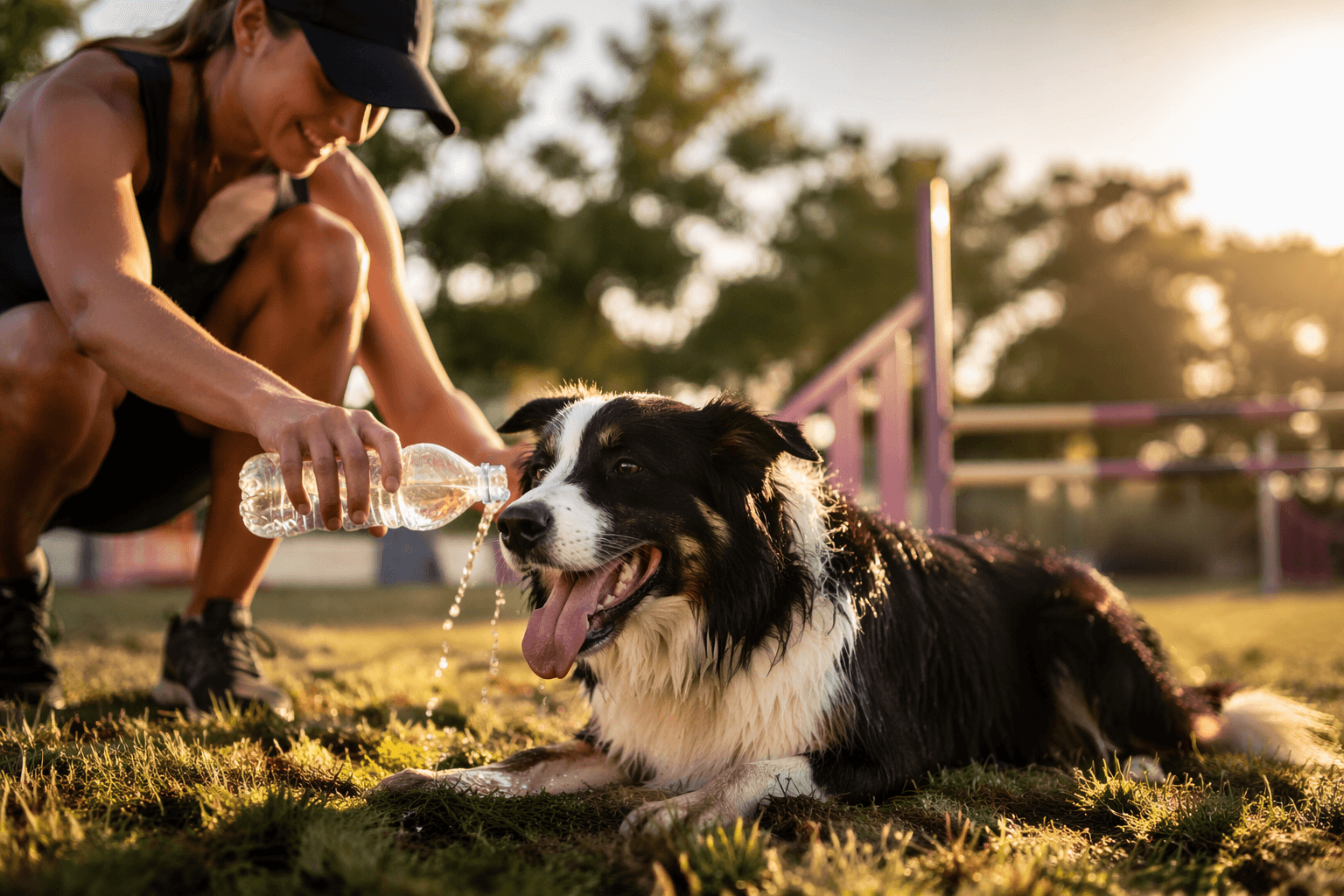
Before the gear list, pin this: a heat index above 75°F (24°C) already warrants caution for dogs on trail, and at 85°F or higher, especially with high humidity, conditions become risky for most dogs; above 100°F, it's best to postpone the hike entirely. For a high-drive dog pushing hard uphill, those numbers arrive faster than you think. A dog's normal body temperature sits between 100°F and 102.5°F; heatstroke sets in above 104°F, and unlike people, dogs don't sweat to cool down — they rely almost entirely on panting and limited sweating through their paw pads. Share that 75°F heat index number with your trail group before the weekend.
Problem 1: Pulling and Terrain Control
Essential 1: Sturdy Waterproof Leash
A leash for a tough hike needs to be waterproof and rugged enough to survive snagging on rocks or difficult surfaces, and it should fasten securely to a collar or harness. For high-drive dogs, "rugged" is not optional — a fraying webbing leash on a dog that goes taut every 30 seconds becomes a liability well before the summit.
Essential 2: Hands-Free Waist Leash
A waist leash fastens around your waist at one end and to the dog's collar or harness at the other, freeing your hands for carrying bags or keeping balance over tricky terrain; it should have at least one handle so you can shorten the line when the dog tries to pull toward wildlife. On switchbacks and scramble sections, having both hands free while still controlling a pulling dog is the difference between a manageable outing and a fall.
Essential 3: Padded Harness
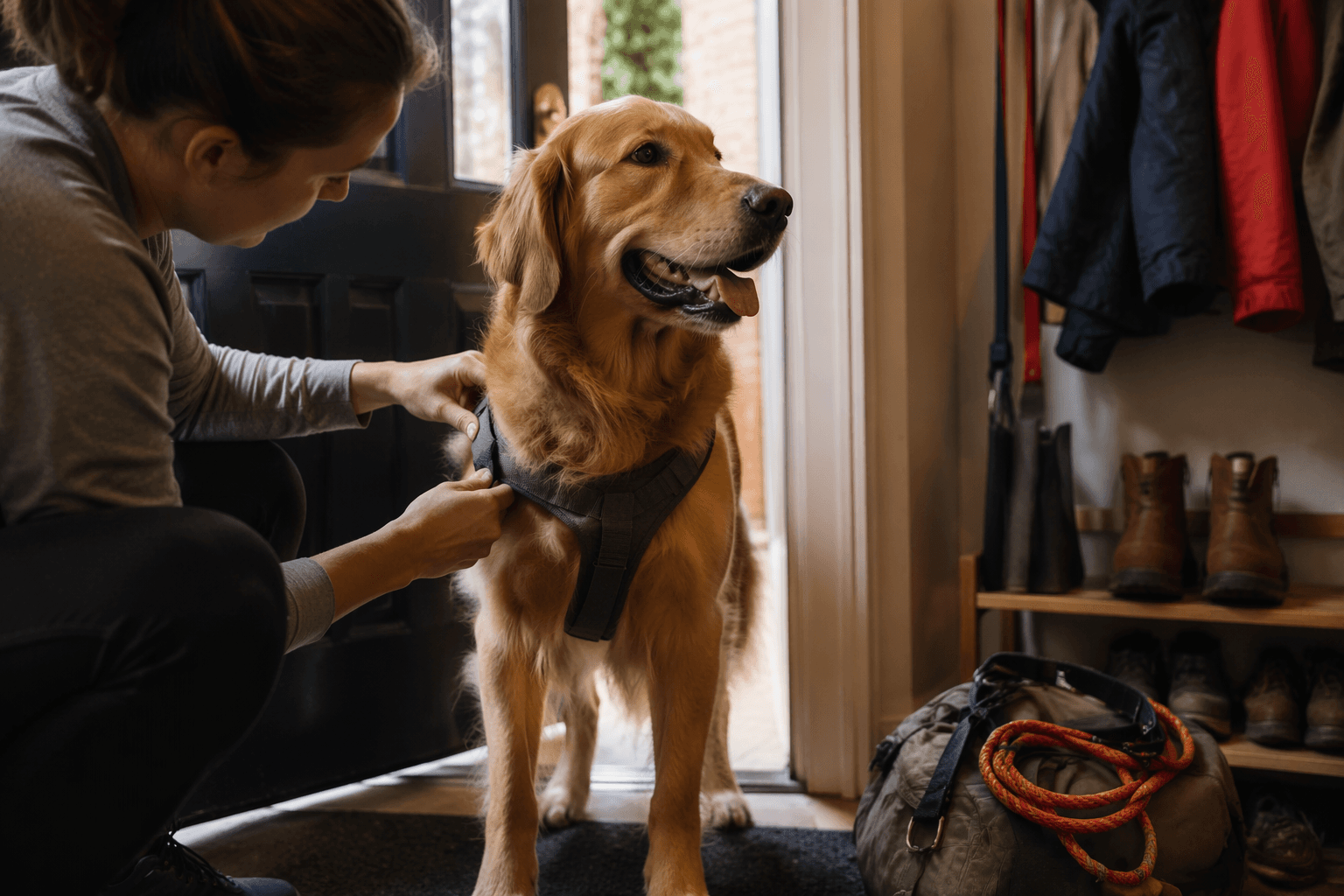
A harness spreads weight and pressure across the dog's whole body rather than concentrating it at the neck the way a collar does, making long hikes more comfortable. Reflective piping is a practical bonus for anyone finishing a long day in fading light. For dogs that pull habitually, a front-clip harness also gives handlers a steering advantage on steep or narrow stretches.
Problem 2: Overheating
Essential 4: Hot-Surface Avoidance Protocol
Hepper flags summer trail surfaces explicitly: avoid hiking in high heat on exposed rock or asphalt, both of which absorb and radiate heat well above ambient air temperature. Temperatures above 90°F are the most dangerous for trail hikes and increase the likelihood of heat-related problems including torn paw pads and overheating. High-drive breeds are especially vulnerable because they won't self-limit their effort, so the timing and surface of the hike is the handler's responsibility, not the dog's.
Essential 5: Water and Hydration Checks
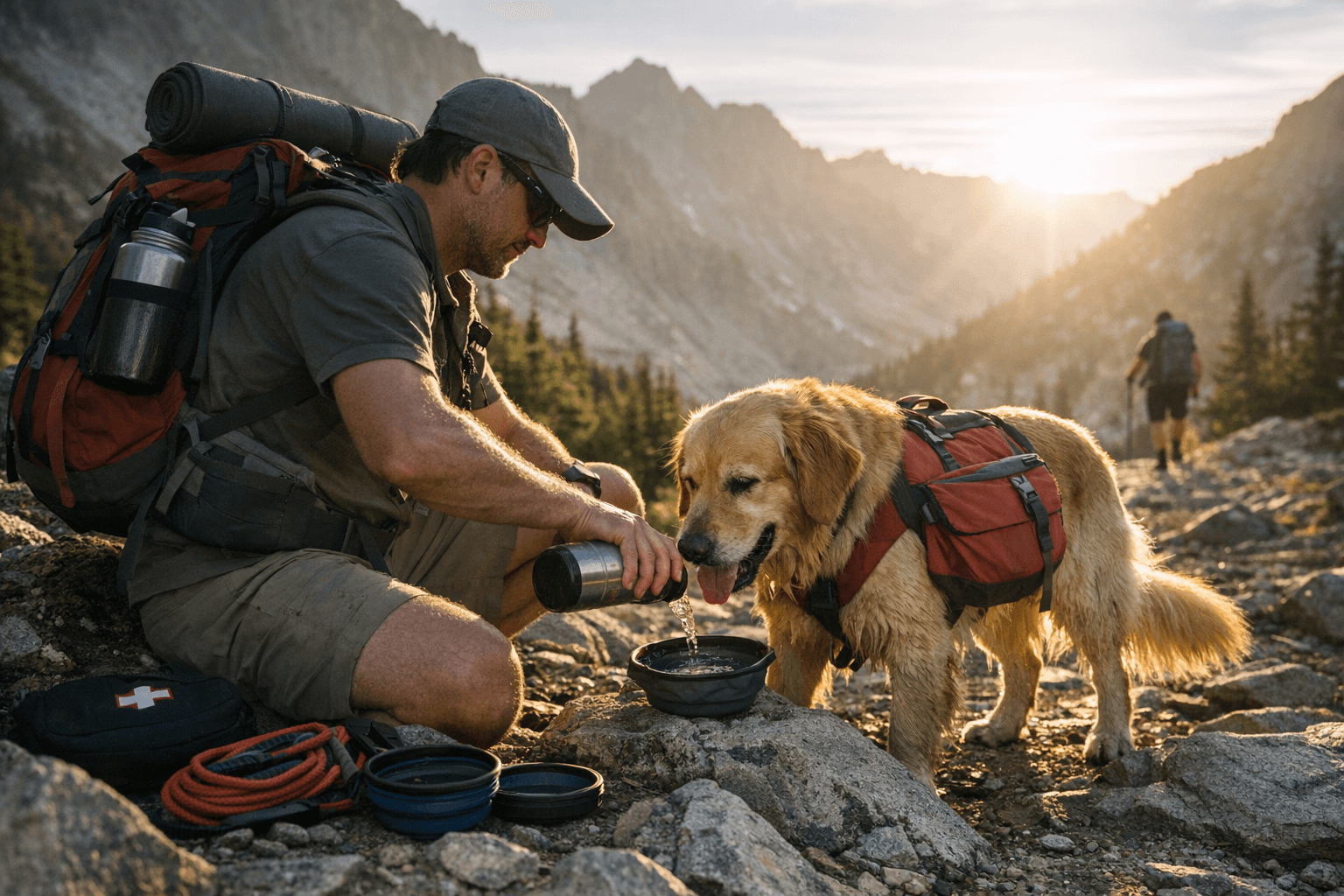
Hepper's pacing strategy pairs rest breaks directly with hydration checks and foot inspection. Collapsible bowls and a purpose-carried water supply are non-negotiable, and high-mileage days require more water than owners typically pack. A good rule is to hydrate the dog before it shows obvious thirst, not after, because a working dog's panting mechanism is already under load by the time visible distress appears.
Essential 6: Caloric Planning for Long Days
A dog's energy demands climb significantly on trail days, and caloric planning is as important as water planning for multi-hour outings. Hepper recommends factoring in daily mileage when calculating food portions for trail days, and for dogs carrying their own packs, calorie needs go up further. The guide advises adding weighted packs only after the dog has a base of trail fitness and explicit vet approval, so that the extra metabolic load doesn't arrive before the cardiovascular system is ready for it.
Problem 3: Paw Wear
Essential 7: Dog Booties
Booties can protect a dog's paws in icy or abrasive trail conditions. For hyperenergetic dogs, paw wear accumulates faster than it does for casual trail dogs, because a high-drive animal is rarely trotting at a measured pace; it's sprinting, pivoting, and covering rough ground hard. Hepper includes booties as a comfort essential rather than a luxury, which is the right framing for any breed doing serious mileage. The trade-off is acclimation time: most dogs need multiple short sessions at home to move naturally in booties before they're functional trail gear.
Essential 8: Foot Inspection Routine
Pacing strategies in the guide include foot inspection as a formal rest-break checklist item. On abrasive granite or trail debris, paw pad damage can go unnoticed when a motivated dog pushes through discomfort. Building inspection into every scheduled break, especially the first two stops of any hike, catches small cuts and embedded debris before they become multi-day problems.
Problem 4: Off-Leash Temptation
Essential 9: ID, Microchip, and GPS Collar
Even a chipped and tagged dog can get hopelessly lost in the backcountry with no one nearby to find the ID collar or scan the chip; a GPS tracker like the Tractive GPS Tracker for Dogs lets owners track location in real time via smartphone. For high-drive dogs, this isn't a worst-case accessory; it's routine kit. A reactive dog that spots a deer and disappears into dense vegetation has done so before the handler's recall command is even out.
Essential 10: Whistle and High-Value Recall Treats
Hepper recommends carrying a whistle and short training treats to maintain reliable recall under trail distraction. For high-arousal breeds, distraction-proofed recall is built in training sessions at home over weeks, but a whistle carries further than a voice command, and high-value treats (not the everyday kibble variety) give the handler a competing motivator against a squirrel or another dog. Neither substitutes for pre-trail training, but both are practical insurance.
Problem 5: Health, Hygiene, and Environmental Ethics
Essential 11: Canine First-Aid Kit
Hepper lists a canine first-aid kit as a core safety essential, not an add-on. For a dog covering serious mileage on rough terrain, the realistic list of trail injuries includes paw lacerations, minor sprains, eye debris, and insect bites. A purpose-built kit typically includes wound wash, bandaging, tweezers, and emergency wrap. Knowing how to use it matters as much as packing it, so veterinarians increasingly recommend a brief canine first-aid refresher before any multi-day trip.
Essential 12: Parasite Prevention and Bio-Secure Waste Removal
Trail exposure raises the risk of ticks, fleas, mosquitoes, and soil-borne pathogens; a thorough pre-hike parasite prevention plan and immediate post-hike inspection to remove pests are both recommended. Bio-secure waste bags are equally non-negotiable: Hepper ties proper waste removal directly to Leave No Trace ethics and trail access preservation. Pack out everything, and do a full tick check within two hours of leaving the trail.
Pack List in 90 Seconds
Before you leave the trailhead, run this:
- Waterproof leash: clipped and tested
- Waist leash: adjusted to your hip width, handle accessible
- Padded harness: fitted, no chafing points
- Check the heat index: above 75°F, plan shade and extra water stops; above 85°F with humidity, reconsider the route
- Water: more than you think, bowl accessible
- High-calorie trail food portioned for today's mileage
- Booties: packed or worn depending on surface
- ID tag readable, microchip registered, GPS charged
- Whistle: around your neck, not in the bag
- High-value recall treats: vest pocket, not buried in the pack
- First-aid kit: not at the bottom of the bag
- Parasite preventive: applied before departure, full-body inspection scheduled for after
Before You Go at All
The guide draws a firm line on who should not hike: puppies with open growth plates, older dogs with arthritis, brachycephalic breeds sensitive to heat, and dogs with cardiac or respiratory disease. Veterinary clearance is recommended before beginning any high-mileage plan, and the conditioning build-up follows a specific arc: short walk-and-play intervals first, incremental daily mileage increases, incline walks and stair repeats to build load-bearing capacity, and weighted packs only at the end of that progression. Abrupt distance increases skip the physiological adaptation that makes the difference between a dog that thrives on trail and one that breaks down in the first season.
For the high-drive breeds in this community — the Belgian Malinois, the Weimaraner, the Border Collie logging 40 laps in the backyard before breakfast — trail hiking done right is one of the few activities that actually satisfies the engine. Hepper's updated checklist is a solid baseline for making sure the gear and the preparation match the dog's output.
This article was produced by Prism’s automated news system from verified source data, official records, and press releases, then run through automated quality and moderation checks before publishing. The system is built and supervised by the people who set the standards it runs under. Read our full AI policy.
Did this article answer your question?