60 Minutes Highlights Dog Aging Project Tracking 50,000 Canines Nationwide
Anderson Cooper brought the Dog Aging Project to millions on 60 Minutes, featuring CSU researchers studying canine dementia in 50,000+ dogs whose brains mirror our own.
Pat Schultz enrolled her 12-year-old German shepherd-poodle mix, Murphy, in the Dog Aging Project while her husband was declining from Alzheimer's disease. The project her dog was participating in aimed to advance research into both canine and human aging, and Murphy is one of more than 50,000 dogs now enrolled. It was exactly the kind of personal, high-stakes story that anchored the March 22 broadcast of CBS's 60 Minutes, when correspondent Anderson Cooper devoted the program's closing segment to the Dog Aging Project and the researchers working to understand why dogs, like people, lose their minds as they age.
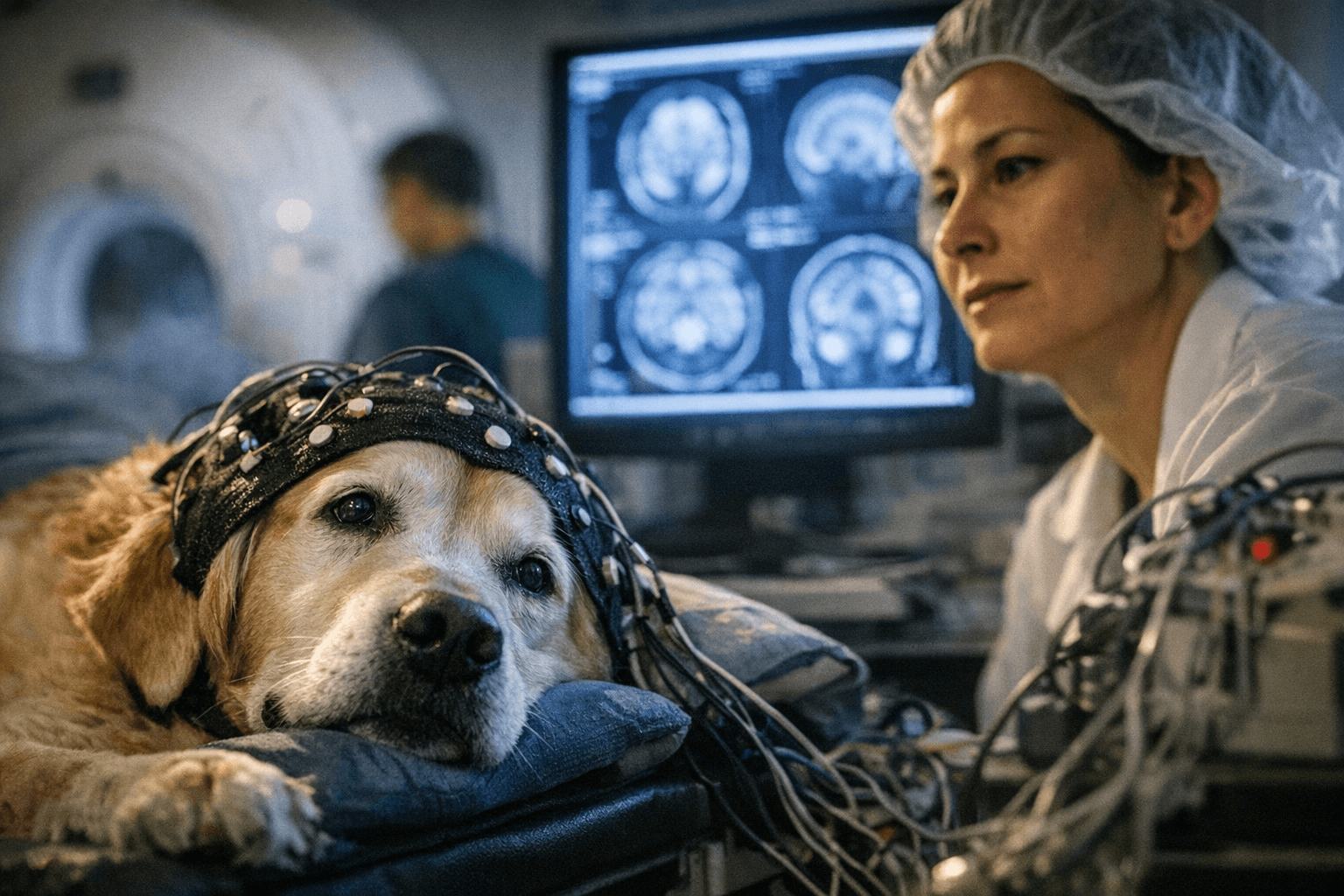
The Dog Aging Project is one of the most ambitious studies of its kind, involving more than 50,000 dogs across the United States. Scientists around the country collect data on dogs' diets and exercise, analyze blood samples, and do MRIs of dogs' brains. The project seeks to understand how genes, lifestyle, and environment influence health and aging, with a focus on six scientific domains: health, genetics, environment, lifestyle, cognition, and activity.
Two Colorado State University researchers were central to the broadcast: veterinary neurologist Stephanie McGrath, who told 60 Minutes that dogs suffer from many of the same aging-related diseases as humans, and because they age more rapidly than humans, scientists can learn a lot from studying them. Dr. Julie Moreno, a neurotoxicologist and fellow associate professor at CSU's College of Veterinary Medicine and Biomedical Sciences, was also featured. Moreno helped conduct a pilot study of the drug rapamycin with 12 dogs, all showing signs of dementia.
The segment made the case for dogs as biological stand-ins for human patients in a way that was hard to dismiss. Dog brains, like human brains, have a frontal lobe, temporal lobe, and occipital lobe, the same basic shape as the human brain, and dementia changes brain size and structure in very similar ways in both species. Dr. Dirk Keene, a neuropathologist who has studied human brains for 20 years looking for causes of Alzheimer's, works alongside the vets and researchers in the project; his motivation for joining was watching his mother suffer from Alzheimer's and seeing his own dog Spring decline from what looked like the same disease.
The CSU Brain Health Study is part of the larger, NIH-funded Dog Aging Project, and its national television moment was not lost on CSU's leadership. "There is so much to be learned by interdisciplinary research, as illustrated by the collaborative work of Drs. Moreno and McGrath, and we are thrilled that the work received national attention on 60 Minutes," said Dr. Sue VandeWoude, dean of CSU's College of Veterinary Medicine and Biomedical Sciences.
The project, in addition to helping dogs live healthier lives as they age, is also looking at increasing life expectancy; researchers are testing the drug rapamycin. For owners of high-energy, active dogs already attuned to the links between exercise, cognition, and longevity, the project's finding carries particular weight: active dogs are less likely to develop dementia, and social interaction is also beneficial for dogs' cognitive function.
Owners voluntarily enroll their pets, providing detailed information about health, diet, activity, and living conditions. The project represents citizen science at a scale the dog world has never seen before, and with 50,000 animals already contributing data, the answers it generates may reshape how we think about aging on both sides of the leash.
Know something we missed? Have a correction or additional information?
Submit a Tip