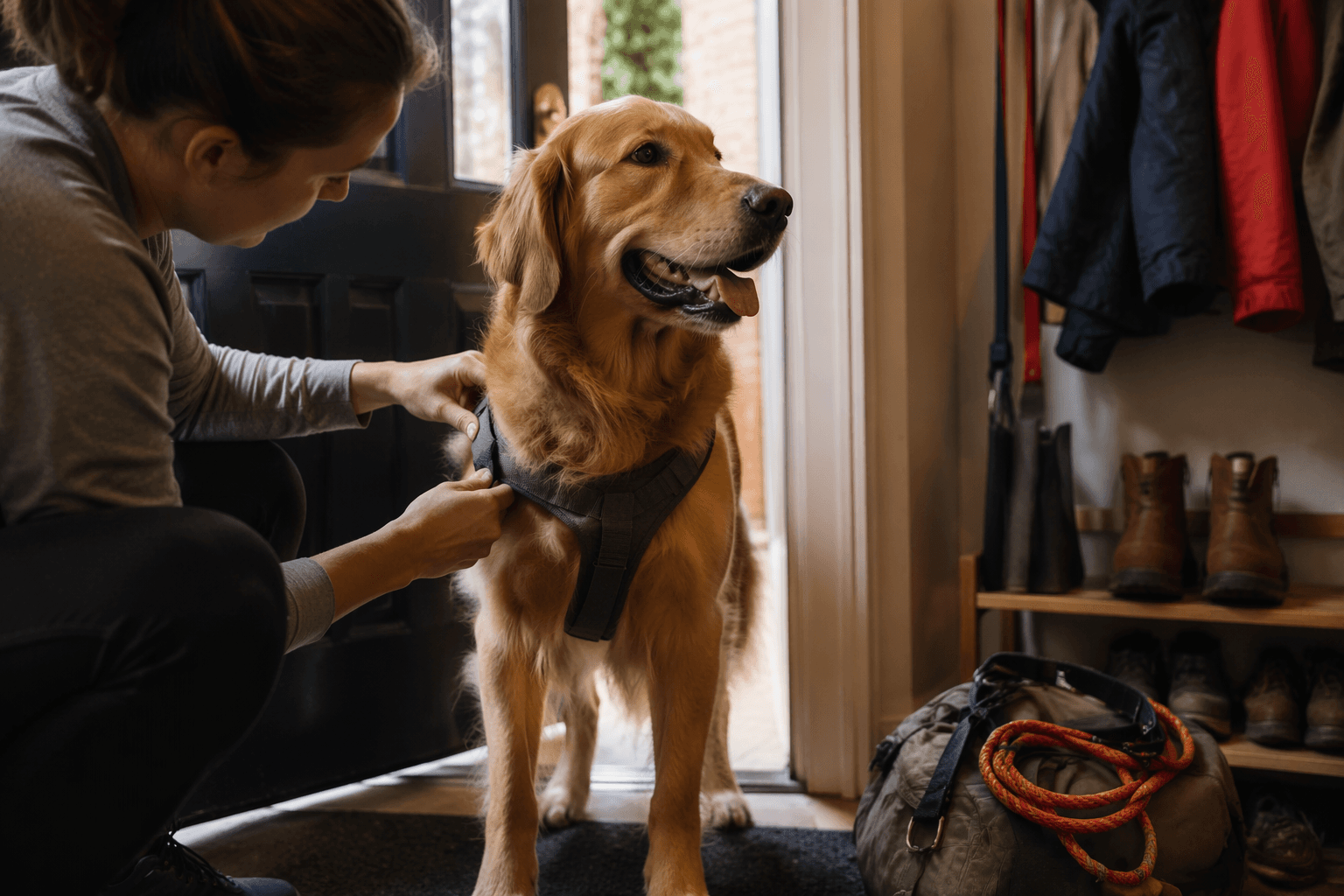
Calming collars may ease anxiety in active, sensitive dogs
Calming collars can help some anxious, high-drive dogs, but the evidence says they are a tool, not a cure. The right match depends on the trigger: noise, separation stress, or post-activity overarousal.

The promise and the limits
Calming collars look appealing because they seem like the simplest answer in a house with a frantic, sensitive dog. Dogster’s latest roundup leans into that reality, framing these products as a middle-ground option for dogs with disruptive anxiety that may not need prescription medication but still need more than good intentions and a long walk. The catch is that calming collars do not work the same way for every dog, and that matters when the real issue is stress, not just excess energy.
That is why the buyer-beware angle is so important. For some dogs, a collar may take the edge off enough to make training possible. For others, it may only mask a dog that actually needs more exercise, decompression, behavior work, or veterinary help. If your dog’s anxiety is severe, persistent, or tied to a specific trigger, the collar should be treated as one piece of a larger plan, not the whole plan.
What the evidence actually shows
The science behind pheromone-based calming products is mixed, and owners should know that before they buy. A 2010 systematic review from the American Veterinary Medical Association found only one study with enough evidence to support dog-appeasing pheromone for reducing fear or anxiety during training. Six other studies came up short for noise phobia, travel-related problems, fear or anxiety in the veterinary clinic, and stress- and fear-related behavior in shelter dogs.
Still, there are individual studies that point in a more hopeful direction. A randomized controlled clinical trial looked at 45 puppies between 12 and 15 weeks old and tested dog-appeasing pheromone’s effect on fear, anxiety, training, and socialization. Another placebo-controlled study examined 24 beagle dogs in a thunderstorm simulation model and found that a DAP collar reduced sound-induced fear and anxiety. More recently, a triple-blind, placebo-controlled crossover study tested a synthetic dog-appeasing pheromone gel in 28 dogs during veterinary visits, showing that the category continues to be explored in clinical settings.
That mix of mixed review data and promising individual trials is exactly why collars should be read as situational tools. They may help in controlled or predictable stress cases, but the broader literature does not support the idea that they solve anxiety across the board.
How the main products differ in practice
Dogster’s roundup is useful because it does not treat all calming collars as interchangeable. ThunderEase is highlighted as best overall, Sentry Good Behavior as best value, ZENIDOG as the long-acting option, ALZOO as the plant-based choice, and VETALITY Harmony as another pheromone-focused product. That spread matters because the right collar depends on whether you need duration, ingredient profile, or a simple entry point for a nervous dog.
Some collars are odorless to humans, which can be a relief if you live with one or more dogs and do not want a scent hanging in the house. Some are waterproof, which makes them more practical for dogs that swim, get muddy, or live an active outdoor life. Others are built to last for weeks or even months, which can make the difference between a product you actually use consistently and one that gets forgotten after a few days.
Match the collar to the problem, not the personality
Separation stress is the first place many owners look for help, but it is also where expectations can go wrong fast. A collar may help create a calmer baseline, especially if the dog’s distress is mild or early-stage, but a dog that panics when left alone usually needs a fuller separation plan. In those cases, alone-time training, gradual departures, and a safer home setup matter just as much as any collar.
Noise sensitivity is the use case with the clearest support in the notes. The thunderstorm simulation study with 24 beagle dogs suggests that a DAP collar can reduce sound-induced fear and anxiety, which makes it a reasonable option for dogs that melt down during fireworks, storms, or other sharp noises. Even there, though, the collar is best seen as support during a known trigger, not as proof that the dog’s overall anxiety has been solved.
Overarousal after activity is a different problem entirely. If your dog comes off a walk, play session, or training burst still unable to settle, the issue may be arousal regulation, not anxiety in the narrow pheromone sense. That is where a calming collar is often the wrong first tool, because the dog may need structured decompression, better pacing, impulse control work, and fewer adrenaline spikes before you reach for a product.
Why ZENIDOG’s long-acting pitch stands out
The 2022 Zenidog study gives owners a concrete reason to think about duration. In that paper, Zenidog was described as a three-month collar, while the matching Zenidog diffusing gel lasted two months, and the study noted that most competing reference pheromone devices typically lasted about one month. For owners who dislike constant replacements, that longer coverage is not just a marketing line, it is a practical advantage.
The study also focused on dogs showing signs of stress in everyday situations, which helps explain why long-acting collars appeal to people trying to manage chronic low-grade tension rather than a single emergency event. That is a meaningful distinction. A collar that lasts longer may be more useful for the dog who needs steady background support, but it still is not a substitute for training if the dog is reactive, under-exercised, or living in a stressful routine.
When a calming collar is the wrong tool
A collar is the wrong tool when the dog’s problem is actually unmet physical and mental needs. Hyper dogs that are bouncing off the walls, chewing out of boredom, or escalating because they never learn how to settle may look “anxious,” but the fix is often more structure, more decompression, and more training. If the dog’s behavior improves only when exhausted, the issue is probably not being solved by pheromones.
It is also the wrong tool when anxiety is severe enough to interfere with daily life or safety. The AVMA review is a reminder that the evidence for many common stress problems is thin, especially outside training and some specific fear contexts. In those cases, a veterinarian or behavior professional can help decide whether medication, behavior modification, or a different management plan makes more sense than relying on a collar alone.
The best read on calming collars is simple: they may ease anxiety in active, sensitive dogs, but only when the problem fits the product. For a noise-reactive dog, a long-acting pheromone collar can be a smart part of the kit. For a dog that needs more exercise, decompression, or training, it is a side tool, not the answer.
This article was produced by Prism’s automated news system from verified source data, official records, and press releases, then run through automated quality and moderation checks before publishing. The system is built and supervised by the people who set the standards it runs under. Read our full AI policy.
Did this article answer your question?