Survey finds many pet owners see anxiety, depression in dogs
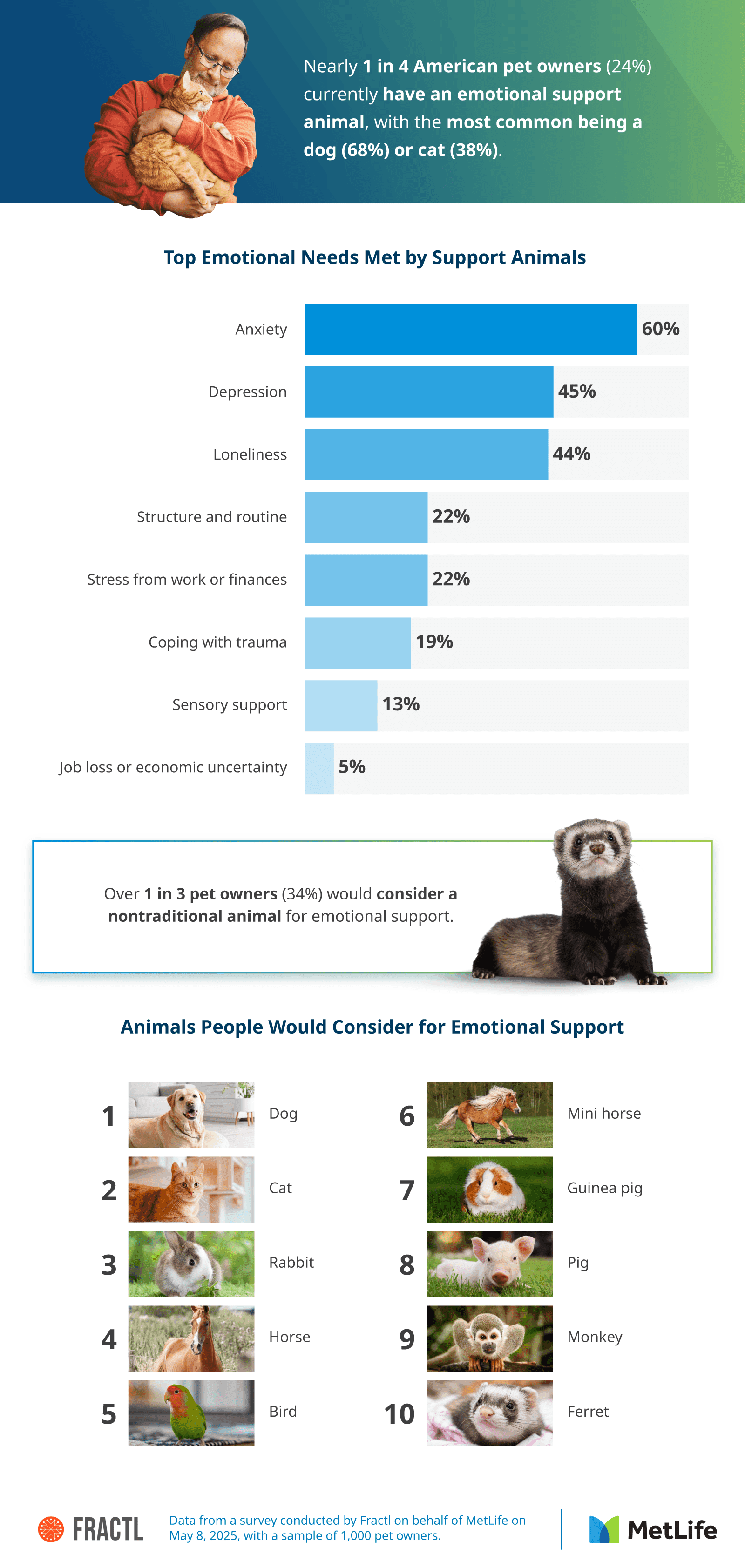
Nearly half of 1,000 pet-owning families said their dogs or cats had shown depression, and 89% said they had seen anxiety.
A dog that paces, shivers or falls apart the second you grab your keys is not always “too much dog.” Sometimes the behavior is the message, and MetLife’s survey work says a lot of pet owners are now reading it that way.
Fractl surveyed 1,000 American pet-owning families for MetLife on May 8, 2025, and found that 48% believed their dogs or cats had experienced depression while 89% believed they had experienced anxiety. For the hyperenergetic-dog crowd, that matters because restlessness is easy to misread. A dog that seems wound tight, clingy or annoying may not just be under-stimulated or acting out. It may be showing emotional strain that needs a closer look.
The behavior signs owners most often recognized lined up with what veterinarians see in anxious dogs. Separation anxiety topped the list, followed by trembling or shaking, excessive vocalization, pacing or restlessness, and excessive grooming. Cornell University College of Veterinary Medicine says dogs with separation anxiety may whine, howl, bark, pace, soil the house or destroy items after a guardian leaves. The ASPCA calls separation anxiety one of the most common behavior issues pet parents encounter with dogs, while VCA Animal Hospitals says anxious dogs and cats may pace, fidget, freeze, hide or flee.
That overlap between emotional distress and ordinary dog chaos is where owners get tripped up. A dog that tears around the house, refuses to settle or starts shredding bedding is not automatically bored. It could be routine stress, a change in the household, or a deeper anxiety issue. American Animal Hospital Association guidance says depression in pets is not as well understood as it is in humans, and many veterinarians prefer the term “depressive behaviors” because animals cannot explain what they feel.
The survey also pointed to a generational split. Gen Z pet parents said they felt especially confident reading their pets’ emotions, but they also admitted they were more likely than older owners to confuse emotional problems with physical ones. That makes observation more important than gut instinct. Pattern matters more than one bad afternoon, especially with active dogs whose energy can mask shutdown or frustration.
The bigger picture is ugly if the signs get missed. Peer-reviewed AVMA literature has put separation anxiety in about 14% to 20% of dogs, and AVMA has also said behavior problems are a major, often overlooked reason pets are relinquished. Human Animal Support Services says behavior is a leading cause of returns, and the median time out of shelter for animals returned for nuisance behavior is just 3 days. For dogs that bounce off the walls, the hard part is knowing when to add more activity and when the real fix is emotional support.
This article was produced by Prism’s automated news system from verified source data, official records, and press releases, then run through automated quality and moderation checks before publishing. The system is built and supervised by the people who set the standards it runs under. Read our full AI policy.
Did this article answer your question?