Church’s Chicken to pay $2,000 after refusing veteran’s service dog
A Warner Robins Church’s Chicken must pay $2,000 after a veteran was told to remove a service dog from the dining room. The deal also forces training and a new service-animal policy.
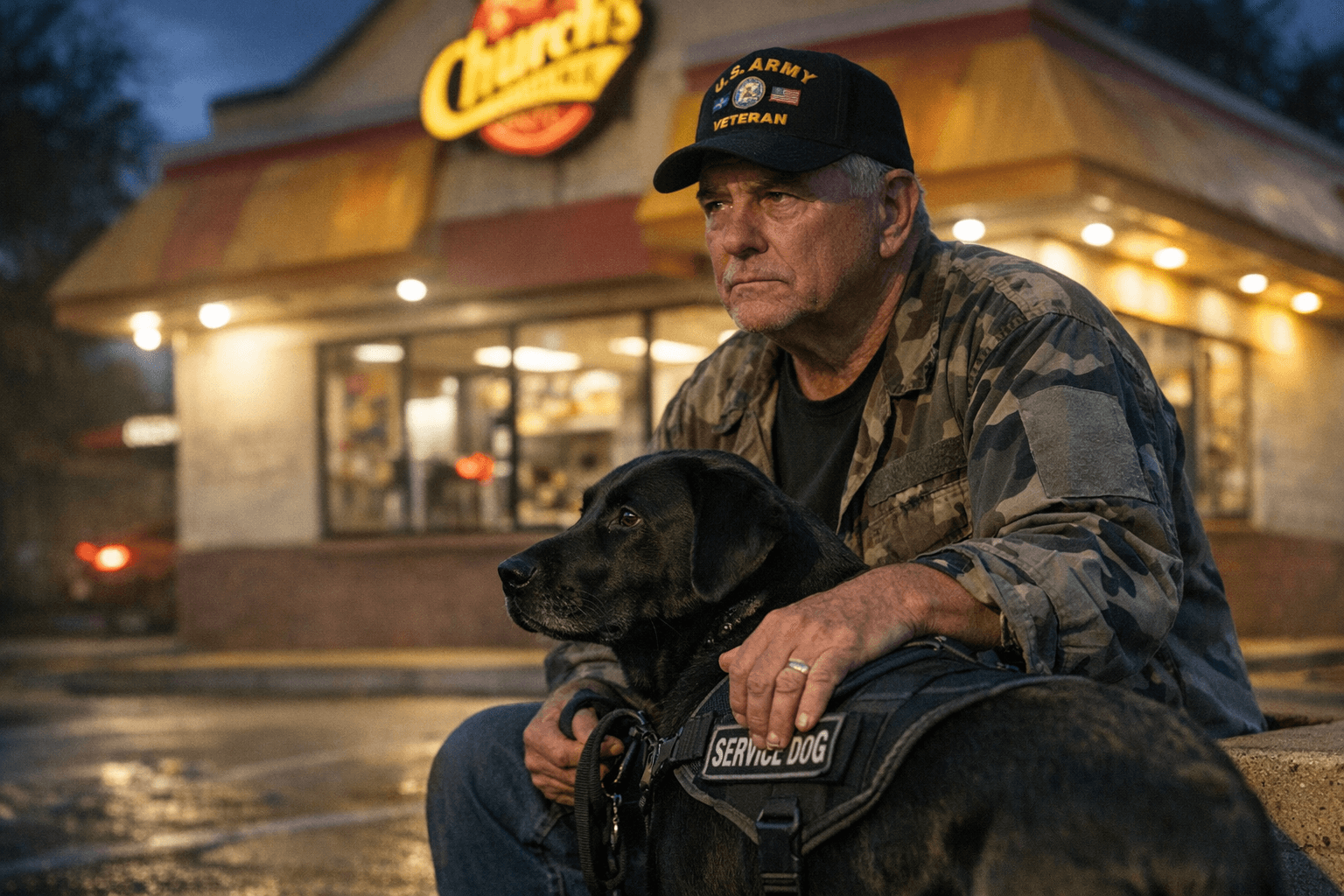
A veteran and a service dog were turned away from a Church’s Chicken on Watson Boulevard in Warner Robins, and the fix now comes with a price tag: a $2,000 civil penalty. The case turned a routine fast-food stop into a clear ADA enforcement example, with the restaurant chain also required to change how employees handle service animals going forward.
The U.S. Attorney’s Office for the Middle District of Georgia said the resolution involved Askar Management Group, QSR Group Holdings, LLC, and QSR Southern Group, LLC, the entities identified as the owners and operators of Church’s Chicken #749 at 1801 Watson Boulevard. The matter grew out of a complaint filed by a veteran, who said a restaurant employee refused service unless the dog was removed from the premises.
That refusal is exactly what federal disability law is designed to prevent. Under ADA guidance, service animals are dogs trained to perform tasks related to a disability, and public businesses generally must make room for them even when a no-pets rule is in place. The Justice Department says businesses usually may ask only two questions when it is not obvious whether a dog is a service animal: whether the dog is required because of a disability, and what work or task the dog has been trained to perform.
The rules also cut through two common mistakes that still trip up staff. Service dogs do not need certification, and they do not need to wear a vest. Emotional support animals and comfort animals are not treated the same way under the ADA, which is why a business cannot use a blanket pet policy to shut out a working dog that is doing a job for a person with a disability.
The settlement goes beyond the fine. Along with paying the $2,000 civil penalty, the franchisee agreed to adopt and enforce a service-animal policy and train employees and managers so the same mistake does not happen again. That matters in the real world, where a single front-counter decision can become a civil-rights violation in seconds. For businesses, the message is blunt: if a dog is performing a service role, the door stays open, and the staff has to know the law before the customer ever reaches the register.
Know something we missed? Have a correction or additional information?
Submit a Tip