High-Drive Dogs Showcase Elite Bitework Skills in Intense Training Session
Celine Tails' April 9 bitework session captures elite working-dog control in action, and raises the questions every high-drive dog owner should ask before seeking it out.
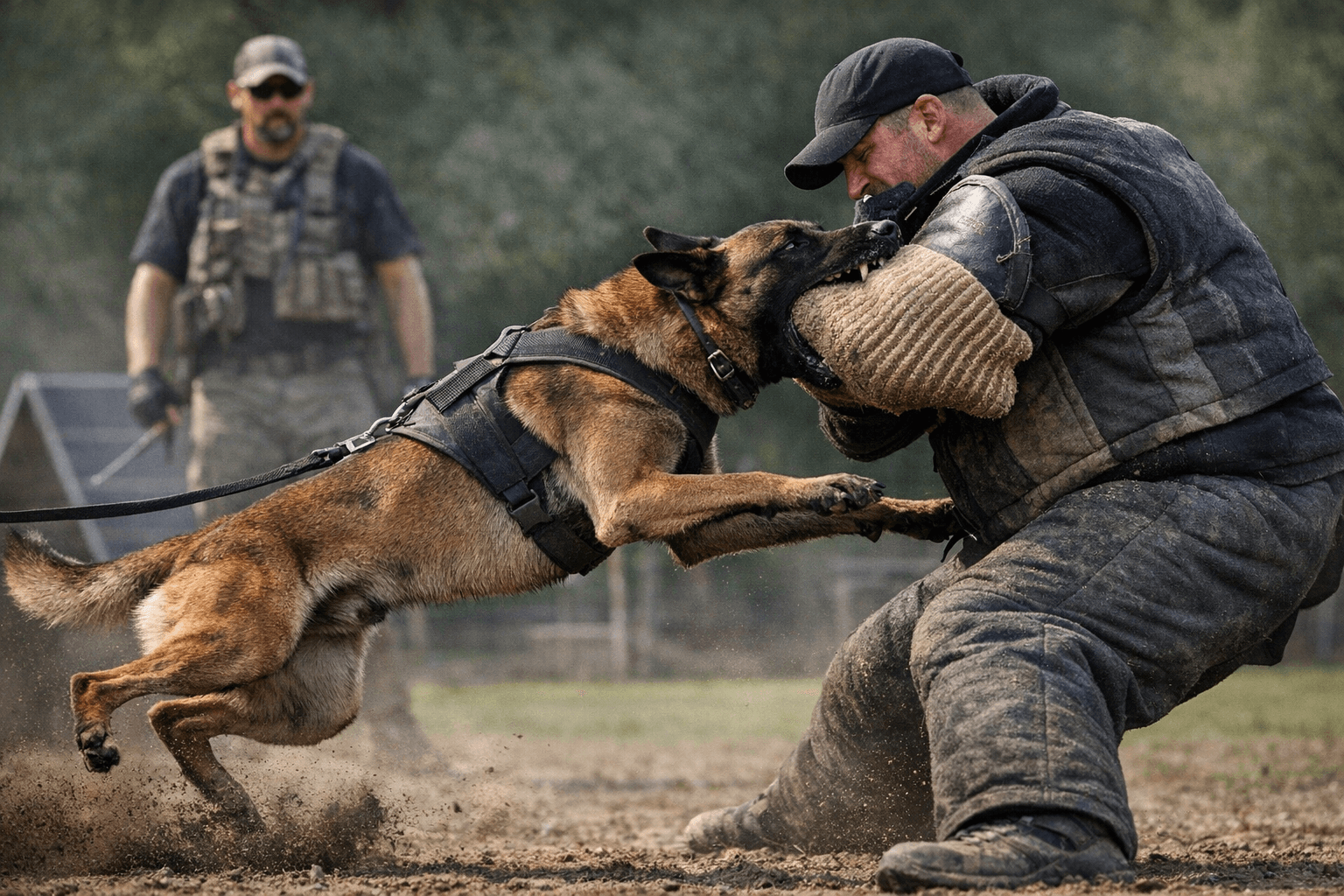
Celine Tails' footage from April 9 shows something that will make a lot of casual dog owners uncomfortable before they understand what they're actually watching. Multiple working dogs launch off the line in explosive bursts, lock onto protective sleeves with targeted grip precision, and cycle through directional cues mid-sequence alongside certified decoys in full body protection equipment. The session was intense by any measure.
But intensity isn't the story. Control is.
What distinguishes sport and working bitework from actual dog aggression comes down to a handful of observable markers, and this clip demonstrates them consistently. Watch for obedience between reps: a dog that sits, holds, or heels calmly between drive sequences is showing the foundation the entire enterprise rests on. Watch for clean outs: when the dog releases the sleeve on verbal command without the handler wrestling it free, that's the behavior separating a trained protection athlete from a liability. Watch for handler neutrality: the trainer isn't agitated or reactive, because the dog is responding to trained cues, not emotional escalation. Those three markers appear throughout the footage.
The padded sleeves and full decoy suits aren't theater, either. Progressive conditioning means dogs build drive and grip work against equipment designed specifically to prevent injury to both the animal and the training partner. Responsible practitioners layer in gradual desensitization protocols and veterinary monitoring across a progression that extends well beyond what any short clip can capture.
That context matters because the footage surfaced on MSN's video aggregation feed, reaching a mainstream audience with no framework for what they're watching. A Belgian Malinois or Dutch Shepherd in a full bite sequence reads as dangerous to most people who don't follow protection sports. Observed through the criteria of an IGP trial or law enforcement K-9 evaluation, the same dog reads as a finely conditioned working athlete performing exactly as trained.
Before seeking out local protection training programs after a clip like this, the questions worth asking are specific: Does the trainer hold credentials through a recognized body such as the United Schutzhund Clubs of America or a sanctioned Mondio Ring organization? Is the decoy certified? Has the dog undergone formal temperament evaluation before any sleeve work began? What does the arousal-management protocol look like between sessions, and how is aftercare handled when a dog has been pushed this hard physically?
These aren't gatekeeping questions. They're the difference between a dog that performs controlled bitework as a competitive sport and a dog that gets labeled dangerous because someone skipped the foundational work.
Protection sport enrollment has historically spiked after high-visibility video content lands on mainstream platforms, and Celine Tails' session is precisely the kind of footage that drives that pattern. The dogs in the clip earned every rep they took.
This article was produced by Prism’s automated news system from verified source data, official records, and press releases, then run through automated quality and moderation checks before publishing. The system is built and supervised by the people who set the standards it runs under. Read our full AI policy.
Did this article answer your question?