Yonkers Police Mourn Cali, Department's First Bloodhound K-9, After Decade of Service
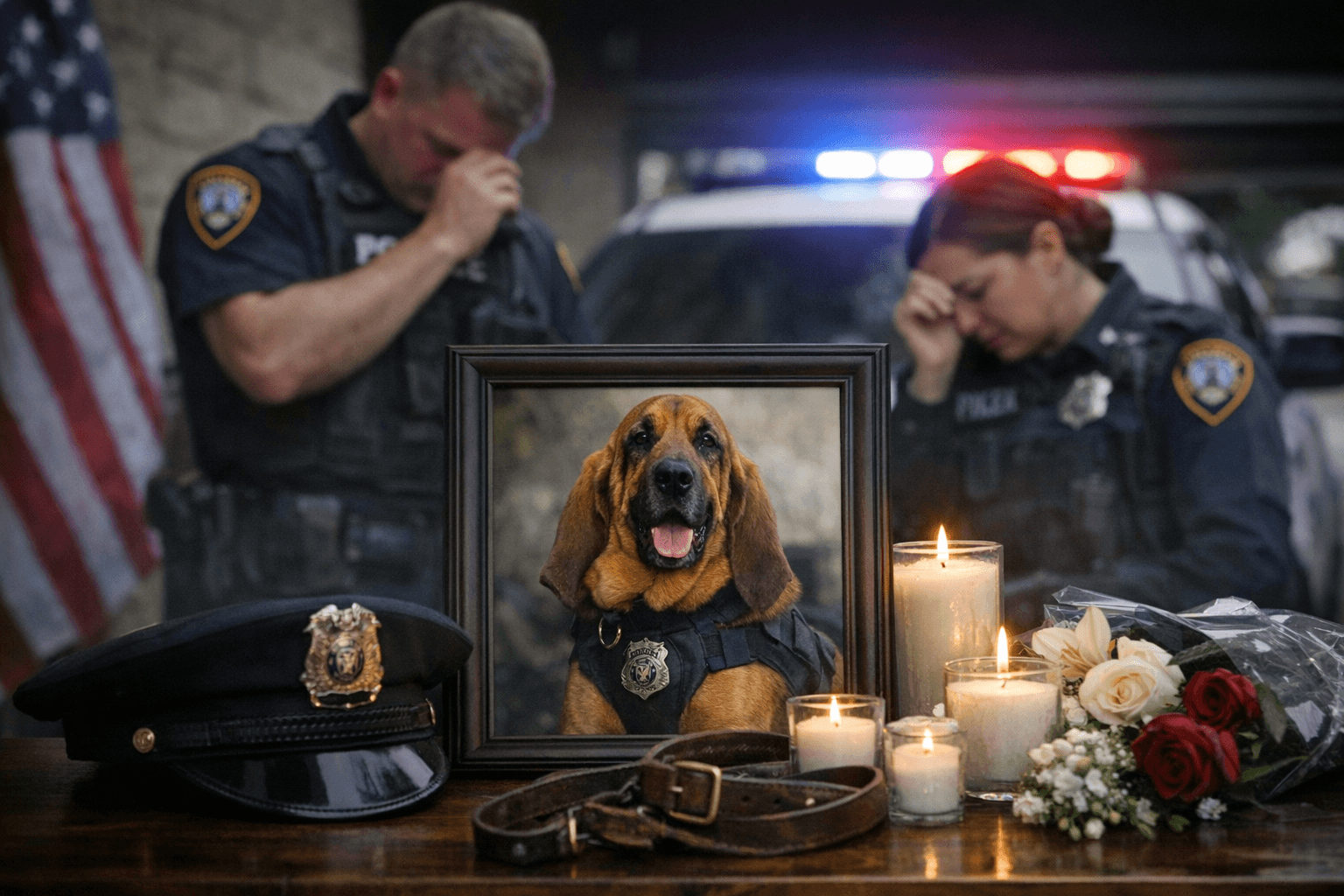
Cali, the Yonkers Police Department's first bloodhound K-9, died April 6 at roughly ten years of age, leaving no clear successor for a rare scent-trailing capability she built from scratch.
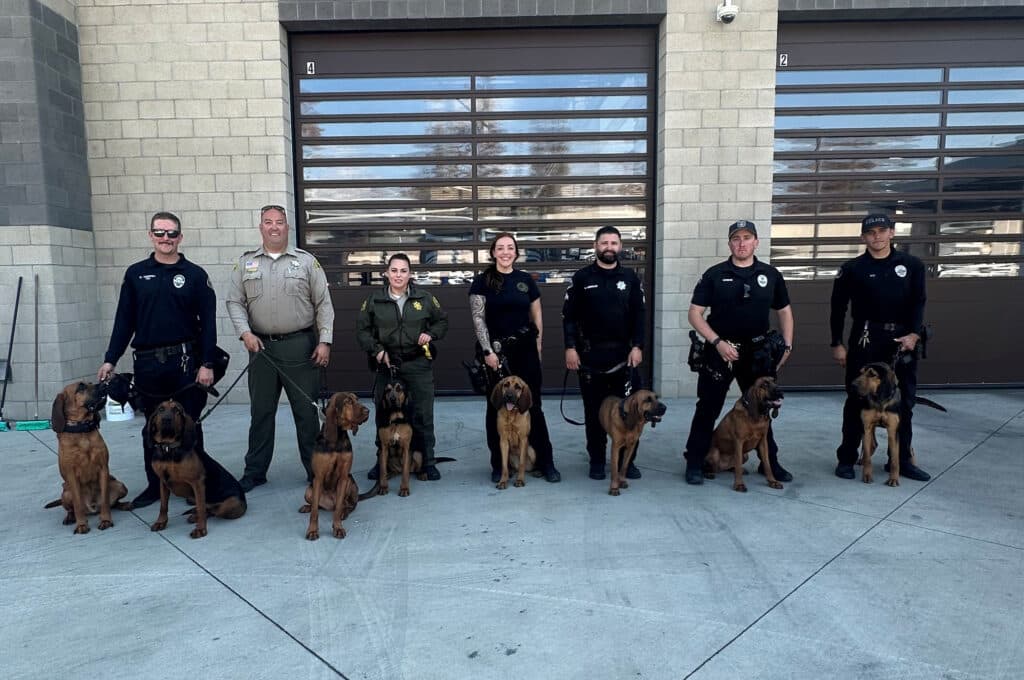
Cali spent her career pressing her wrinkled muzzle to the ground through Yonkers neighborhoods, following trails no human nose could find while Officer Robert Ascolillo worked the lead behind her. The Yonkers Police Department's first bloodhound K-9 died April 6, 2026, nearly a decade after Parson-DiSalvo Insurance Company donated her to the force in 2016.
The department announced her passing the following day, describing her in a social media statement as "more than a working dog" and "a loyal partner and a beloved member of our Department and community." She had retired from active duty in August 2023 after more than six years on the job, but remained with her department family until the end.
During those active years, Cali located missing people, assisted on criminal investigations, and showed up at schools and community events where she became a fixture for Yonkers residents who might never otherwise encounter a police K-9 up close. For a department that had no bloodhound capability before she arrived, her career represented a genuine operational leap: scent-discriminate trailing, the ability to follow a specific human's scent through urban terrain on tracks that may be hours old, is a tool most municipal K-9 units simply don't carry.
What sustained a dog like Cali through seven demanding field years is worth understanding if you work or train a high-drive scent hound. The bloodhound's barrel chest is not cosmetic; it delivers the sustained oxygen load required for hours of ground-scenting across pavement, through intersections, and over terrain that strips scent faster than open woodland. Trailing teams build that cardiovascular base deliberately, logging long distance work on varied surfaces well before a real deployment demands it. Patrol dogs from other programs often hit a functional wall at around four hours of active search; a conditioned bloodhound can work successful trails that are 50 hours old.
Joint load is the other side of that equation. Large-bone scent hounds working miles of concrete accumulate stress on hips and elbows that compounds across a career. The management approach that serious working-dog programs follow consistently includes glucosamine and chondroitin for structural support, omega-3 supplementation to control inflammation, and rotating high-impact surface work with water sessions. Swimming builds the muscular conditioning without the pavement stress, and for a dog whose core temperature climbs fast during intense trailing work, particularly in summer heat, it doubles as a recovery and cooling tool.
The nosework itself is not separate from the dog's wellbeing; it is central to it. Bloodhounds carry centuries of selection pressure toward exactly this task, and a dog without a structured job becomes a dog in distress. Cali's community appearances, the school visits and outreach demonstrations, gave her what any structured scent work provides: novel environments, new scent profiles, and the same core cognitive engagement as a field search. For sport-nosework handlers running intense dogs at home, that principle carries over directly.
Replacing Cali will not be simple. Scent-discriminate bloodhounds trained to law enforcement standards are rare and expensive, and rebuilding a handler partnership from scratch takes time that agencies without dedicated K-9 budgets struggle to find. The Yonkers Police Department has not announced plans for a successor.
What nearly ten years of Cali produced was both a working asset and a public identity for a department that had neither before 2016. That combination, operational capability paired with genuine community trust, is the standard every K-9 program should be built around.
This article was produced by Prism’s automated news system from verified source data, official records, and press releases, then run through automated quality and moderation checks before publishing. The system is built and supervised by the people who set the standards it runs under. Read our full AI policy.
Did this article answer your question?