Labrador Retriever nutrition guide helps owners balance energy and portions
Labs can look starving after every game of fetch, but the real win is keeping energy high without letting portions creep. The fix is measured meals, strict treat math, and body-condition checks.
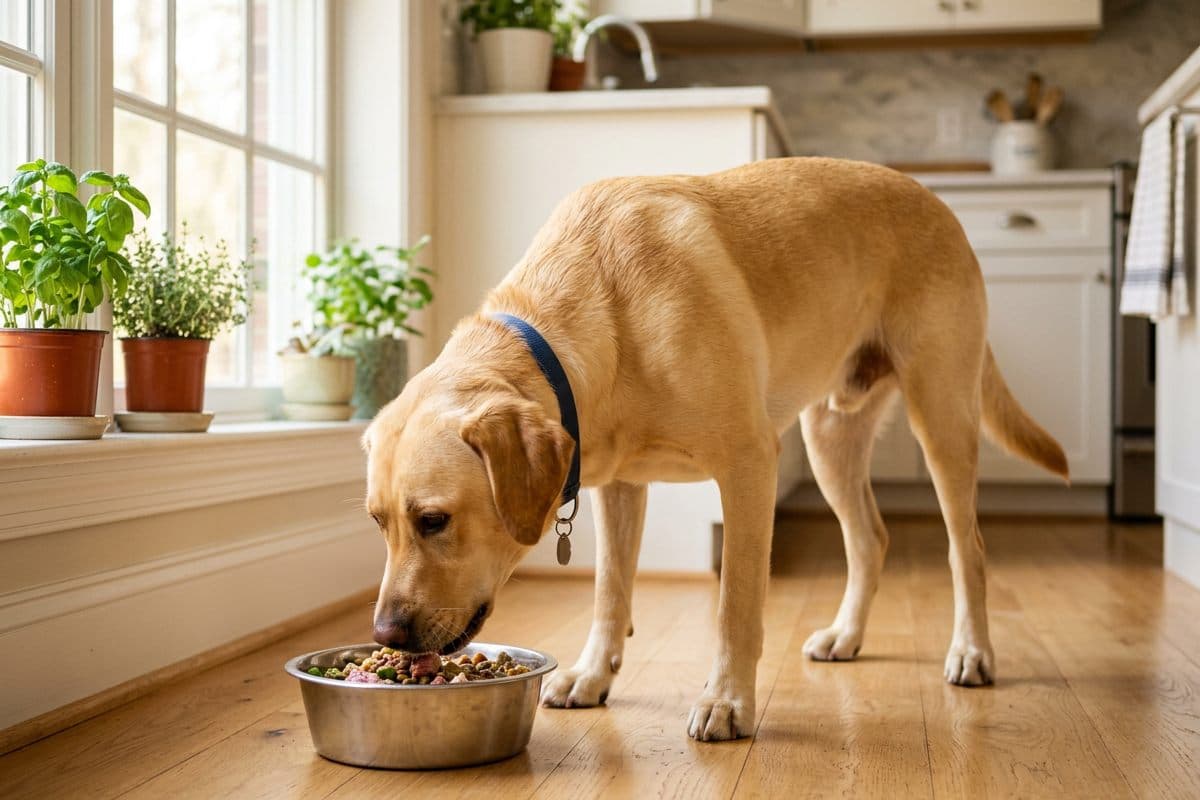
More than 60% of Labradors are overweight or obese, a problem that starts easily when portions are guessed, treats pile up, or a second pet’s food becomes fair game. A Labrador Retriever can act as if every bowl is the best event of the day, and that appetite is part of the breed’s charm. For high-energy Labs, the challenge is matching calories to the dog in front of you, on this couch, after this walk, this hunt, or this training session.
Start with the dog, not the bag
The American Animal Hospital Association’s 2021 nutrition and weight management guidelines call for a nutritional assessment that includes both body condition score and muscle condition score. A dog can look busy and still carry extra fat, or look lean while losing muscle if the diet is off. The same AAHA guidance is blunt about prevention: it is easier to prevent weight gain than to treat obesity later.
Labrador appetite also has a biological component. The University of Cambridge has linked an obesity-associated genetic mutation to about a quarter of Labradors.
Active Labs and sedentary Labs should not eat the same way
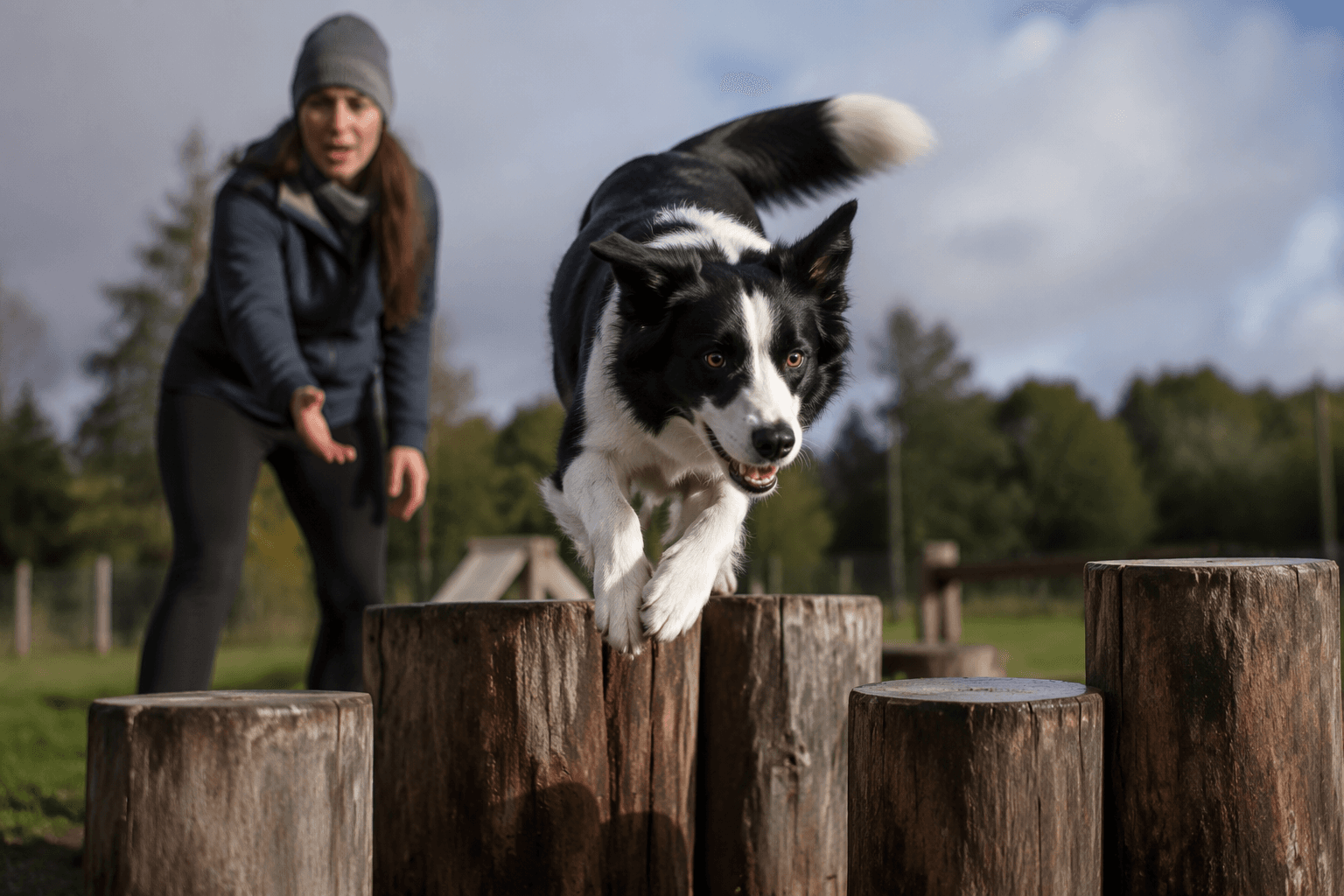
Active dogs have distinct nutritional needs, a point reflected in Cornell University College of Veterinary Medicine guidance on performance dogs. A Labrador that spends the day on the couch does not need the same calorie intake as one that is hiking, hunting, running agility, or tearing through long fetch sessions. Visible enthusiasm is not the same thing as useful energy expenditure, and plenty of Labs can burn through a morning of play while still taking in more calories than they use.
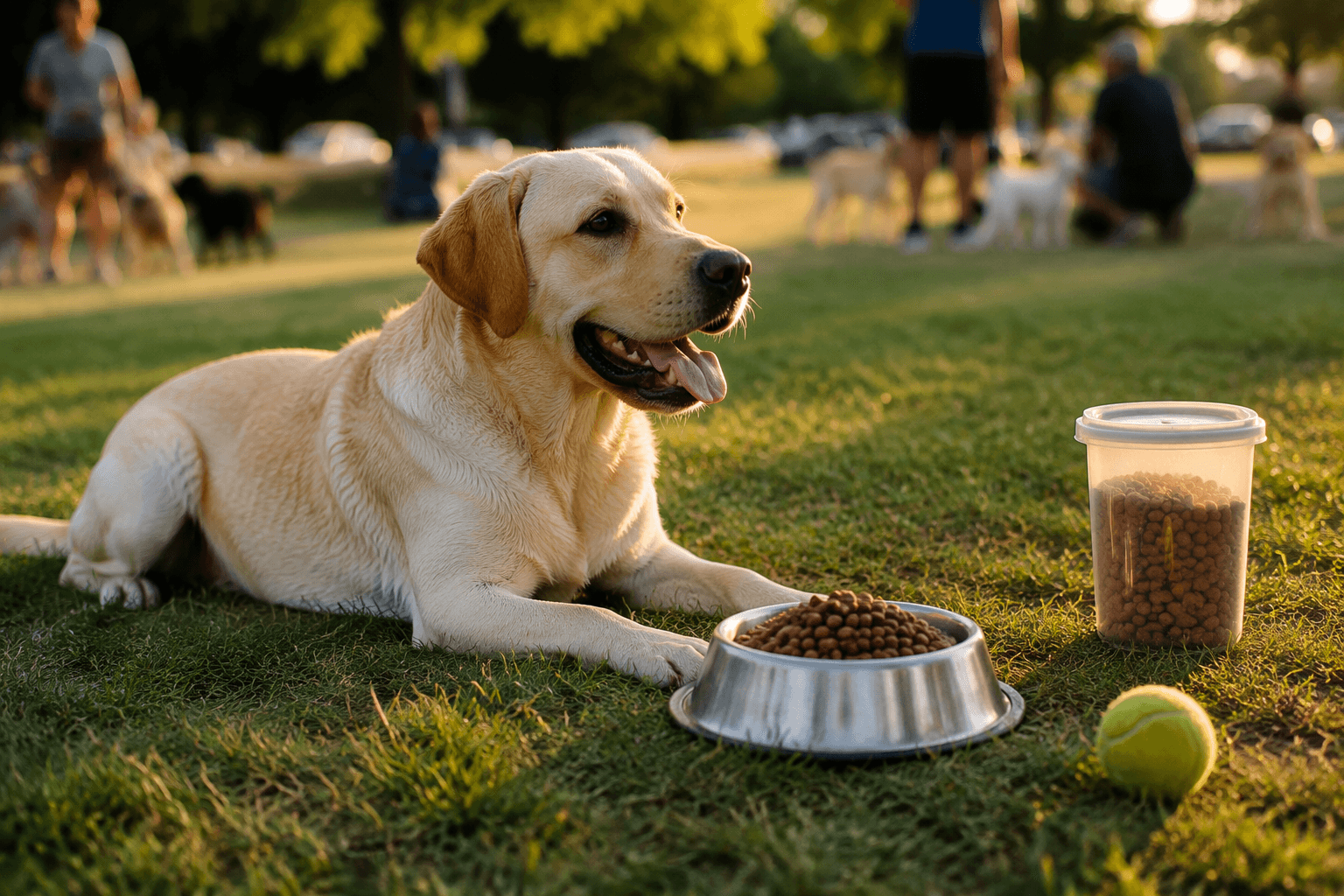
The practical decision is to feed for workload, not for vibe. If your dog is a true weekend athlete, portions need to reflect that activity. If the dog’s week is mostly short walks and indoor lounging, the calories need to come down even if the tail still thumps like a metronome at dinner time.
Treats are where a lot of Labs quietly go over budget
AAHA lists a few common obesity risk factors that matter especially for food-driven breeds: too many treats, defined as more than 10% of the diet, overfeeding the primary diet, and eating another pet’s food. Labs are excellent at discovering every loophole in the household feeding system, which is why “just this once” treats turn into a habit faster than owners expect.
The easiest correction is to treat snacks as part of the total daily ration, not as a bonus category. Measure meal portions instead of free-feeding, and use small treats strategically during training so the dog can earn reinforcement without blowing past calorie targets. If there are multiple pets in the house, separate bowls and feeding times matter as much as the main diet itself.
- Measure meals every time instead of eyeballing the scoop
- Count training treats as real calories, not invisible rewards
- Keep dog food and cat food out of easy reach
- Use part of the daily kibble for training sessions when possible
When protein, stamina, and joint support become more important
A Labrador bred to retrieve for long hours in difficult conditions has different demands from a low-activity house dog. The American Kennel Club recognized the Labrador Retriever in 1917, and the breed standard describes a strongly built, medium-sized retrieving dog with sound, athletic, well-balanced conformation, built to function as a retrieving gun dog. That working background is why some Labs need food that supports stamina, recovery, and the demands of repeated movement, not just satiety.
For dogs that spend real time running, hiking, hunting, or competing, the point is not simply to feed less or more, but to keep the dog in shape for the work. Muscle condition becomes as important as the number on the scale. A dog that is carrying excess weight may struggle to move efficiently, while one that is underfed for activity can lose the physical reserve needed to stay strong through a long training block or outdoor season.
Food motivation is a behavior issue as much as a nutrition issue
A 2025 American Journal of Veterinary Research study of Dog Aging Project participants found that food motivation and owner feeding-management practices are associated with overweight. The breed’s enthusiasm for food is famous, but the real lever is the person holding the bowl. The dog may be driven to eat; the household decides whether that drive becomes a healthy routine or a slow creep into excess weight.
That is why the smartest Labrador feeding plans look boring from the outside. The dog still gets reward food during training and the calories needed for an active life, but meals are measured, treat counts are tracked, and body condition is checked regularly.
This article was produced by Prism’s automated news system from verified source data, official records, and press releases, then run through automated quality and moderation checks before publishing. The system is built and supervised by the people who set the standards it runs under. Read our full AI policy.
Did this article answer your question?