Walk safety guide urges better gear for energetic dogs
The safest walk starts before the door opens: fit the gear, scan the route, and stop pulling before it becomes the dog's default.
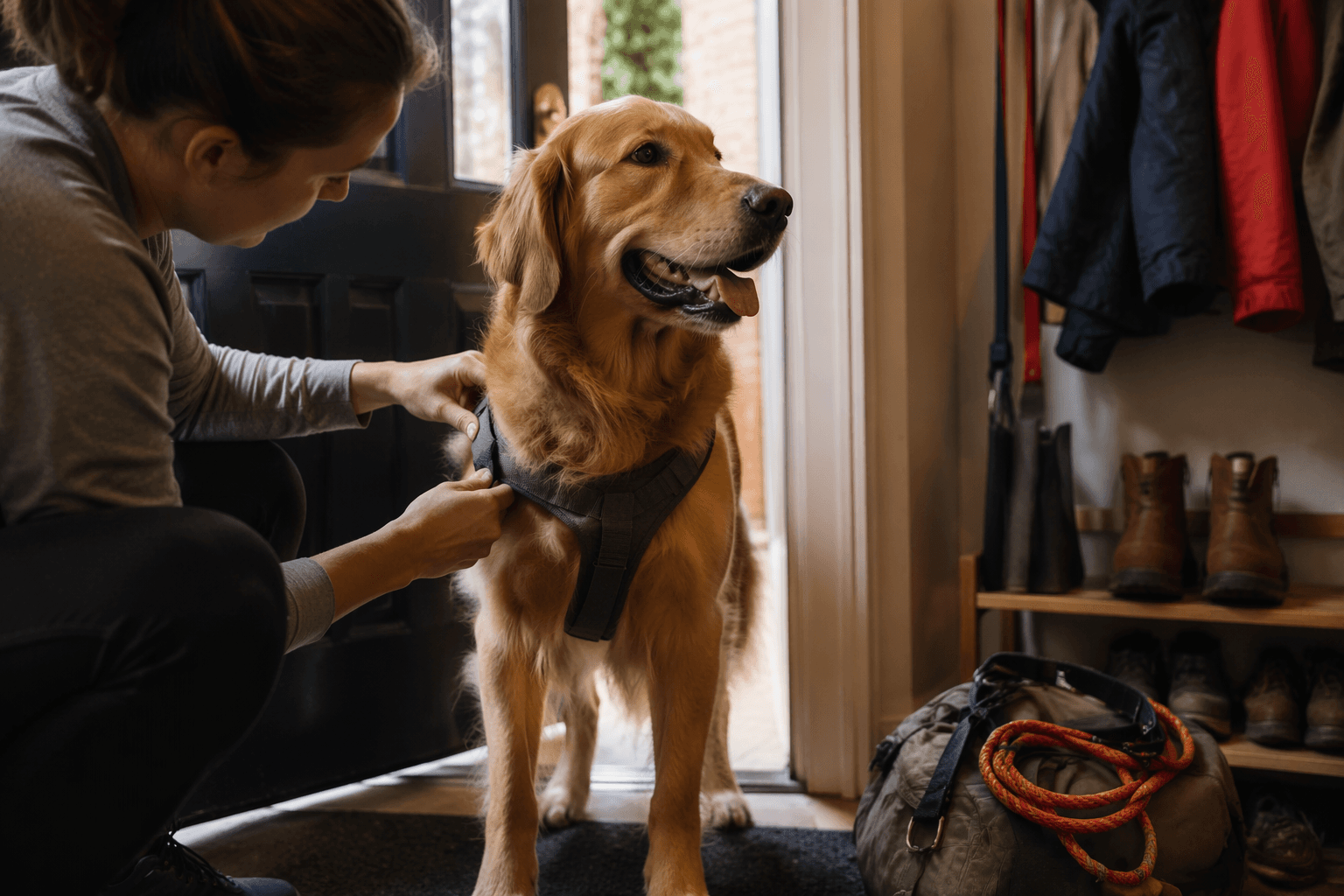
A squirrel bolting across the sidewalk or a loose dog appearing from behind a parked car can turn a daily walk into chaos in seconds. For a hyper dog, the walk is the main energy-management session of the day, so safety and behavior have to travel together: the route, the leash setup, and the way you handle surprises shape whether the walk decompresses your dog or rehearses chaos.
Start with the dog, not the habit
The smartest walking plan begins with a veterinarian, not with whatever leash happened to be closest to the door. Make sure your dog is healthy enough for exercise and that the routine fits the pet’s health needs, because the right amount of movement for one dog can be too much for another.
That same thinking applies to identification. Dogs should wear ID tags with up-to-date owner information. The American Veterinary Medical Association and AAHA both recommend current owner contact information on collar tags and current microchip details, while American Humane calls for all cats and dogs to wear collars with ID tags, rabies vaccination tags, and city or county licenses where applicable. A tag helps in the moment while a microchip acts as backup if a collar slips.
Pick gear that matches the dog in front of you
For energetic dogs, the hardware matters as much as the route. Collars, harnesses, leashes, buckles, clips, and fit all affect what happens when a distraction appears suddenly. A multi-point harness is often a strong choice because it spreads pressure across the chest and ribcage instead of concentrating it on the neck and throat.
The best setup is not the same for every dog. Dogs with narrow heads relative to their necks, or dogs that panic and slip out of standard gear, may be better protected by a Martingale collar. Front-clip or no-pull harnesses can also help with control, while flat collars can be easier for some dogs to back out of if they are not fitted correctly.
A walk can become a hard pull in seconds. Hyper dogs are often the ones who surge first, lean hardest, and react fastest, so the gear should make good choices easier and bad choices harder.
Treat the route like part of the equipment
A safe walk starts with route choice. Streets with clear sightlines, fewer blind corners, and less off-leash traffic give you more time to respond if a loose dog appears suddenly or weather shifts and footing changes. The outdoor environment is unpredictable, which means the walk cannot run on autopilot if you want to avoid a leash pop, a startled lunge, or a scramble that ends in a fall.
That is also where trigger-scanning comes in. Watch ahead, not just down at your dog, and build in space before your dog needs it. If another dog, cyclist, delivery cart, or busy intersection is likely to set off barking or lunging, a small detour beats trying to muscle through the moment after your dog is already over threshold.
Strategic sniff and decompression breaks are part of the job, not a reward for “being good.” Letting your dog use their nose lowers the pressure of the outing and turns the walk back into information gathering instead of a nonstop obedience drill. For high-energy dogs, those pauses can keep the whole session from becoming an overstimulating rehearsal of pulling, lunging, or reckless sprinting.
Know what reactivity looks like before it takes over
Leash reactivity is a common pattern. It shows up as barking, lunging, snapping, trembling, or fear-based responses on leash toward people or animals. Once that pattern starts, management and training have to work together, because the dog is not learning much when the nervous system is already flooded.
That is why a walk for a reactive or hyperexcitable dog should be designed as prevention first. You are not waiting to “correct” a bad moment, you are arranging the environment so the bad moment is less likely to happen. If your dog tends to explode at movement, sound, or sudden proximity, the answer is not more mileage in a crowded place, it is better spacing, clearer handling, and a setup that keeps you in control.
The injury numbers
Johns Hopkins Medicine found that an estimated 422,659 U.S. adults were treated in emergency departments for leash-dependent dog-walking injuries from 2001 to 2020, which averages out to more than 21,000 visits a year. The most common injuries in that dataset were finger fracture, traumatic brain injury, and shoulder sprain or strain, and traumatic brain injury was the second-most common injury among adults.
Falls add another layer of risk. The CDC estimated an average of 86,629 pet-related fall injuries each year, and nearly 88 percent were associated with dogs.
This article was produced by Prism’s automated news system from verified source data, official records, and press releases, then run through automated quality and moderation checks before publishing. The system is built and supervised by the people who set the standards it runs under. Read our full AI policy.
Did this article answer your question?