Andrew Huberman explains face-first cold plunge technique on Joe Rogan Podcast
Face-first plunges are about one thing: kicking on the dive reflex fast. For most people, it is a lever, not a requirement.
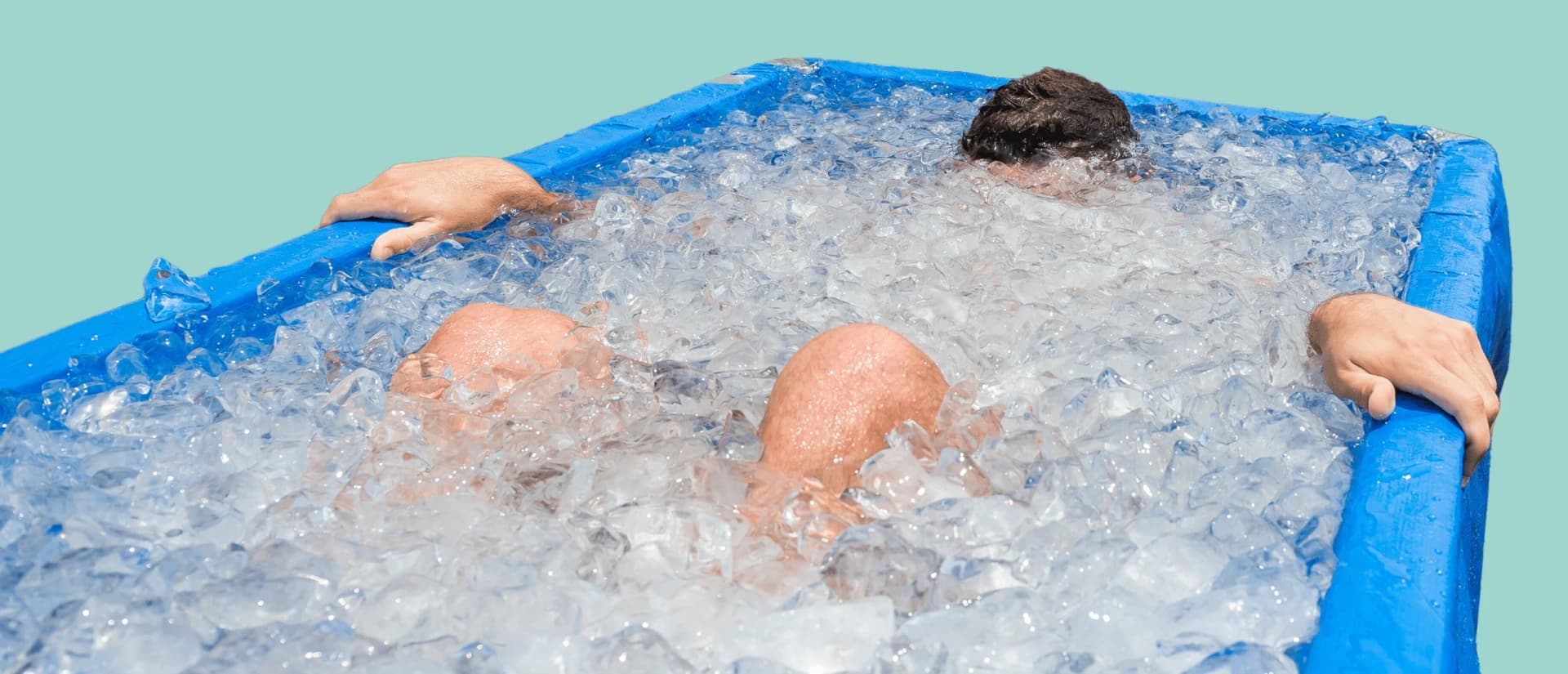
The face-first cold plunge is not theater. In the Rogan-Huberman cold exposure clip, the point was to get the face wet immediately so the mammalian dive reflex kicks in before the rest of the shock response takes over.
What Huberman is trying to trigger
When cold water hits the face, especially around the forehead, eyes, and nose, the body can flip into a dive response that slows heart rate, tightens blood vessels, and helps conserve oxygen. Review literature on the mammalian diving response describes it as apnea, bradycardia, and peripheral vasoconstriction, all geared toward protecting the heart and brain under submersion.
That is the physiological prize experienced cold plungers are chasing. They are not just trying to "tough it out." They are trying to get a faster autonomic shift, where the initial spike of panic gives way to a more controlled response once the face is in the water and the reflex is engaged.
Why experienced plungers do it
Experienced cold plungers use face-first entry because it changes the first few seconds of the plunge. Human studies show cold facial immersion can produce a stronger cardiac response than body-only cold exposure, and one study found heart rate dropped more during face submersion than during hands-in-water breath-holds. That is the real move here: not grit, but a faster autonomic switch.
There is also a practical reason the trick shows up in advanced circles. If you spend enough time around serious plungers, you notice they care less about dramatic suffering and more about control. A face-first entry is one way to set the nervous system early, so the rest of the immersion feels less like a scramble and more like a repeatable protocol.
Where the trick fits in a real protocol
Huberman Lab's own cold-exposure guidance still centers on neck-deep cold water immersion, including feet and hands, as the most effective cold-exposure format used in research. The same material frames deliberate cold exposure as a controllable dose, with benefits tied to regular exposure, minimal safe time, and a total weekly target around 11 minutes rather than any single flourish.
That matters because it puts face-first entry in the right place. It can be a useful refinement, but it is not the core of adaptation. If your goal is the broad payoff of cold exposure, the big rocks are still temperature, consistency, and staying calm long enough for the session to count.
When to try it, and when to skip it
If you're already comfortable with standard plunges, can keep your breathing under control, and want to experiment with a sharper parasympathetic hit, face-first entry is worth testing. If you're new, prone to panicking, or still fighting the first 30 seconds in the tub, it is unnecessary, and the safer play is to build tolerance with ordinary neck-deep plunges. Huberman's safety advice is blunt too: do not get into dangerous water, and do not hyperventilate before or during immersion.
If you are using cold for recovery, mood, or resilience, the face-first move is an optimization, not a requirement. The evidence-backed effect lives in the reflex itself, and the reflex does not need a theatrical entrance to work.
The face-first plunge works because it starts a reflex, not because it proves anything. If you want the benefit, make it a tool you choose on purpose, and if you do not, you are not missing the part of cold adaptation that actually moves the needle.
This article was produced by Prism’s automated news system from verified source data, official records, and press releases, then run through automated quality and moderation checks before publishing. The system is built and supervised by the people who set the standards it runs under. Read our full AI policy.
Did this article answer your question?