Basement Laundry Room Transforms Into 300-Square-Foot Private Wellness Spa
A basement laundry room became a 300-sq-ft wellness spa with a cold-plunge tub, sauna, and hydrotherapy tub in one standout residential remodel.
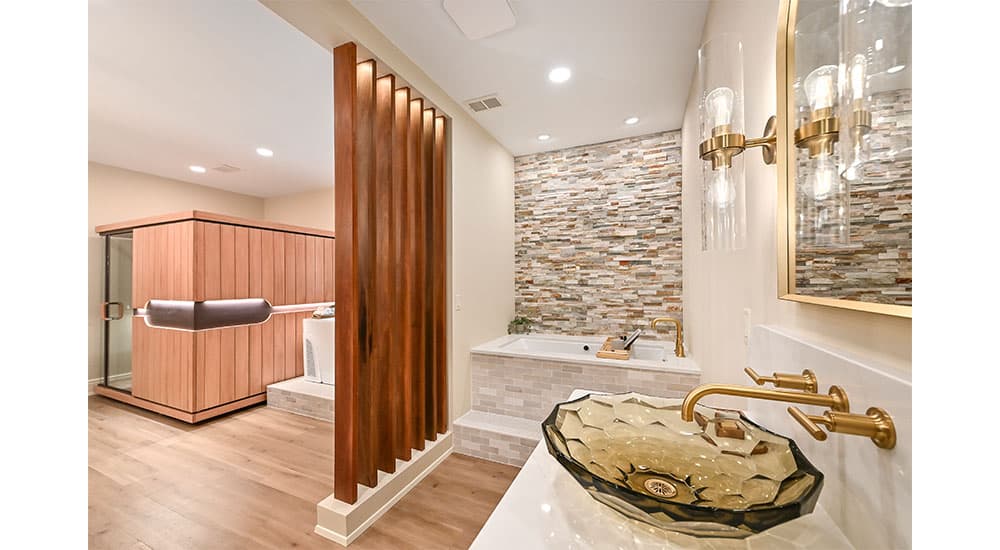
What used to hold a washer and dryer now holds a cold-plunge tub, a sauna, and a hydrotherapy setup worthy of a high-end spa resort. That's the reality of a residential remodel profiled by Kitchen & Bath Business, where a basement laundry room was gutted and reimagined as a 300-square-foot private wellness sanctuary, designed by Christina Kolb of Kowalske Kitchen & Bath.
For anyone who has ever dreamed of having a dedicated cold-plunge space at home rather than a chest freezer in the garage or a livestock trough on the back patio, this project is the kind of build that makes you stop scrolling. It's a fully integrated wellness room where the cold plunge isn't an afterthought bolted onto the edge of someone's bathroom renovation; it's a centerpiece, designed in deliberate relationship with the sauna and hydrotherapy tub around it.
The Space: From Laundry Room to Cold-Plunge Sanctuary
Three hundred square feet is not a massive footprint, but in the hands of a thoughtful designer, it's more than enough to build a complete contrast therapy circuit. The original laundry room, tucked in the basement, offered the kind of blank-slate utility space that serious wellness builds require: no windows to work around, existing plumbing to leverage, and an out-of-the-way location that naturally lends itself to a quiet, focused recovery environment.
Christina Kolb's design for Kowalske Kitchen & Bath treated the space as a cohesive system rather than a collection of individual fixtures. The cold-plunge tub, sauna, and hydrotherapy tub were positioned to support a deliberate hot-cold-hot or cold-hot-cold contrast therapy flow, the kind of protocol that serious cold-plunge practitioners know drives the most benefit from each session.
Why Basement Conversions Work for Cold Plunge Builds
Basement spaces have some natural advantages that make them surprisingly well-suited for cold-plunge installations. Temperature regulation is easier below grade, where ambient temps run cooler year-round, reducing the workload on whatever chilling system keeps your plunge at that bracing 50-55°F range. The separation from main living areas also means you're not running condensation or humidity into spaces where it causes problems.
There's also a psychological dimension that experienced cold-plunge practitioners often mention: having a dedicated, intentional space changes the practice. Walking into a room built for recovery, with the sauna already warming and the plunge already chilled, removes the friction that causes people to skip sessions. It's the difference between a habit and a ritual.
The Full Wellness Circuit
What makes this remodel particularly compelling from a cold-plunge perspective is the integration of all three elements: the cold-plunge tub, the sauna, and the hydrotherapy tub. Each serves a distinct physiological purpose, and together they cover the full spectrum of thermal contrast therapy.
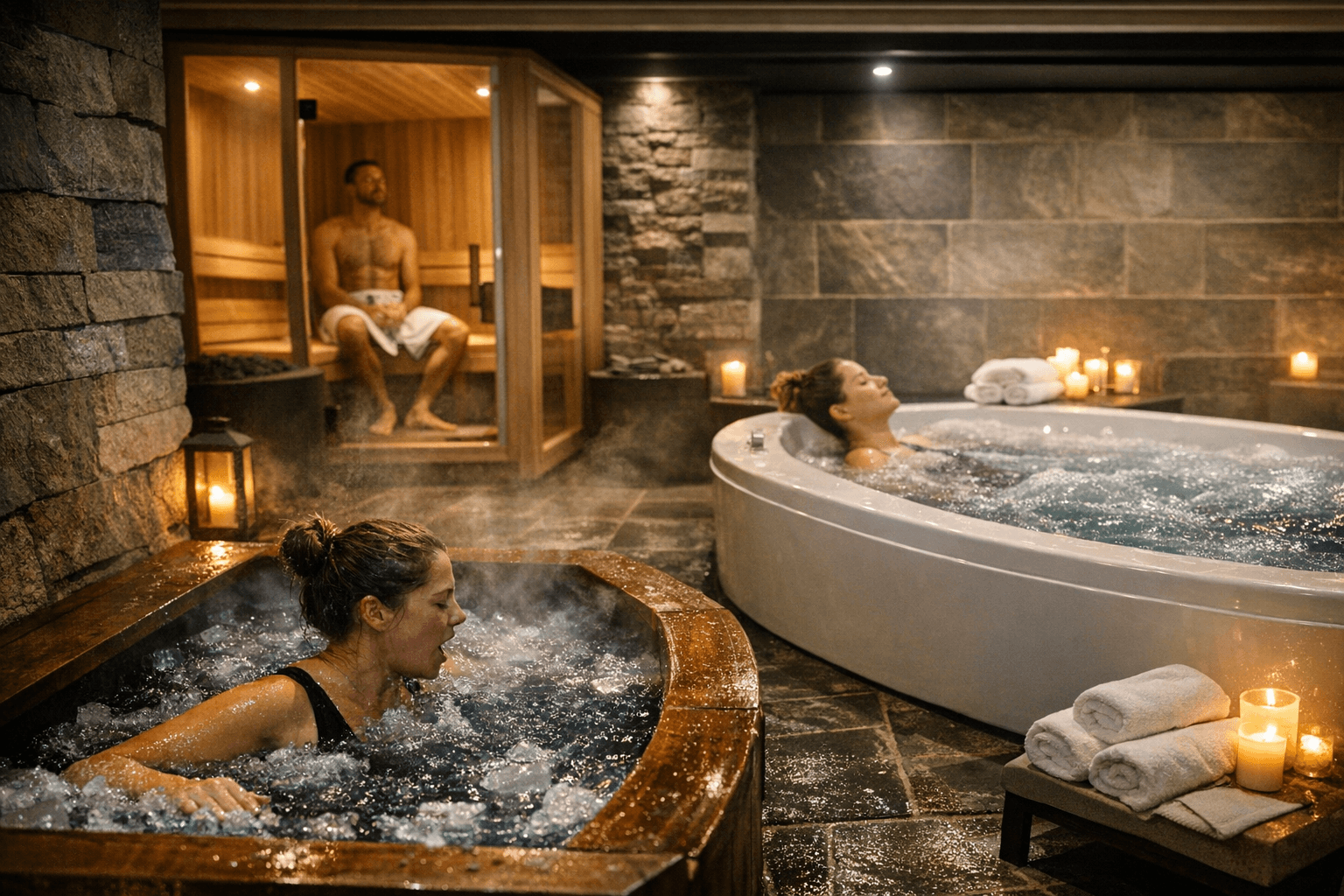
The sauna drives core temperature up, dilates blood vessels, and primes the body for the shock of cold immersion. The cold-plunge tub then triggers vasoconstriction, floods the system with norepinephrine, and delivers the anti-inflammatory response that has made cold exposure such a consistent topic in recovery circles. The hydrotherapy tub rounds out the circuit, offering the kind of warm, jet-assisted muscle work that helps flush the metabolic byproducts that cold exposure mobilizes.
Running that full circuit in a single 300-square-foot room, without having to go outside, drive somewhere, or share the space with anyone else, is the practical value proposition of a build like this.
Design Considerations for Integrated Cold-Plunge Spaces
A project like this one surfaces some of the key decisions anyone planning a home cold-plunge installation will eventually face. Waterproofing is non-negotiable in a basement wellness room: the combination of a plunge tub, hydrotherapy tub, and sauna creates sustained humidity and splash exposure that standard construction materials simply aren't built to handle. Drainage planning has to account for the volume of water a cold-plunge tub displaces when you get in and out, and for the frequency of water changes the plunge requires to stay clean.
Ventilation is another critical layer, particularly when a sauna is part of the build. The heat differential between a sauna running at 160-180°F and a cold plunge sitting at sub-60°F creates real condensation dynamics that have to be managed deliberately. A well-designed wellness room routes that moisture out of the space rather than letting it migrate into the surrounding structure.
The fixture selection itself carries significant weight in a room this small. Every piece has to earn its square footage, and the visual coherence between the cold-plunge tub, hydrotherapy tub, and sauna finishes determines whether the room feels like a spa or like three appliances in a basement.
What This Kind of Build Signals for Home Wellness
The decision to dedicate 300 square feet of a home's basement to a private wellness spa, and to include a cold-plunge tub as a primary fixture rather than a secondary addition, reflects how seriously a growing segment of homeowners is treating cold exposure and contrast therapy. This isn't a trend driven by aesthetics alone. The people commissioning builds like this are practitioners who have structured a recovery protocol around regular cold immersion and want their home to support it properly.
For the cold-plunge community, the Kowalske Kitchen & Bath project is a useful reference point: proof that a basement utility space can be transformed into a genuinely functional, beautifully designed recovery environment without requiring a sprawling footprint. Three hundred square feet, the right designer, and a clear vision of how you actually use the space is enough to build something worth building.
This article was produced by Prism’s automated news system from verified source data, official records, and press releases, then run through automated quality and moderation checks before publishing. The system is built and supervised by the people who set the standards it runs under. Read our full AI policy.
Did this article answer your question?