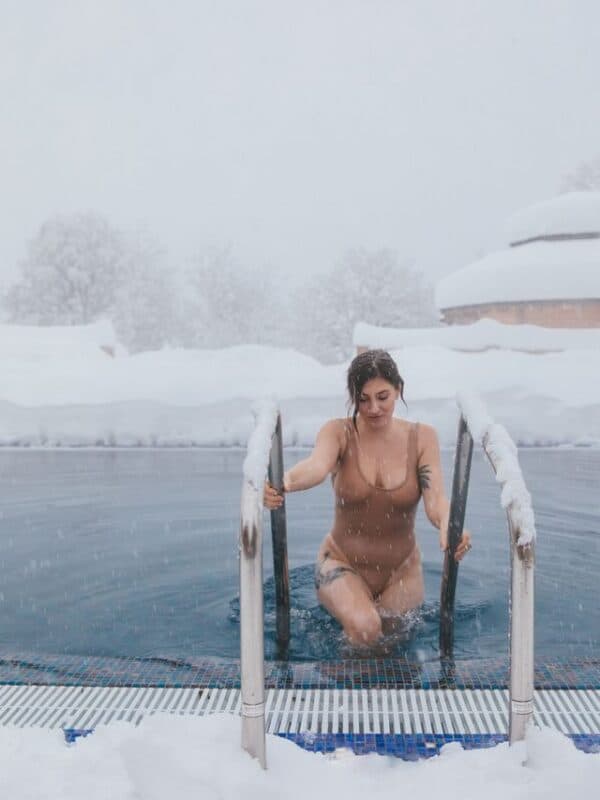
Singapore’s bathhouse boom is driving contrast therapy interest
Singapore’s bathhouse boom is turning contrast therapy into a ritual, but the evidence still leans toward cold plunging alone as the simpler recovery play.

The new bathhouse scene is making contrast therapy feel less like a hack and more like a ritual
Singapore’s latest wellness wave has given contrast therapy a much better stage than the average backyard ice tub. The appeal is not just the cold plunge itself, but the whole sequence, heat, cold, repeat, inside shared bathhouse spaces that borrow from onsen, jjimjilbang, and modern urban spa culture. In places built for communal soaking, the hot-cold shuffle feels deliberate rather than macho, and that changes how people experience it.
That matters because the best local setups are not vague wellness rooms with a bucket of ice. The Bathhouse, for example, lists ice baths at 5-7°C and 10-12°C, a dry sauna, and a hot magnesium bath at 38-42°C, all in a drop-in format with no bookings required. That is the difference between a social trend and a usable recovery tool: clear temperatures, a controlled environment, and enough structure that you can actually repeat the protocol.
Why the hot-cold switch feels good, at least in theory
The physiology is simple enough to follow even if the execution gets messy. Heat is meant to dilate blood vessels, cold to constrict them, and the alternation creates a pump-like effect that proponents believe can ease soreness, swelling, and fatigue. The nervous-system story is just as important: the sympathetic system gets a quick jolt from the cold, then the parasympathetic system takes over as the body settles into recovery mode. That is the real logic behind the ritual, not the social-media performance of how long you can suffer.
If you are choosing between contrast therapy and a plain cold plunge, the cold plunge still has the cleaner evidence
This is where the hype gets trimmed down. A 2025 meta-analysis found that cold-water immersion alone and cold-water immersion combined with other therapies both reduced delayed-onset muscle soreness, but there was no meaningful edge for the combination on creatine kinase or jump performance. A separate 2017 systematic review of team-sport recovery found cold-water immersion helped at 24 and 72 hours, while contrast water therapy showed a benefit at 48 hours for perceived fatigue, not a clean win on soreness. If your goal is the most defensible post-training recovery dip, cold alone is still the simpler bet.
The numbers that actually matter are less dramatic than the internet makes them sound
For cold water immersion, the strongest recent signal is not “colder is always better,” but a middle ground that is repeatable. A 2025 network meta-analysis found the best results for reducing soreness came from 10 to 15 minutes at 11°C to 15°C, while 10 to 15 minutes at 5°C to 10°C ranked best for improving jump performance and lowering creatine kinase. That gives you a real target instead of a bravado contest.
Contrast baths are less standardized, which is part of the problem. An older systematic review found published protocols ranging from 7°C to 22°C on the cold side and 27°C to 45°C on the hot side, with total sessions lasting 12 to 32 minutes. A newer swimmer study used 10 alternating immersions of 60 seconds hot at 40°C to 41°C and 30 seconds cold at 20°C to 21°C, and it improved lactate clearance and reduced fatigue, but did not produce immediate performance gains. In other words, the ritual can help you feel better, but the winning recipe is still less settled than the bathhouse marketing suggests.
- If you want the most evidence-backed cold protocol, start with 10 to 15 minutes at 11°C to 15°C.
- If you want to try contrast, keep the session within the broad research range, roughly 12 to 32 minutes total, and do not assume one exact hot-cold ratio is magic.
- If your venue is running true plunge temperatures like 5°C to 12°C and a hot side around 38°C to 42°C, you are in the range that local bathhouses are already using for real recovery sessions.
Singapore’s heat does not rewrite the protocol, it just makes the indoor setup matter more
The climate outside does not replace the hot phase, and it definitely does not make the cold phase optional. In a place like Singapore, the practical variable is the bathhouse itself, because the experience lives indoors, in controlled temperatures, not in the weather. That is why a real contrast session there is about whether the venue gives you a proper hot zone, a proper cold zone, and enough space to move between them without turning the whole thing into a sweaty endurance drill. That is an inference from how the local spaces are built, but it fits the way Singapore’s bathhouse culture is being packaged right now.
The people who should not copy the social-media version are the ones who have the most to lose
Cold immersion is not a harmless flex. Harvard Health notes the evidence for broad benefits is thin and warns against cold plunges for people with cardiovascular disease, especially heart-rhythm problems, while the British Heart Foundation says very cold water can trigger cold shock, faster heart rate, higher blood pressure, shortness of breath, and greater cardiac strain. The British Journal of Sports Medicine goes further, calling out respiratory and cardiovascular risk, including arrhythmias, and recommending medical assessment for anyone taking on a significant cold-water challenge for the first time.
That caution gets even sharper for pregnancy. A recent scoping review and consensus paper found there is still a lack of evidence-based guidance on cold-water immersion during pregnancy, with concerns centered on temperature, maternal and fetal risk, and water quality. So the beginner who should absolutely not be copying the viral sauna-then-ice marathon is the one with heart disease, arrhythmia, Raynaud’s, pregnancy, or any other reason to think cold shock might be more than a passing thrill.
Singapore’s bathhouse boom works because it turns contrast therapy into something controlled, social, and repeatable. But if the question is whether contrast bathing beats a cold plunge alone, the honest answer is still no, not cleanly enough to crown it the better buy. The bathhouse ritual is the nicer experience; the cold plunge remains the sharper recovery tool.
This article was produced by Prism’s automated news system from verified source data, official records, and press releases, then run through automated quality and moderation checks before publishing. The system is built and supervised by the people who set the standards it runs under. Read our full AI policy.
Did this article answer your question?