Cold-Plunge Buying Guide Explains Tub, Chiller, and Filtration Essentials
The real cold-plunge decision is not the tub, it is the whole system. Size, chill power, and filtration decide whether your setup gets used or abandoned.
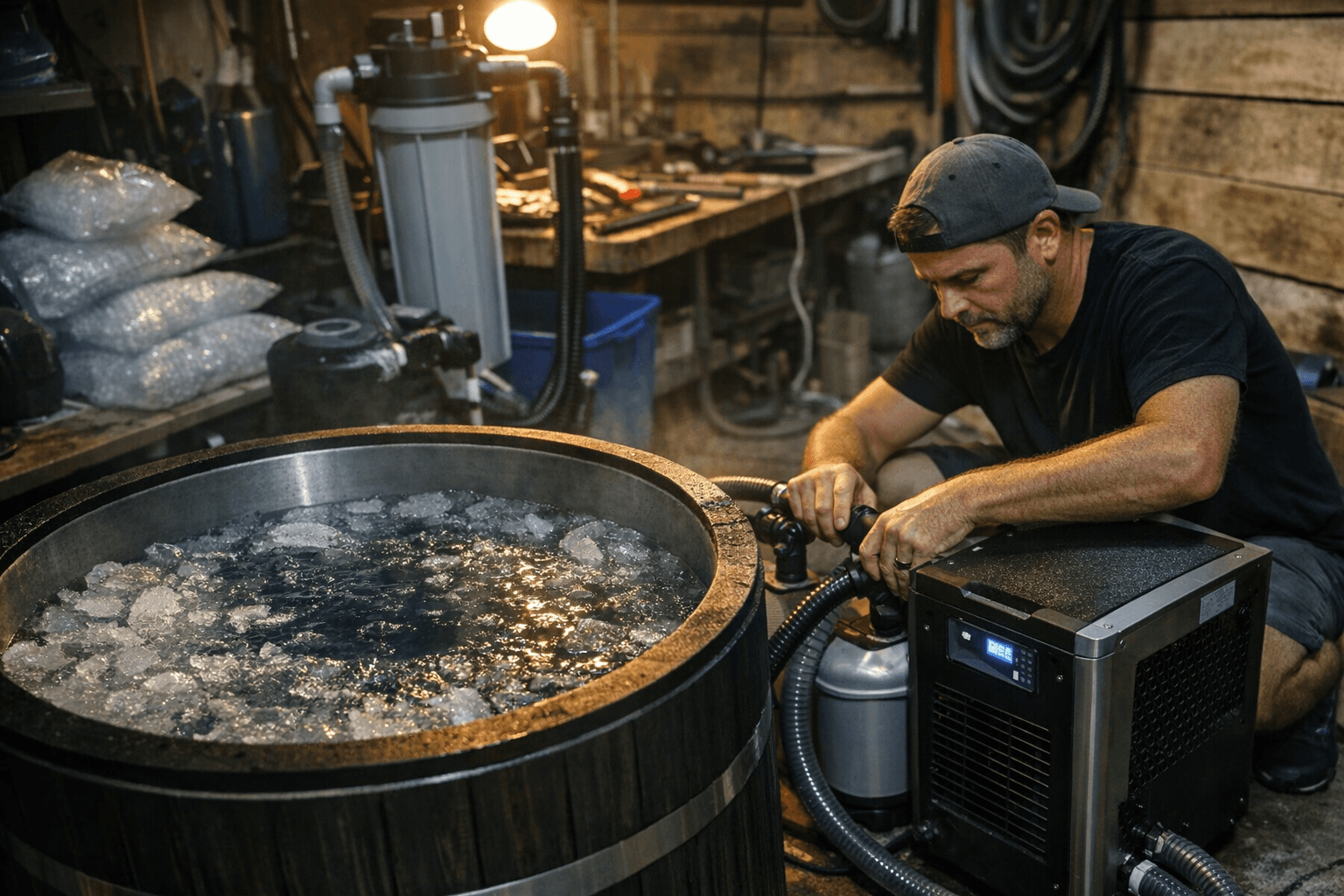
The three-system reality
The biggest mistake in cold plunges is thinking you are shopping for a tub. Commonplace’s guide cuts through that illusion fast: a home plunge is really three systems in one, the tub, the chiller, and the filtration setup. Miss any one of them, and the result is usually the same, either you overspend on a flashy shell or you under-buy the parts that make the water cold, clean, and worth using.
That framing matters because the cold-plunge market still rewards impulse. People chase the look, the branding, or the idea of recovery, then discover that the real purchase is an operating system with ongoing demands. The best setups are not the loudest ones; they are the ones that fit your body, your space, and your tolerance for maintenance.
Sizing the tub to the body you actually have
Commonplace says a good home plunge usually falls somewhere between 48 and 72 inches long and 24 to 32 inches deep. Those dimensions are not decoration, they decide whether you can sit in the water with your body fully supported or end up folded into a cramped position that makes the whole thing feel like a stunt. Length is especially important, because a plunge that looks substantial in a product photo can feel tiny once your knees are bent and your shoulders are fighting the rim.
The guide’s body-size rule of thumb is simple and useful. If you are around 5'8" and under, a tub in the 48-to-56-inch range can work well. Taller users need more length, because otherwise knees crowd forward and shoulders sit above the water line, which defeats the point of a full-body cold soak. That is the kind of detail people only learn after buying too small, and by then the mistake is expensive.
Depth matters too. A tub that lands in the 24-to-32-inch range gives you enough water to actually immerse, not just splash around the lower half of your torso. The right dimensions are not about luxury, they are about whether the plunge becomes a repeatable part of recovery or another piece of gear that takes up floor space.
The chiller is where the category separates
If the tub is the body of the system, the chiller is the heart. The guide makes a clear threshold call here: a serious home setup needs a chiller that can reliably pull water to at least 39 degrees. That number matters because it separates casual cold soaking from something that can function as dependable cold-water immersion day after day.
Cheap chillers often stall in the mid-50s, and that changes everything. Mid-50s water may feel brisk, but it is not the same experience as a plunge that actually gets down near the high 30s. Commonplace treats mid-range and higher-end chillers as the real dividing line, and that is the right consumer-protection lens. The chiller is not an accessory you can shrug off later; it is the part that determines whether the system performs as advertised.
This is also where buyers get trapped by false economy. A lower-cost unit may look like the smart entry point, but if it cannot consistently hold a meaningful cold range, you have paid for a machine that produces compromise instead of immersion. For a category built on recovery and ritual, consistency is the feature that counts.
Filtration is the invisible cost everyone underestimates
Filtration is the least glamorous part of the setup, which is exactly why it gets overlooked. Commonplace highlights it as one of the three essentials for a reason: without a filtration system, you can end up stuck in a cycle of weekly drain-and-refill maintenance. That is not just annoying, it changes the economics of the whole purchase, because water care becomes a recurring chore rather than a background function.
A proper filtration setup helps keep the water clean enough for regular use and saves you from treating the plunge like a temporary novelty. That matters for anyone hoping to turn cold water immersion into a routine rather than a weekend experiment. If you are planning to use the plunge often, sanitation is not a side note, it is part of the user experience and the long-term cost of ownership.
The hidden lesson here is that the cheapest setup is rarely the cheapest over time. Tub, chiller, and filtration work together, and if one piece is weak, the others have to carry the burden. That is how a simple-looking purchase becomes a maintenance project.
Used versus new, and why the bargain can be real or fake
The guide does not dismiss the used market. It gives a price range for used units and, more importantly, tells buyers to think about warranty status and maintenance before chasing a bargain. That is the right way to look at it, because a used plunge can be a smart entry point if it has been cared for, but it can also be a silent headache if the chiller is tired or the filtration system has been neglected.
There is a real split in the market between people who buy too much cold plunge and never use it, and people who buy a used unit that becomes part of a consistent recovery routine. The difference is not luck, it is fit and condition. A used setup with a credible maintenance history can be the one that gets used every morning; a flashy new unit with the wrong footprint or weak cooling can become a very expensive bench ornament.
Warranty matters here because it changes the risk profile. Maintenance matters because it tells you how the previous owner treated the system, especially the chiller and filtration components that do the hardest work. A bargain is only a bargain if the machine still performs like a working system, not a project.
The real buying test
The best plunge is the one that matches your body, your space, and your maintenance tolerance. That is the deeper message in Commonplace’s guide, and it is why the piece feels more like a field note than a glossy product roundup. It understands that cold plunges attract people for the feeling, but they stay in the routine only when the hardware is sized correctly, cooled reliably, and kept clean without turning into a second job.
If there is one lesson to take from the whole category, it is this: stop shopping for a tub and start shopping for a system. In cold plunge buying, the hidden costs are the real costs, and the right setup is the one you will still be using long after the novelty wears off.
This article was produced by Prism’s automated news system from verified source data, official records, and press releases, then run through automated quality and moderation checks before publishing. The system is built and supervised by the people who set the standards it runs under. Read our full AI policy.
Did this article answer your question?