Cold Plunge Timing and Temperature Protocol Promises Deeper, Faster Sleep
A 50-59°F plunge just 1-2 hours before bed could cut the time it takes you to fall asleep by 12 minutes and boost deep sleep by up to 20%.

A 15-to-20% increase in slow-wave sleep sounds like the kind of number that belongs in a pharmaceutical ad. But the mechanism behind it is your own body's thermoregulatory system, and the trigger is a cold plunge timed with surgical precision to your bedtime. HomePlunge, the company behind a growing line of home chiller systems, has published a detailed sleep protocol that converts the biology of post-immersion cooling into a nightly routine with specific numbers attached: temperature, duration, timing, and frequency, all dialed to the same goal.
The Core Protocol
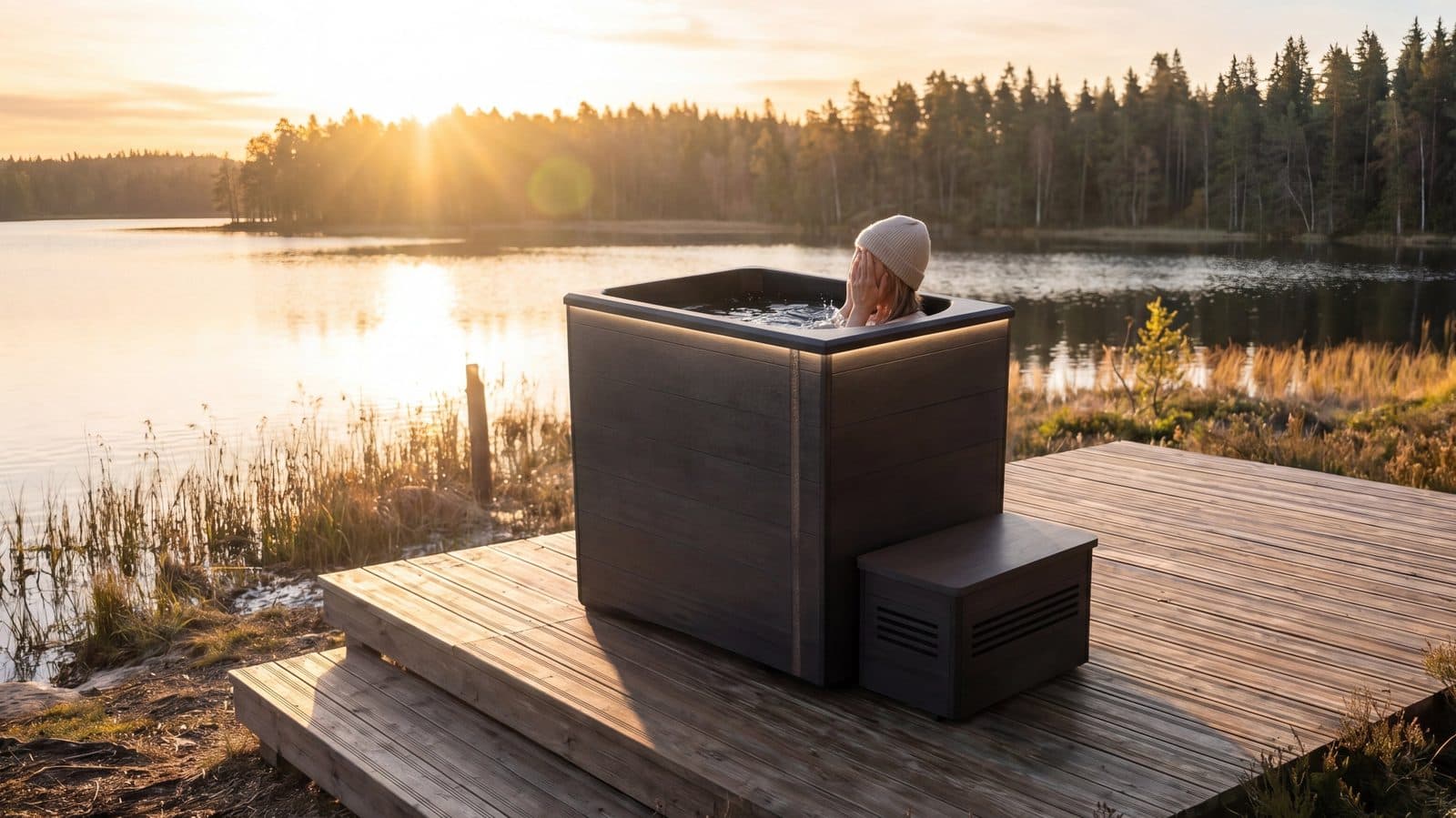
The HomePlunge protocol is built around four variables, and none of them are vague. Water temperature sits between 50 and 59°F (10–15°C), a range cold enough to trigger the physiological response without tipping into the territory that requires acclimatization for most plungers. Immersion duration runs 2 to 5 minutes. The timing window is 1 to 2 hours before bed. Frequency lands at 3 to 4 sessions per week, enough regularity to observe cumulative effects without demanding a daily commitment.
Those numbers stack into a claim that is harder to ignore than most wellness protocols: a reduction in sleep-onset time of roughly 10 to 12 minutes, and that 15-to-20% gain in slow-wave, or deep, sleep. For anyone who has ever stared at a ceiling for 45 minutes waiting for sleep to arrive, shaving 12 minutes off that wait through a 5-minute cold plunge represents a meaningful return on an uncomfortable investment.
The Physiology: Why Your Body Does the Work After You Get Out
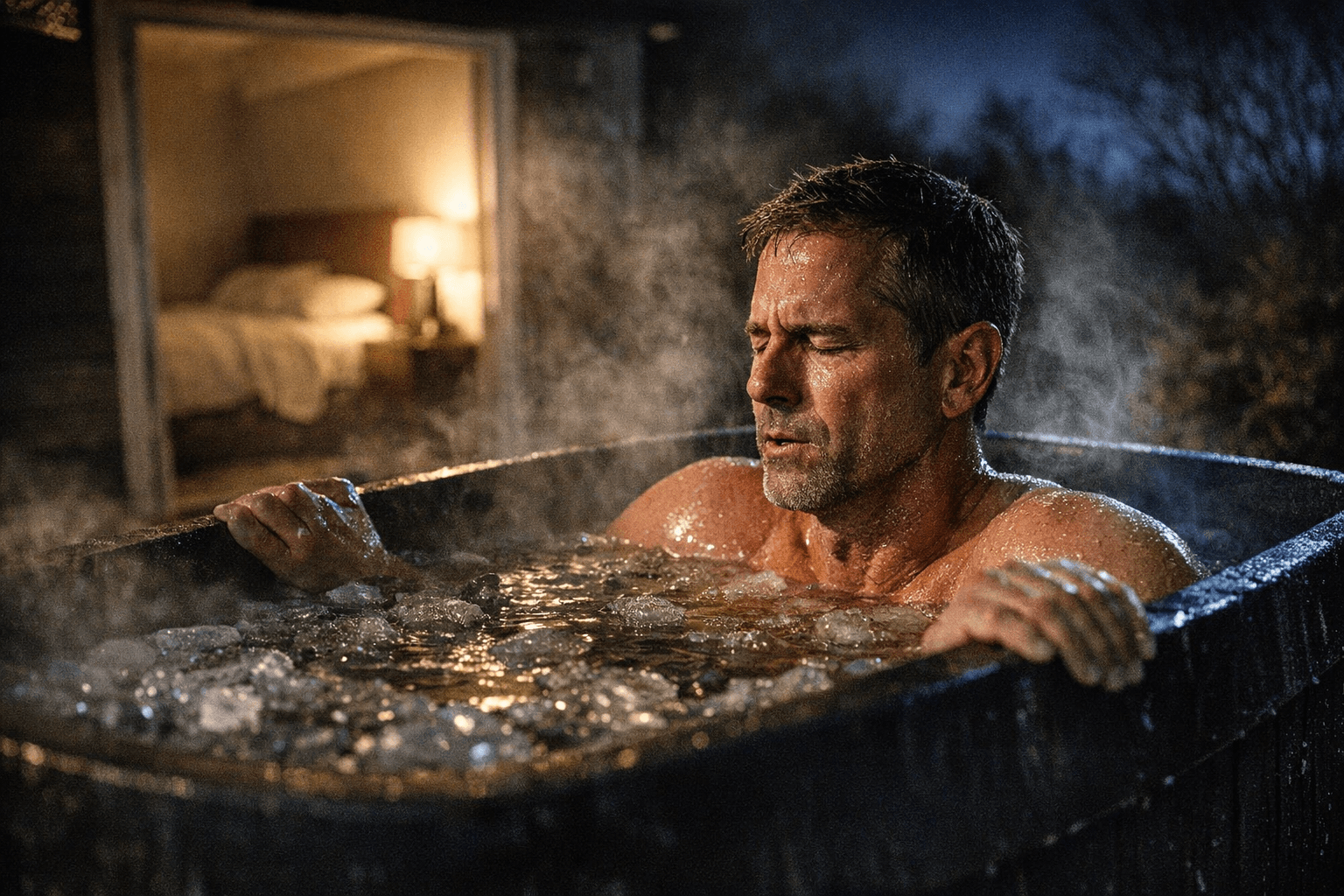
The mechanism is not mysterious, but it is precise. The moment you step into water at 50–59°F, peripheral vasoconstriction kicks in: blood vessels near the skin contract, pulling blood toward the body's core. That is the acute phase. The more sleep-relevant response comes after you exit the water. Rebound vasodilation follows, redistributing heat outward from the core through the now-reopened peripheral vessels. Over the next 60 to 90 minutes, your core body temperature falls by approximately 0.5 to 1.5°F.
That temperature drop is not incidental. It maps directly onto the circadian cooling that the brain uses as a biological signal to initiate sleep. Your core temperature naturally falls in the lead-up to sleep onset, and the post-plunge drop essentially amplifies and accelerates that existing signal. The protocol's 1-to-2-hour timing window is not arbitrary; it is designed to align the trough of that rebound cooling curve with the moment your head hits the pillow. The result, according to HomePlunge's synthesis of thermoregulatory physiology and applied sleep science, is faster sleep onset and more time spent in the deepest, most restorative sleep stage.
Practical Steps: What the Routine Actually Looks Like
Understanding the physiology is one thing; building it into a nightly routine without disrupting everything else is another. HomePlunge addresses this directly with a set of practical considerations layered around the core protocol.
Pre-warm transition routines are recommended to ease the shift from cold immersion back to a relaxed, wind-down state. The logic here is that the goal after the plunge is steady, passive cooling, not shivering in a cold room or jumping straight into a hot shower, which would counteract the temperature drop the protocol depends on.
Timing relative to exercise matters too. Intensive training sessions affect core temperature and vascular tone in their own right, and stacking a plunge too close to a hard workout may confuse the timing of the thermoregulatory response. The protocol treats exercise and sleep-prep plunges as distinct use cases, recommending that the sleep-focused session be treated as its own dedicated intervention rather than a cool-down afterthought.
Water sanitation gets its own mention, a detail that is easy to skip in protocol discussions but critical for anyone running a home system through multiple sessions per week. Consistent maintenance of chiller water is part of the operational overhead that makes the protocol sustainable long term.
Who Should Approach This Carefully
The protocol is clear-eyed about its contraindications. People with cardiovascular conditions are flagged as a population that should not self-prescribe cold immersion for sleep. The physiological demands of cold exposure, including the acute cardiovascular stress of vasoconstriction and the hemodynamic shifts of rebound vasodilation, are meaningful enough that cardiac or respiratory risk factors warrant a conversation with a clinician before adopting this regimen. The same applies broadly to anyone with underlying health concerns.
Individual variation is also acknowledged. The 15-to-20% slow-wave sleep improvement and the 10-to-12-minute reduction in sleep-onset time are framed as protocol-level projections, not guarantees for every body. Thermoregulatory response varies with age, fitness, acclimatization to cold, baseline sleep architecture, and a range of other factors.
Reading the Evidence Honestly
The HomePlunge protocol is positioned as science-backed but is not itself a peer-reviewed study. It synthesizes existing thermoregulatory physiology and sleep science into a consumer-facing set of instructions, which is a genuinely useful thing to do, provided the reader understands the distinction. The value here is procedural specificity: a concrete temperature band, a measured timing window, and quantified sleep-change targets give this protocol testable structure that vague "cold exposure for wellness" claims never offer.
For researchers, the specificity is its own contribution. The combination of 50–59°F water, 2–5 minute immersion, and a 1-to-2-hour pre-bed window is a hypothesis precise enough to run in a randomized controlled trial. Whether the protocol holds up under that scrutiny is a question the sleep research community is well-positioned to investigate.
For the cold plunge community, the practical takeaway is a reframing of when and why to plunge. Recovery work after training has driven most of the culture around cold immersion. This protocol extends the use case into sleep optimization, treating the evening plunge as a deliberate circadian intervention rather than a recovery tool with a convenient side effect. That distinction, timed correctly, may be the difference between a good night's sleep and another hour of ceiling-staring.
Know something we missed? Have a correction or additional information?
Submit a Tip