Cold Plunge Timing Is Everything, Says Men's Fitness Expert
Jumping into a cold plunge right after lifting could be quietly killing your gains. Timing your ice bath by 6+ hours makes all the difference.
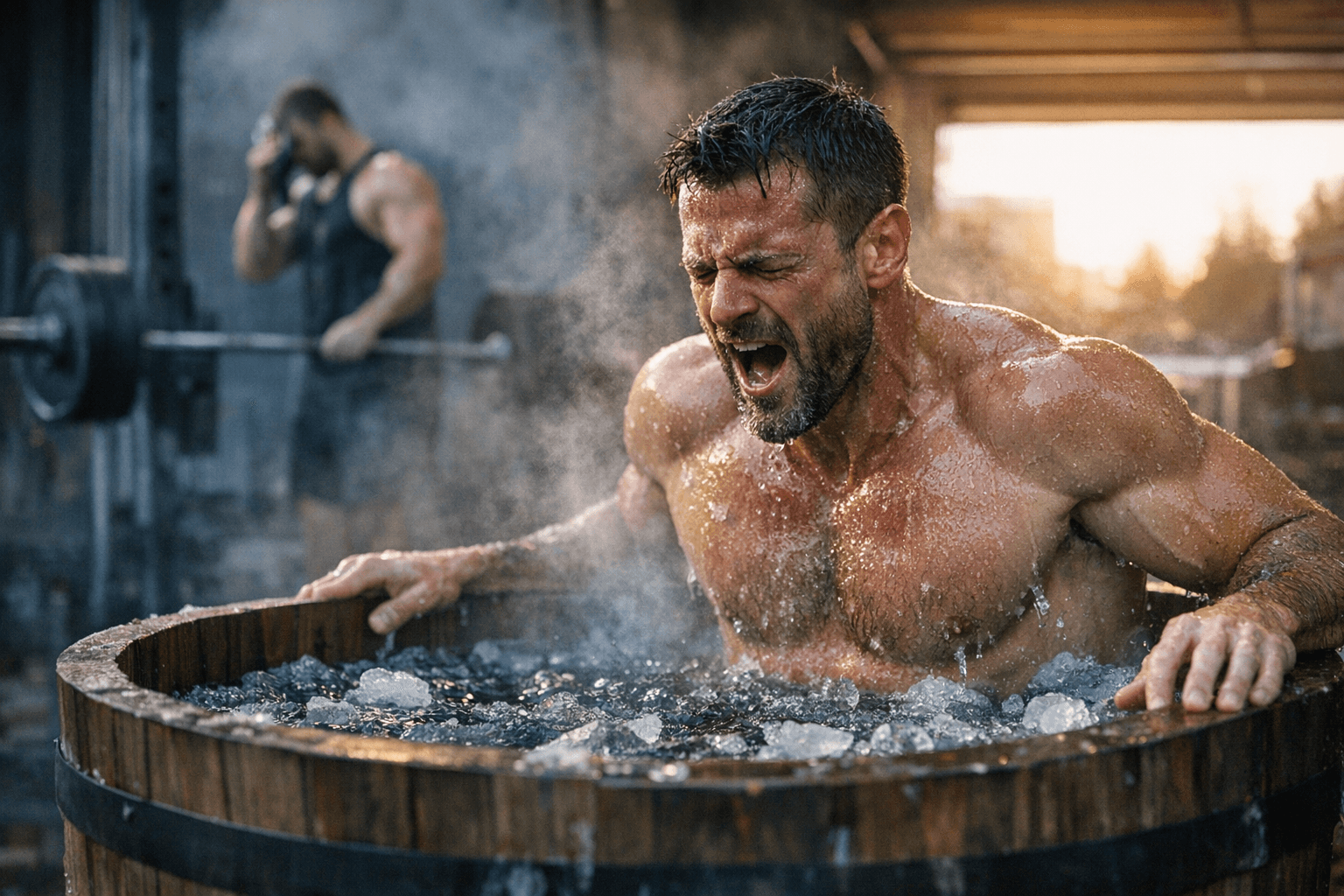
There's a tub full of ice water in the corner of plenty of home gyms right now, and there's a good chance it's being used at exactly the wrong moment.
The fitness recovery market has exploded. People are buying massage guns, installing infrared saunas, and dropping cold plunge tubs next to their squat racks. The cold plunge, in particular, has a lot going for it: it's relatively inexpensive, doesn't take up much space, and delivers both physical recovery and a mental edge. That last part has its own pull. Users track how long they last in the cold, try to beat their time, or push the temperature a notch lower with each session. It's a built-in challenge, a tiny act of willpower you can quantify. For a certain kind of fitness-minded person, that's irresistible.
But a Men's Fitness piece, republished via Yahoo, cuts through the enthusiasm with a clarification the community has needed: most people who cold plunge after lifting are actively working against themselves.
The inflammation you actually want
The key is understanding what happens inside muscle tissue after a hard resistance training session. "When you lift weights, your muscles become inflamed," the Men's Fitness piece explains. "This type of acute, or short-term, inflammation is actually a good thing. The inflammatory process, and the subsequent recovery from it, is what builds muscle. Any disruption in that process would blunt muscle gains."
That word "blunt" is doing a lot of work. It means the gains don't disappear entirely, but the signal that tells your body to rebuild stronger gets muffled. Cold water immersion constricts blood vessels, reduces metabolic activity, and dampens that acute inflammatory cascade. If building muscle and strength is your goal, that's the last thing you want to interrupt.
"If you perform a hard workout and immediately submerge your body in ice water, you are actively disrupting this important inflammatory process," the article states plainly. "If your goal is to build muscle, this is something you don't want to do."
This is the misconception at the center of the problem: a widespread assumption that all recovery methods are beneficial at all times. Icing soreness feels intuitive. Cold feels like medicine. But the soreness you feel after a hard set of squats isn't an injury to suppress; it's construction work already underway.
Why athletes and plungers seem to contradict this
The counterargument arrives quickly in most cold plunge conversations: what about the pros? NBA players, NFL linemen, professional soccer players, they all climb into ice baths after competition. If cold immersion blunts muscle adaptation, why are elite athletes doing it constantly?
The Men's Fitness piece addresses this directly, and the answer comes down to a difference in goals that most casual observers miss. "During the season, an athlete isn't concerned about building muscle or strength," it explains. "Their primary goal is to be as fresh as possible for the next game."
The math of professional sports schedules makes ice baths an obvious tool. In basketball, a player might compete in three or four games in a single week. In football, where each game represents hours of full-contact, physically grueling effort, the body takes a beating that has to be managed before the next kickoff. An ice bath speeds up that short-term recovery process. For an in-season athlete, that tradeoff is entirely rational. They're not trying to add muscle in November; they're trying to make it to Sunday.
The muscle-building phase for those same athletes happens in the offseason, under very different training conditions and with very different recovery protocols. What looks like a single practice is actually two distinct athletic phases with two distinct sets of priorities.
The actual timing guidance
So where does that leave the recreational lifter who bought a cold plunge tub and uses it religiously after every session? The Men's Fitness recommendation is specific: "If you're deep in a muscle-building phase, save the cold plunge for rest days or at least 6+ hours after your workout to let that inflammatory process do its job."
That six-hour window gives the acute inflammatory signal enough time to run its course before cold exposure interferes. On rest days, there's no fresh hypertrophic process to disrupt, so the cold plunge becomes purely a recovery and wellness tool with no conflicting cost.
The practical upshot is a simple schedule adjustment:
- Lifting day: hold the cold plunge until evening at the earliest, or skip it entirely
- Rest day: the cold plunge is fully open; use it to reduce systemic inflammation, support nervous system recovery, and get the mental toughness reps in
- In-season/competition phase: if your priority is showing up fresh for the next event rather than building new tissue, post-competition cold exposure is not only acceptable but one of the better recovery tools available
Reframing the tool
The Men's Fitness piece lands on a framing that's worth sitting with: "So the cold plunge isn't bad, it's just misunderstood. Like most tools in fitness, the key is knowing when to use it."
That's a more nuanced position than most hot takes in the wellness space allow. Cold plunges have attracted both breathless champions and aggressive skeptics, and neither camp fully accounts for context. The problem isn't the tub. It's the timing.
There's also the mental toughness dimension, which doesn't disappear just because you shift your plunge to a rest day. The practice of voluntarily entering freezing water, of breathing through the shock, of staying in when every instinct says get out, builds something that doesn't show up in a DEXA scan. Users compete with themselves, nudging the temperature down a degree, adding thirty seconds to their immersion time. That discipline is real and valuable regardless of when in the training week it happens.
The fitness recovery market keeps growing, and the cold plunge sits near the center of it. For anyone serious about maximizing what they're building in the gym, the adjustment is small and the payoff is potentially significant: move the plunge, protect the gains, and let the inflammation you worked so hard to create actually do its job.
This article was produced by Prism’s automated news system from verified source data, official records, and press releases, then run through automated quality and moderation checks before publishing. The system is built and supervised by the people who set the standards it runs under. Read our full AI policy.
Did this article answer your question?