Cold Plunges Aid Recovery But May Blunt Muscle and Strength Gains
In a 12-week University of Queensland trial, athletes who cold-plunged after every session built less muscle than those who didn't. Timing turns out to be everything.
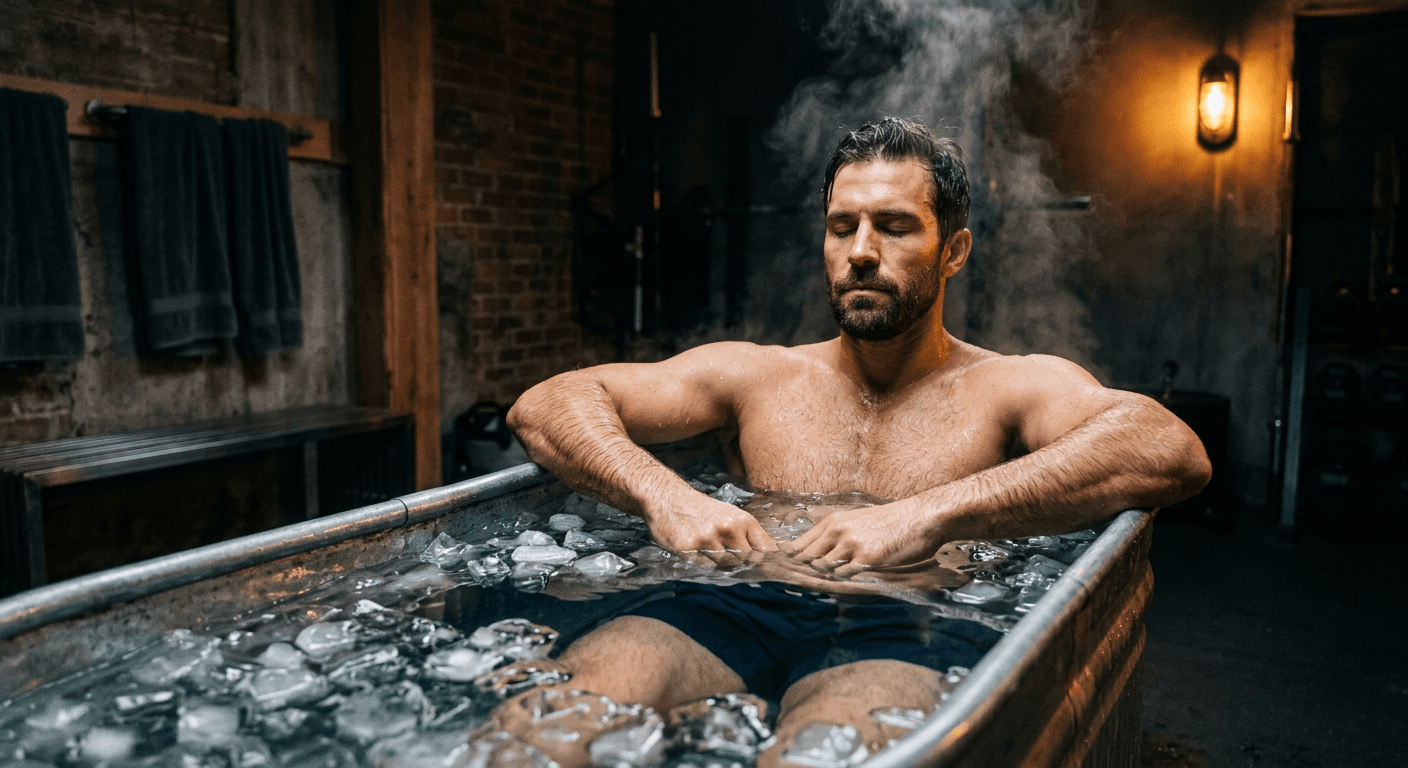
Twenty-one physically active men trained twice a week for 12 weeks. Half recovered with 10 minutes of cold water immersion after every session; the other half used active recovery. By the end, the active recovery group had outgained the cold-water group in both muscle mass and strength. That 2015 trial, led by Llion Roberts at the University of Queensland and published in the Journal of Physiology, remains the clearest evidence that the cold plunge sitting in your gym's recovery suite can work against you if you use it at the wrong moment.
The mechanism isn't subtle. Cold water immersion suppresses p70S6K phosphorylation and blunts satellite cell activation, two of the primary molecular signals that tell muscle tissue to grow after a training session. You don't just feel less sore; you turn down the biological dial that drives adaptation. A 2024 meta-analysis in the European Journal of Sport Science, synthesizing eight controlled trials, confirmed the pattern: post-exercise CWI likely attenuates hypertrophy adaptations compared with resistance training alone, even when it doesn't eliminate gains entirely.
"Some of these claims have merit. Some are wildly overstated," Jeff wrote at LiftStrong, the independent strength and conditioning publication that built a practical framework around this literature, adding that "timing and application matter far more than most people realize."
The cold plunge tub market, valued at $330.58 million in 2024 and projected to nearly double to $659.86 million by 2033, has been shaped largely by influencer content that rarely draws this distinction. The result is a lot of lifters in the middle of hypertrophy blocks who are diligently plunging after every leg day and quietly wondering why the scale isn't moving.
The answer lies in matching protocol to training phase. During a hypertrophy block, plunging immediately after a primary compound session is the worst-case scenario: you've created the stimulus and then chemically muted the response. But if you're sore from Monday's squats and need to perform again on Wednesday, a Tuesday evening plunge is a different calculation entirely. You're not suppressing a fresh adaptation signal; you're buying back range of motion and reducing perceived soreness across the 24-to-96-hour DOMS window so the next session is actually productive. Two-a-days, competition weekends, and meet-prep phases are where CWI earns its price tag, because rapid recovery between efforts matters more than long-term molecular signaling in those windows.
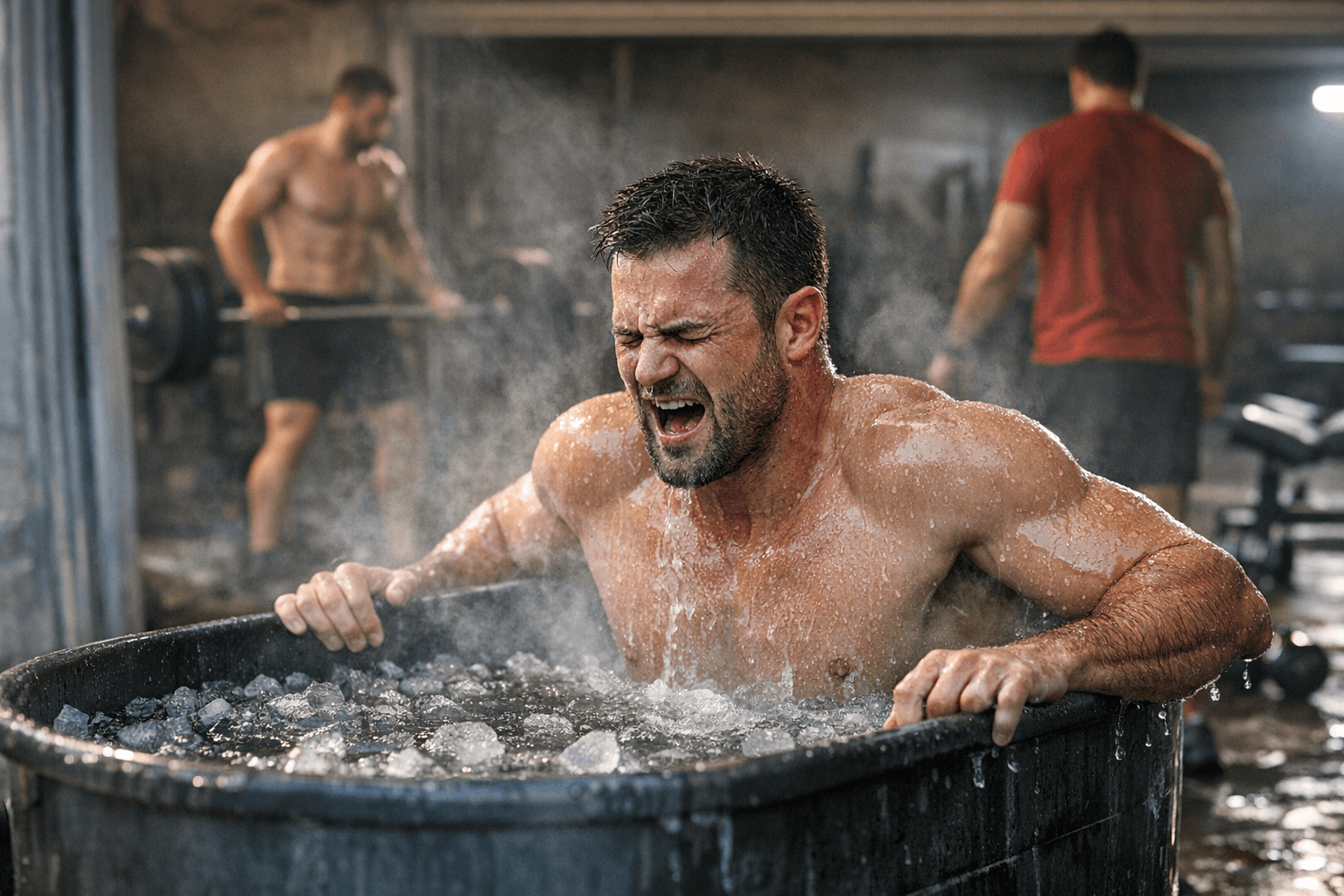
For lifters who want a structured entry point, a three-tier framework holds up against the evidence. The minimum effective dose is water at 13-15°C for 10 minutes, applied only on non-training days or at least six hours after a session, reserved for the highest-fatigue weeks of a training cycle. The conservative approach sits at the warmer end of the range, schedules cold exposure after accessory work rather than primary lifts, and treats it as a weekly recovery tool during peaking phases without touching hypertrophy sessions. The aggressive protocol, near-ice temperatures with daily immersion, belongs to competition weekends or endurance-heavy blocks where building new tissue is not the priority.
Four red flags indicate cold exposure should be cut back regardless of phase: poor or fragmented sleep, a significant caloric deficit, more than three CWI sessions per week during a muscle-building block, or any plunge within two hours of a primary strength session. Under any of these conditions, the recovery math stops adding up.
A decade after the Roberts trial, the evidence has only compounded. The cold plunge is not a bad tool; it is a precise one, and precision requires knowing exactly where you are in your training year before you step in.
This article was produced by Prism’s automated news system from verified source data, official records, and press releases, then run through automated quality and moderation checks before publishing. The system is built and supervised by the people who set the standards it runs under. Read our full AI policy.
Did this article answer your question?