Contrast Therapy Protocols Tailored for Athletes and Busy Professionals
Jump into the wrong contrast sequence post-lift and you could be actively suppressing the muscle gains you just worked for. Here's how to match the protocol to your actual goal.
The Protocol Mismatch That's Costing Lifters Their Gains
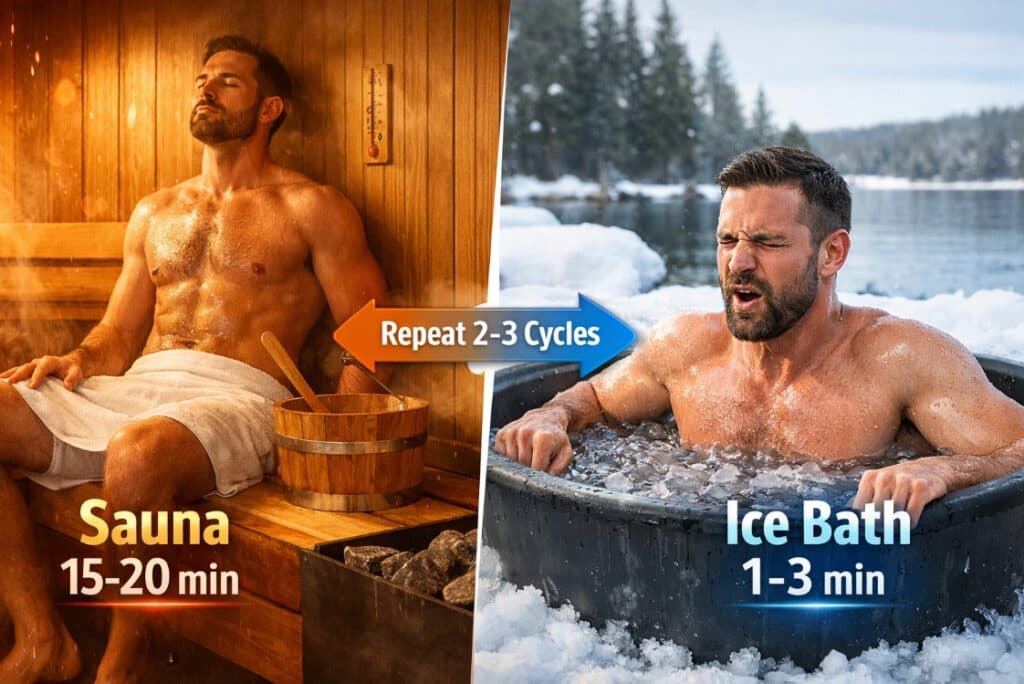
Here is a number worth sitting with: a 2024 randomized trial on combat athletes found contrast therapy increased tissue perfusion to 18.71 PU compared to just 3.69 PU with cold alone, and 9.79 PU with sham therapy. That "vascular pumping" effect, circulation forced wide open then slammed shut in alternating cycles, is the core physiological event contrast therapy is selling. But the same research landscape that confirms those circulatory benefits also contains a 2024 meta-analysis in the European Journal of Sport Science showing that cold water immersion after resistance training blunts anabolic signaling, reducing the phosphorylation of p70S6 kinase and suppressing satellite cell activity in the hours your muscles most need them active. The gap between those two findings is exactly where most contrast therapy advice breaks down: it tells you what to do, but not *when*, *for whom*, and at what cost.
The three protocols below are not interchangeable. Each one is built around a specific adaptation priority. Run the wrong one and you are not just missing upside; you may be working against yourself.
Protocol A: The Runner/Endurance Athlete (DOMS and Race Recovery)
The goal here is rapid soreness reduction and autonomic rebalancing after a long run, race, or hard interval session. Hypertrophy is not on the table, which means cold's blunting effect on anabolic signaling is irrelevant and you can use the most aggressive version of contrast therapy without reservation.
The sequence: begin with a 5-10 minute light cooldown, easy pedaling or walking, to bring heart rate down before thermal stress. Move into a warm soak or sauna at 80-90°C for 8-12 minutes. Follow immediately with a cold plunge at 10-15°C for 8-12 minutes, targeting perceived soreness reduction and vasoconstriction of inflamed tissue. An optional repeat heat phase of 3-5 minutes can be added for comfort, but always finish with a final 3-5 minutes of cold to limit rebound inflammation. The finish-cold rule matters: ending on heat leaves vasodilation active and can allow re-accumulation of metabolic waste in tissue you just flushed.
This sequence is competition-window safe precisely because its aim is recovery, not muscle building. Run it within two hours of finishing your event.
- Soreness scale (0-10) logged immediately post-session and again the next morning
- RPE (Rate of Perceived Exertion) on the following training session compared to your baseline
- Sleep quality score (subjective 1-5, or use a wearable)
- Time-to-feel-normal: how many hours before you feel ready to run again
What to track over 14 days:
Protocol B: The Strength Athlete (Protect Hypertrophy, Aid Recovery)
This is the most counterintuitive protocol in the contrast therapy toolkit, and the one most often misapplied. The 2024 meta-analysis confirmed what acute studies have been suggesting for years: cold water immersion administered immediately after resistance training blunts the anabolic response. That means the cold plunge you are using to "recover faster" on leg day may be quietly eroding the gains from the session you just completed.
The fix is timing, not abstinence. If you can wait 2-6 hours after your resistance session before any prolonged cold exposure, the acute anabolic signaling window closes on its own schedule and you can then use cold without interfering with it. If immediate recovery is non-negotiable (back-to-back training days, competitive schedules), prefer mild cold at 15-18°C for 5-8 minutes rather than the deep 10-12°C plunges that maximize vasoconstriction and hormonal disruption. Keep warm exposures moderate during same-day contrast: a hot sauna immediately post-lift before cold is a particularly high-risk sequence for blunting gains.
- Session RPE and volume completed (sets x reps x load) to detect any performance decline
- Next-day soreness scale (0-10) to confirm recovery benefit is real
- Sleep onset time, as thermal regulation disruption from late-day cold can delay sleep
- Subjective "pump quality" in the session following contrast, as a proxy for preserved anabolic readiness
What to track over 14 days:
Protocol C: The Time-Crunched Professional (Morning Alertness and Mood)
This protocol is the most accessible and arguably the most underrated. It requires no sauna, no elaborate timing, and no recovery window calculation. Its mechanism is neurochemical rather than muscular: short cold exposures trigger a norepinephrine surge that elevates mood and sharpens focus for hours. The dose is deliberately low to avoid fatigue debt.
The sequence: a 1-3 minute cold plunge at 10-15°C paired with 2-3 minutes of breathwork (structured nasal breathing or box breathing), followed by 5-10 minutes of warm recovery, either a hot shower or passive rest in warm clothing. The breathwork component is not decorative. Controlled breathing during cold immersion modulates the autonomic stress response and converts what would be a pure fight-or-flight spike into a more sustained alertness baseline. Use this routine on non-training days or when cognitive output, not muscle adaptation, is the day's priority.
- Mood rating (1-5) within 30 minutes of completing the session
- Subjective focus score at 11 a.m. (a consistent mid-morning checkpoint works well)
- Sleep quality the previous night, to isolate whether fatigue is masking the protocol's benefits
- Session duration actually completed vs. planned, to track cold tolerance progression
What to track over 14 days:
The Biggest Data Gap: Temperature Delta and Cycle Count
Here is what the research does not yet answer cleanly, and where most practitioners overstate their confidence. A 2025 scoping review published in PMC explicitly flagged "considerable heterogeneity in terms of treatment protocols, with significant differences in the application method, duration, sequence, and temperature across studies." In plain terms: nobody has run the controlled trial that tells you whether a 50°C temperature delta (90°C sauna to 10°C cold) produces meaningfully different outcomes than a 30°C delta (65°C warm bath to 15°C cold), or whether two cycles drives as much vascular pumping benefit as five.
What the available evidence does suggest: completing at least 3 full cycles per session captures most of the circulatory benefit, and finishing on cold (rather than heat) is the most consistent recommendation across protocols for managing inflammation. Beyond that, the specific temperature targets in the protocols above are evidence-informed starting points, not precision prescriptions. If you are tracking the metrics above over 14 days, you will generate more individualized data than most published studies currently offer.
When Contrast Therapy Makes You Feel Worse: A Troubleshooting Guide
Not everyone responds well, and the same protocol can produce opposite effects depending on timing, baseline fatigue, and individual cardiovascular reactivity. Here is what to watch for:
- Rebound fatigue (post-session exhaustion lasting more than 2 hours): Usually a sign that the cold exposure was too long, the temperature too low, or the session was layered on top of accumulated training load. Cut cold duration by 50%, raise temperature to the 15-18°C range, and reintroduce gradually. Adding 30 seconds to one minute per week is the standard conservative progression.
- Overheating or dizziness during the heat phase: This is the most common acute risk and most often occurs when the warm phase runs too long without hydration. Never enter a sauna or hot soak dehydrated. Cap warm phases at 12 minutes during initial weeks, and exit at the first sign of lightheadedness. Seated recovery between phases, not standing, reduces postural hypotension risk.
- Skin irritation or hives (cold urticaria): Some individuals develop histamine-mediated skin reactions to rapid temperature change. If welts or itching appear during or after cold exposure, discontinue and consult a physician before resuming. This is a recognized clinical contraindication, not a tolerance issue that resolves with more practice.
- Disrupted sleep after evening sessions: Ending on cold is inflammation-protective, but the adrenaline and cortisol response to cold late in the day can delay sleep onset. If you notice this pattern, move contrast sessions to the morning or shift to a warm-finish protocol (ending on heat) when sessions must happen within three hours of bedtime.
Safety and Progression
The baseline safety rules apply regardless of which protocol you are running: never plunge alone, always have warm clothing and a seated recovery space ready before you enter, and progress duration before you progress temperature. Individuals with cardiovascular disease, uncontrolled hypertension, or those who are pregnant should get clinician clearance before starting any regular cold immersion routine, full stop.
For practitioners and studio operators building contrast therapy offerings: the most clinically useful and commercially differentiated approach is to offer named, goal-specific tracks rather than a generic "hot-cold" session. Protocol names like "Competition Recovery," "Strength-Friendly Contrast," and "Morning Focus" do real work by cueing clients to self-select correctly. Pairing those tracks with simple logging tools, time, temperature, and goal logged per session, turns passive clients into engaged ones who return because they are watching their own data move.
The difference between contrast therapy as a recovery edge and contrast therapy as an expensive setback is almost entirely a matter of knowing which variable you are actually trying to move, and timing the protocol accordingly.
This article was produced by Prism’s automated news system from verified source data, official records, and press releases, then run through automated quality and moderation checks before publishing. The system is built and supervised by the people who set the standards it runs under. Read our full AI policy.
Did this article answer your question?