Cold-Water Bathing Hype Outpaces the Science, Experts Urge Caution
The science behind ice baths may not match the hype, and writer Bill Gifford says knowing why you're plunging matters as much as how.

Walk into almost any wellness space right now and you'll find a cold plunge tub gleaming in the corner, someone's breath fogging the air above near-freezing water, and a dozen competing claims about what exactly is happening to the person inside it. Longevity. Mental clarity. Inflammation relief. The benefits promised by cold-water bathing culture have grown so ambitious and so loudly repeated that it can feel almost rebellious to ask a simple question: what does the science actually say?
That question sits at the center of a piece by Bill Gifford in The Atlantic, which takes a hard look at the fervent promotion of cold-water bathing and finds the enthusiasm running well ahead of the evidence. As the practice moves from fringe biohacker ritual to mainstream wellness fixture, Gifford's reporting arrives as a necessary counterweight, one that doesn't dismiss the cold plunge community outright but asks it to be more honest about what is proven, what is promising, and what is simply noise.
The Hype Machine Is Real
Cold-water bathing has accumulated a remarkable cultural momentum. What was once the domain of Scandinavian tradition, elite athletic recovery rooms, and a dedicated community of open-water swimmers has become a full-blown wellness trend with its own product ecosystem, celebrity advocates, social media rituals, and brick-and-mortar venues built around the plunge experience. The promises attached to it have scaled accordingly, with advocates citing everything from extended lifespan to improved mood, reduced chronic inflammation, enhanced focus, and metabolic benefits.
This is the environment Gifford's Atlantic piece enters. The wellness industry has a well-documented tendency to outrun its own evidence base, attaching the language of science to practices before the research has caught up. Cold-water bathing is not unique in this, but its current cultural moment makes it a particularly vivid case study. When a practice feels transformative, when it produces a real and immediate physiological response, the temptation to attribute everything to it becomes hard to resist.
Where the Science Actually Stands
The honest state of cold-water bathing research is more complicated than either its most enthusiastic promoters or its most dismissive critics suggest. There is genuine scientific interest in the practice. Cold exposure does trigger real physiological responses: changes in heart rate and circulation, the release of norepinephrine, shifts in how the body manages temperature. Some of this has legitimate implications for mental health and recovery. The problem, as Gifford's reporting highlights, is that many of the specific claims, particularly around longevity and broad-spectrum wellness, are not yet supported by the kind of robust, peer-reviewed human studies that would justify the certainty with which they are often stated.
The gap between preliminary findings and confident proclamation is where the scientific community urges the most caution. A study showing an interesting cellular response in a small sample is a long way from proof that regular cold plunges will extend your life or cure your anxiety. That distance tends to collapse in wellness culture, where the most exciting interpretation of any finding travels faster than the caveats that should accompany it.
Right Reasons and Wrong Reasons to Plunge
One of the more useful frames Gifford brings to the conversation is the distinction between right and wrong reasons to engage with cold-water bathing. This is not a binary judgment about the practice itself; it's a more nuanced invitation to examine your own motivations and expectations before you step into a tub of ice water.
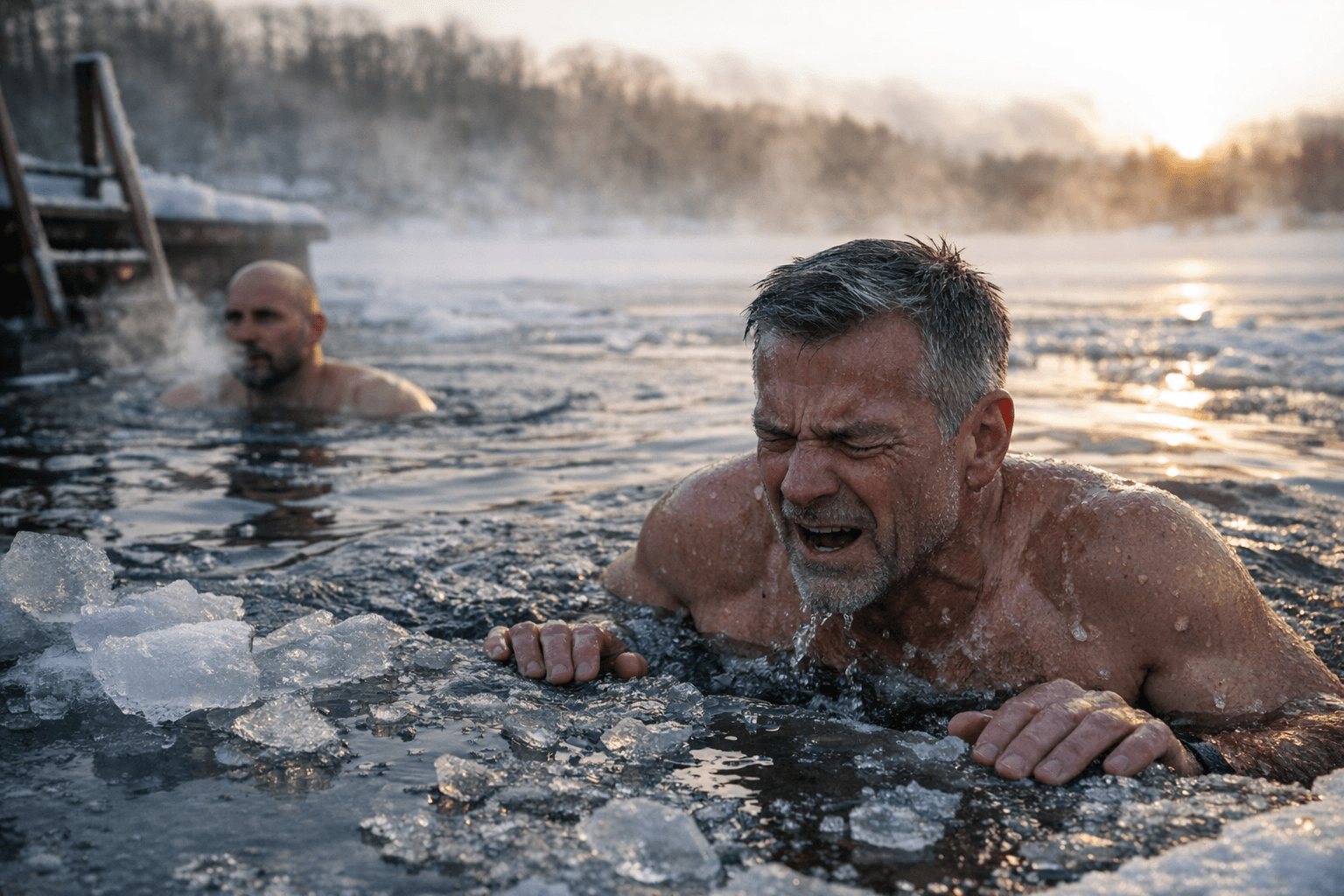
The wrong reasons, broadly speaking, involve treating cold plunging as a medically validated intervention for serious health conditions based on claims that haven't cleared the bar of rigorous evidence. If someone is pursuing cold-water bathing because they've been told it will definitively reverse aging or replace other forms of medical care, the scientific community's current caution is directly relevant to them.
The right reasons look different. Many people in the cold plunge community will recognize them immediately:
- The practice creates a genuine mental challenge that builds a sense of resilience and self-discipline over time.
- The immediate physiological effect, that sharp, clarifying shock of cold water, produces a real shift in mood and alertness that many practitioners find valuable on its own terms.
- It functions as a form of active recovery that feels good and fits into a broader movement practice.
- For some, it's simply a community ritual, a shared discomfort that creates connection.
None of these require the longevity claims to be true. They're honest about what the experience actually delivers, and that honesty is more durable than hype.
What the Community Should Take from This
For anyone who has spent time in the cold plunge world, the instinct when faced with a skeptical article is often defensive. The experience feels real. The benefits feel real. That reaction is understandable, but Gifford's piece isn't an attack on the practice. It's a call for intellectual honesty that, if anything, serves the long-term credibility of cold-water bathing as a serious subject of scientific inquiry.
The community's enthusiasm is part of what drives interest and eventually funding for better research. But that enthusiasm does the practice no favors when it shades into the promotion of unverified medical claims. Every overstated promise that doesn't deliver erodes trust, and cold-water bathing deserves better than to become another wellness trend remembered more for its marketing than its substance.
The science will continue to develop. Researchers are genuinely curious about cold exposure, and better-designed studies will produce cleaner answers over time. The most honest position for practitioners right now is to hold the experience itself with appreciation while holding the biggest claims with appropriate skepticism.
Get in the water because it makes you feel sharp, present, and alive. That's more than enough reason. Just don't let anyone sell you a lifespan.
This article was produced by Prism’s automated news system from verified source data, official records, and press releases, then run through automated quality and moderation checks before publishing. The system is built and supervised by the people who set the standards it runs under. Read our full AI policy.
Did this article answer your question?