five minutes in cold water may boost mood, study finds
Five minutes in 13.6C seawater lifted mood almost as much as 20 minutes, pointing to shorter, repeatable cold dips as a realistic sweet spot.

Five minutes in 13.6C seawater did almost the same job on mood as a 20-minute plunge, a result that gives cold-water regulars a sharper answer to the question behind every session: how long is long enough?
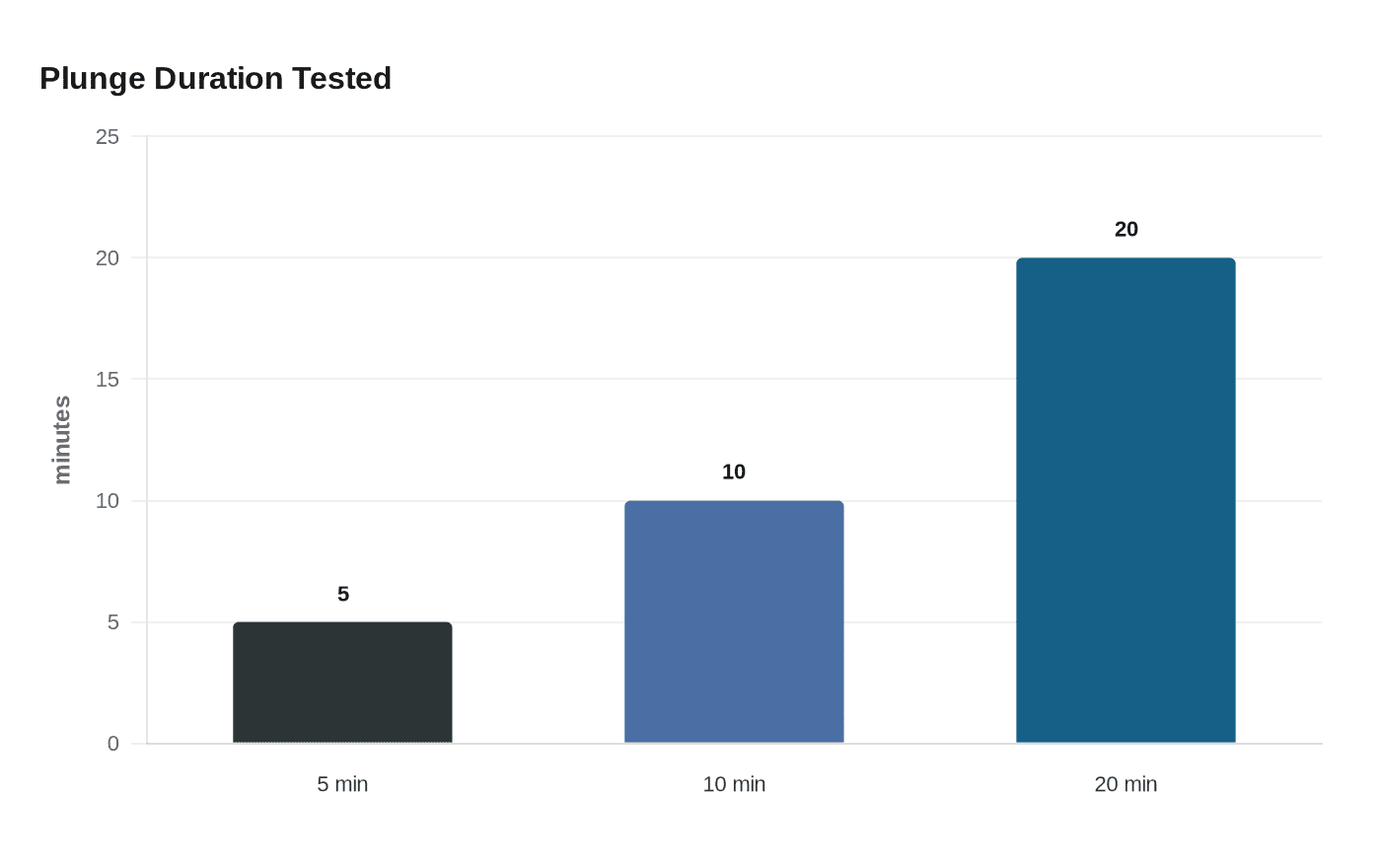
The University of Chichester study tested 121 students who said they were experiencing low mood. All were physically active and confident in the water, but none had previous experience of cold-water swimming or immersion practices. At West Wittering beach in the United Kingdom, researchers compared 5-, 10- and 20-minute immersions in seawater, and each participant completed a mood profile seven days before the trial and again immediately after getting out.

The headline is about mental health benefits, but the measurement was tighter than that. The trial tracked mood, not anxiety disorders, depression treatment, or long-term resilience. Even so, the pattern was clear enough to matter to the cold-plunge crowd: mood improved across all three exposure lengths, and the five-minute dip came close to the 20-minute session. The study was co-authored by John Kelly, Natalie Davidson and Joseph Delaney, and it was built to control for the effects of swimming itself, not just the shock of the cold.
That distinction matters because cold-water immersion has become a mainstream wellbeing habit, while the evidence base is still narrowing in on what actually helps. A 2024 systematic review and meta-analysis defined cold-water immersion in healthy adults as water at 15C or colder for at least 30 seconds, and recent reviews have noted its growing popularity among the general population. This study pushes the community conversation toward a practical middle ground: short exposures may be enough to produce a noticeable lift, without turning every dip into a heroic endurance test.
The University of Chichester also stressed that cold-water immersion is considered safe only in healthy, screened individuals under controlled conditions, and it cautioned people with pre-existing health conditions. For hobbyists chasing a usable protocol rather than a bragging right, the takeaway is straightforward: a brief, repeatable five-minute plunge may be the most realistic way to test whether cold water helps with mood, while bigger claims about anxiety, depression, or broader mental-health repair still go well beyond what this study measured.
This article was produced by Prism’s automated news system from verified source data, official records, and press releases, then run through automated quality and moderation checks before publishing. The system is built and supervised by the people who set the standards it runs under. Read our full AI policy.
Know something we missed? Have a correction or additional information?
Submit a Tip