From Ice Baths to Cryofacials: Clinics, Devices and Medical Claims
Aman New York’s chamber plunges to -167°F for three minutes while clinical liquid nitrogen sits at –196°C, underscoring how “cryo” stretches from mild ozone rolls to surgical freezes.

The cryotherapy landscape now spans social wellness ice baths, luxury full-body chambers and vaporized liquid nitrogen facials, with devices and protocols operating at vastly different temperatures. Aman New York runs a nitrogen-free, full-immersion chamber that “delivers subzero temperatures in under four minutes.” Guests are told to “remove all garments with the exception of gloves, socks, underwear, a hat and face mask before heading into a -72°F room where for 20 seconds guests stand before entering a -167°F chamber for three minutes.”
At the other end of the spectrum, clinical cryosurgery uses liquid nitrogen at a standard temperature of –196°C. Clinical guidance from Dr Amanda Oakley and Dr Jacqueline Kim Nguyen details delivery methods including cryospray, cryoprobe and cotton-tipped applicator; a timed spot freeze places the spray gun 1 to 1.5 cm above a lesion, sprays until an ice ball encompasses the lesion and margin, and maintains the ice field for 5 to 30 seconds with the option of a double freeze-thaw. The guidance notes the treated area is likely to blister within a few hours and that immediate swelling and redness may be reduced by “a topical steroid applied on a single occasion directly after freezing” or oral aspirin.

Facial and localized treatments commonly present a middle ground. Temperature-controlled cryo rollers that “stay cold for up to 40 minutes” are used over sheet masks, and devices such as a Raja Medical machine can “engulf the face in a cool, antibacterial ozone that’s only 68°F.” Practitioner Georgia Louise describes the effect on skin temperature: “Because of airflow and evaporation, the skin typically feels about 58 to 65°F, a 4 to 7°F drop in perceived temperature, not true cooling,” adding that targeted cooling can address “any inflammation and bruising for post-operative patients.” Louise also connects cooling to tightening: “Why is soft wave so effective? Because it’s so hot that the skin contracts, right? So what happens? It tightens. Well, you can also achieve the same with a cool machine because if it’s really, really cool, what’s going to happen? Your skin will tighten.”
Marketing and medical claims collide in the treatment room. Cryotherapy facials, sometimes called “frotox,” are described as procedures where “a machine-operated device pumps liquid nitrogen onto the face,” can be completed “in as little as 15 minutes,” and often promise “little to no downtime.” Dermatologist Dendy Engelman says cryotherapy can “promote collagen production and even offer migraine and sinus relief,” and a 2013 study found a frozen neck wrap at migraine onset “significantly” reduced migraine pain. At the same time, board-certified dermatologist Dr. Shamsa Kanwa cautions that “the skin rewarms, and there is a rebound increase in blood flow that can make the face look brighter for a short time, but that is not the same as long-term collagen remodeling.”
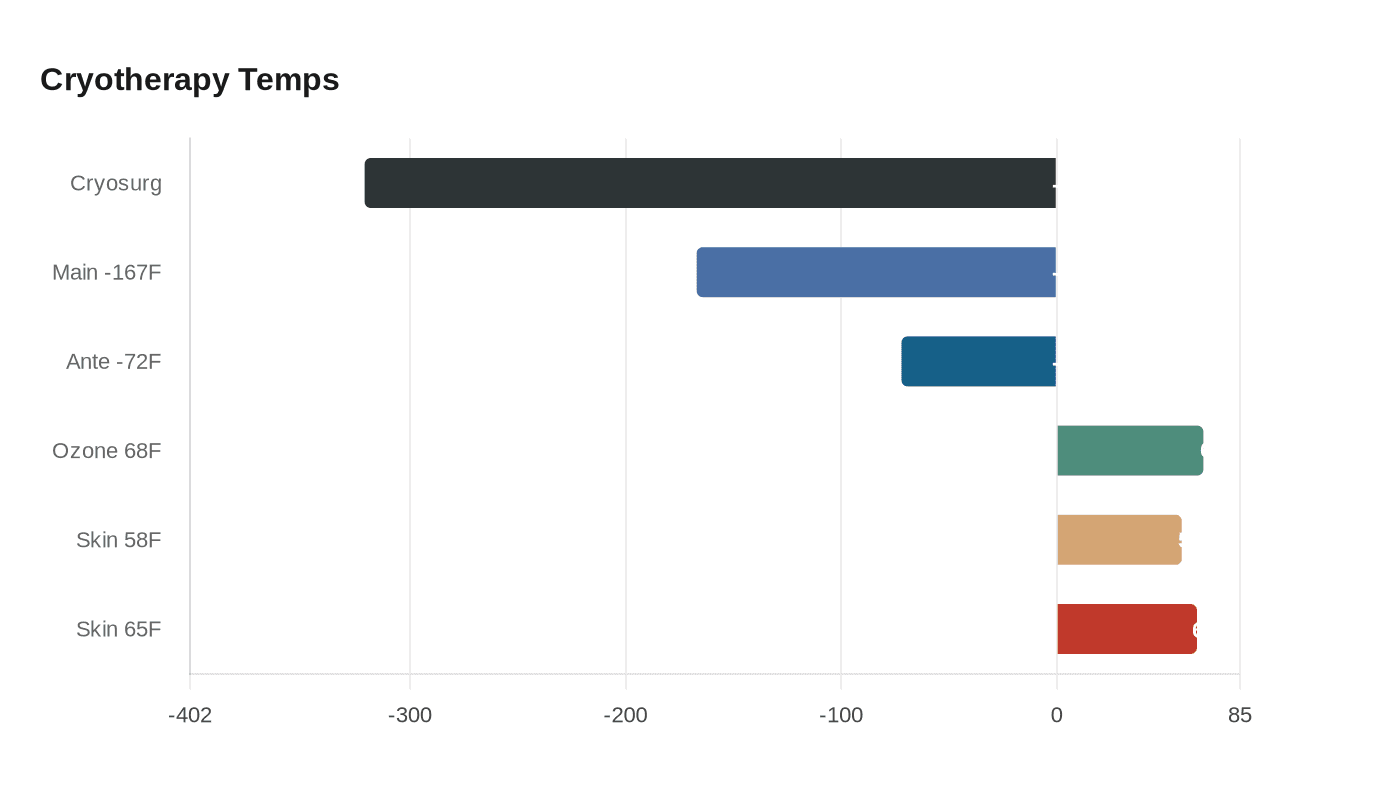
Regulatory lines are narrow: the U.S. Food and Drug Administration defines cryotherapy as “super-cooling” of the body for therapeutic purposes, and while there is an FDA-cleared facial treatment called GlacialRx, whole-body cryotherapy lacks FDA clearance. Practical takeaways for anyone booking a session: expect huge variation in device temperatures and techniques, short in-office facial times around 15 minutes, full-body sequences that include a -72°F ante room and a -167°F chamber, and clinical post-care that recommends gentle washing, optional dressing, and, for deeper freezes, topical steroid or aspirin to manage swelling.
This article was produced by Prism’s automated news system from verified source data, official records, and press releases, then run through automated quality and moderation checks before publishing. The system is built and supervised by the people who set the standards it runs under. Read our full AI policy.
Did this article answer your question?