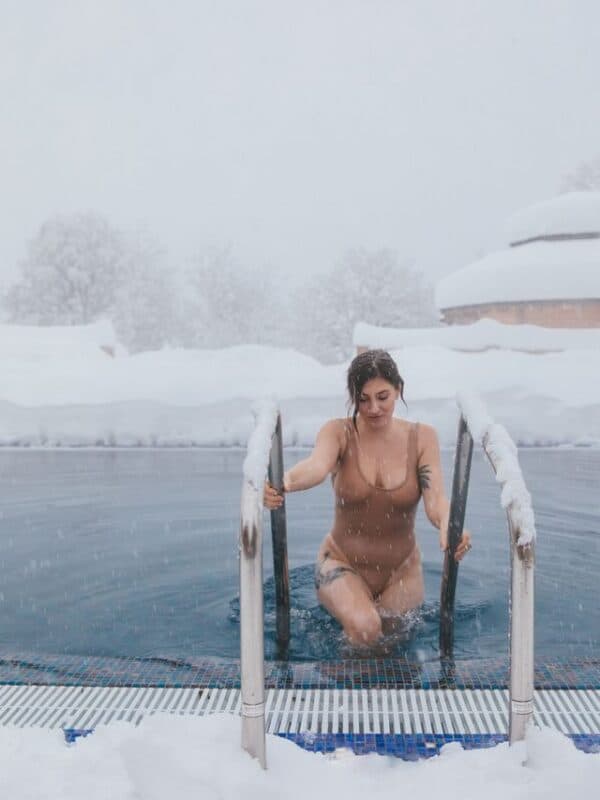
How to Build Your Own Cold-Plunge Setup at Home on a Budget
Skip the $5,000 commercial tub: a chest freezer, a few fittings, and about $300 can get you plunging at home within a weekend.
A chest freezer humming quietly in a garage, a simple thermometer clipped to the rim, water sitting at a crisp 50°F: this is what a functional cold-plunge setup looks like for the growing number of people who have decided that paying $5,000 or more for a branded cold-plunge tub makes no sense when a DIY version costs a fraction of that. Building your own isn't complicated, but it does require making the right choices at each step, from selecting the right vessel to keeping the water clean between sessions.
Why DIY Makes Sense for Most Plungers
The commercial cold-plunge market has exploded, with units from brands like Plunge, Ice Barrel, and Blue Cube commanding anywhere from $1,000 on the low end to well over $5,000 for a chilled-and-filtered setup. For casual hobbyists and even dedicated daily plungers, that price point is hard to justify when the core requirement is simple: a container large enough to submerge your torso, water cold enough to trigger a thermogenic response, and a way to keep things clean. A well-built DIY setup can hit all three targets for roughly $200 to $400 total, depending on which approach you take.
Choosing Your Vessel
This is the single most important decision in the build, and the community has largely converged on two options.
The chest freezer conversion is the most popular route for good reason. A standard 7-cubic-foot chest freezer (look for units in the 70 to 100 gallon range) holds enough water to submerge an average adult from neck to feet, and the built-in compressor keeps water chilled without any extra equipment. New units from brands like Midea or Frigidaire in this size range typically run $250 to $350, and used models on Facebook Marketplace or Craigslist regularly appear for $80 to $150. The key spec to check: the freezer must have a drain plug, or you'll need to add one, which is a straightforward but annoying retrofit.
The stock tank or galvanized trough is the budget champion. Agricultural supply stores like Tractor Supply Co. sell 100-gallon oval galvanized stock tanks for around $100 to $130. These don't chill themselves, so you'll need to add ice for each session (typically 40 to 60 pounds to drop tap water to the 50 to 59°F range most plungers target) or pair the tank with a standalone chiller unit. Ice-only setups work perfectly well if you're plunging a few times a week and have access to cheap or free ice; the ongoing cost of bagged ice, roughly $2 to $3 per 20-pound bag, adds up if you're going daily.
A third option gaining traction is a large Rubbermaid or Brute commercial trash can or tote, which can work for shorter, neck-deep plunges and costs as little as $40 to $60. These are popular for apartment setups where space and portability matter.
The Essential Gear Checklist
Once you've chosen your vessel, the remaining components are straightforward:
- Thermometer: A digital probe thermometer or a simple aquarium thermometer clip-on is essential. Target water temperature between 50°F and 59°F (10°C to 15°C) for the range clinical guidance most commonly associates with cold-shock adaptation benefits.
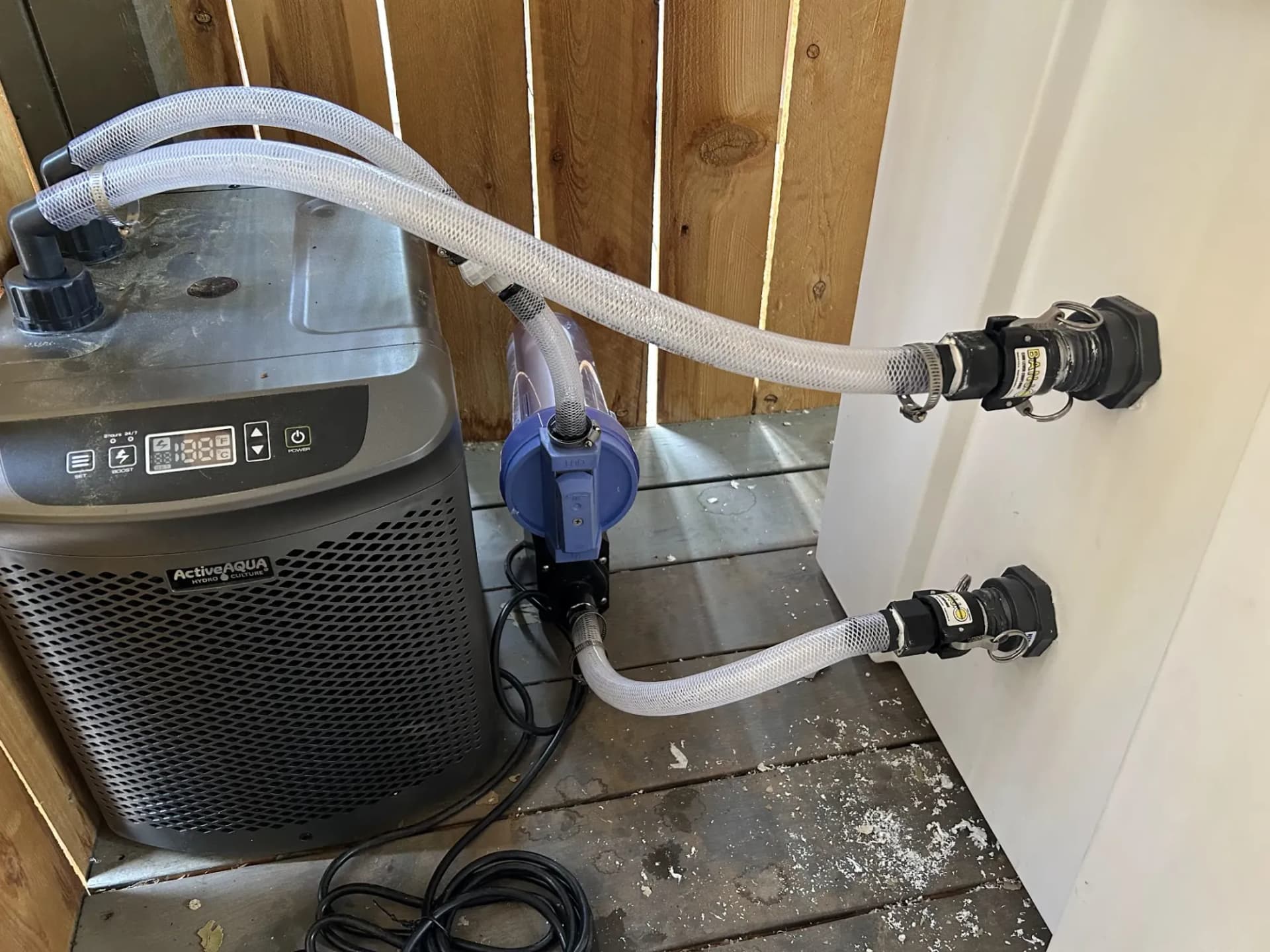
- Submersible pump and filter: For any setup you'll use more than twice a week, a small submersible pump (like those used in koi ponds or aquariums, typically $20 to $40) circulates water through a basic filter and dramatically extends how long you can go between water changes.
- Bromine or non-chlorine oxidizer: Unlike hot tubs, cold water doesn't off-gas chemicals as quickly, but it still needs sanitizing. Bromine tablets are the community standard for cold-plunge water care, as they're effective at lower temperatures than chlorine. A floating bromine dispenser costs about $10, and a 1.5-pound canister of tablets runs $15 to $20 and lasts months.
- pH test strips: Keep pH between 7.2 and 7.8. Strips cost about $8 for a large pack.
- Insulating lid or cover: Critical for chest freezer builds to maintain temperature efficiently; for stock tanks, a simple foam board cut to size works and costs under $10.
- Non-slip mat: Safety basics matter. A rubber mat inside and outside the vessel prevents slips on wet surfaces.
Setting Up and Dialing In Temperature
For the chest freezer build, the setup process is methodical. Fill the freezer with water, then set the thermostat to its warmest "freeze" setting initially (around 32°F on the dial) and let it run. Most plungers add a temperature controller, an external plug-in device like the Inkbird ITC-308 (around $30 to $40), which overrides the freezer's thermostat and lets you hold water at exactly 50°F or 55°F rather than cycling toward freezing. Without a temperature controller, a chest freezer will eventually ice over, which is wasteful and requires a thaw-and-refill cycle.
For the stock tank with ice, fill with tap water the morning of your planned session, then add ice roughly 30 to 45 minutes before you plunge to allow temperature to stabilize. Forty pounds of ice added to 60 gallons of 65°F tap water will typically land you in the 50 to 55°F range, though this varies by ambient temperature.
Water Maintenance: The Part People Skip
Neglecting water quality is the most common mistake in DIY setups. Cold water inhibits some bacterial growth but doesn't eliminate it, and a warm-adjacent environment (a garage in summer, for example) can accelerate the problem. The general community rule of thumb: with a pump, filter, and bromine, water in a chest freezer setup can last four to eight weeks before a full drain and refill. Without filtration, change the water every one to two weeks. After each session, shower before entering to reduce contamination load. Check pH and bromine levels weekly using your test strips, and add tablets or shock treatment if readings fall outside range.
Safety Fundamentals
Cold-water immersion carries real physiological demands that are worth taking seriously, particularly for first-timers. The cold-shock response, triggered in the first 30 to 90 seconds of immersion, causes involuntary gasping and can spike heart rate sharply. Clinical guidance consistently advises starting with shorter sessions of one to two minutes at warmer temperatures (around 60°F) and working down gradually, rather than jumping straight into 50°F water for five minutes. People with cardiovascular conditions, Raynaud's disease, or hypertension should consult a physician before building or using a cold-plunge setup. Never plunge alone until you've established your personal response to the cold, and always have a way to exit the vessel easily, without steps that could become slippery.
Total Cost Breakdown
For a chest freezer build with temperature controller and basic water care kit, expect to spend:
- Chest freezer (new): $250 to $350, or $80 to $150 used
- Inkbird temperature controller: $30 to $40
- Submersible pump and filter: $20 to $40
- Bromine dispenser and tablets, pH strips: $30 to $35
- Non-slip mat and insulated cover: $15 to $25
- Total: approximately $345 to $490 new, or $175 to $290 with a used freezer
For a stock tank build using ice, the entry point drops to around $130 to $160 for the tank, mat, and water care supplies, with the ongoing ice cost factored separately.
The math is difficult to argue with. Even at the high end of a chest freezer build, you're looking at a one-time investment that pays for itself in fewer than two months compared to a commercial unit, with a setup that serious plungers have used daily for years without issue.
This article was produced by Prism’s automated news system from verified source data, official records, and press releases, then run through automated quality and moderation checks before publishing. The system is built and supervised by the people who set the standards it runs under. Read our full AI policy.
Did this article answer your question?