McGill study finds icing injuries may slow recovery, not speed it
McGill researchers found icing eased pain in mice but could more than double recovery time, challenging the old reflex to ice every sprain.

The same cold that calms a swollen ankle may also slow the repair you actually need. In a McGill University study published in Anesthesiology, icing eased pain in the short term but, in some cases, more than doubled recovery time, putting fresh pressure on one of the oldest habits in sports recovery.
The paper, Cryotherapy and Duration of Inflammatory Pain in Mice, was published on May 8, 2026, with Lucas Lima, a research associate at McGill’s Alan Edwards Centre for Research on Pain, and Jeffrey Mogil, the James McGill Distinguished Professor and E. P. Taylor Chair in Pain Studies, as the lead scientists. Their preclinical work used mice with inflammatory and exercise-related injuries to test what happened when injured tissue was iced. The result was the kind of split-screen response cold-plunge fans know well in the tub, except here the tradeoff cut against healing: immediate relief, slower biological repair. The work was supported by the Canadian Institutes of Health Research Foundation and the Louise and Alan Edwards Foundation.
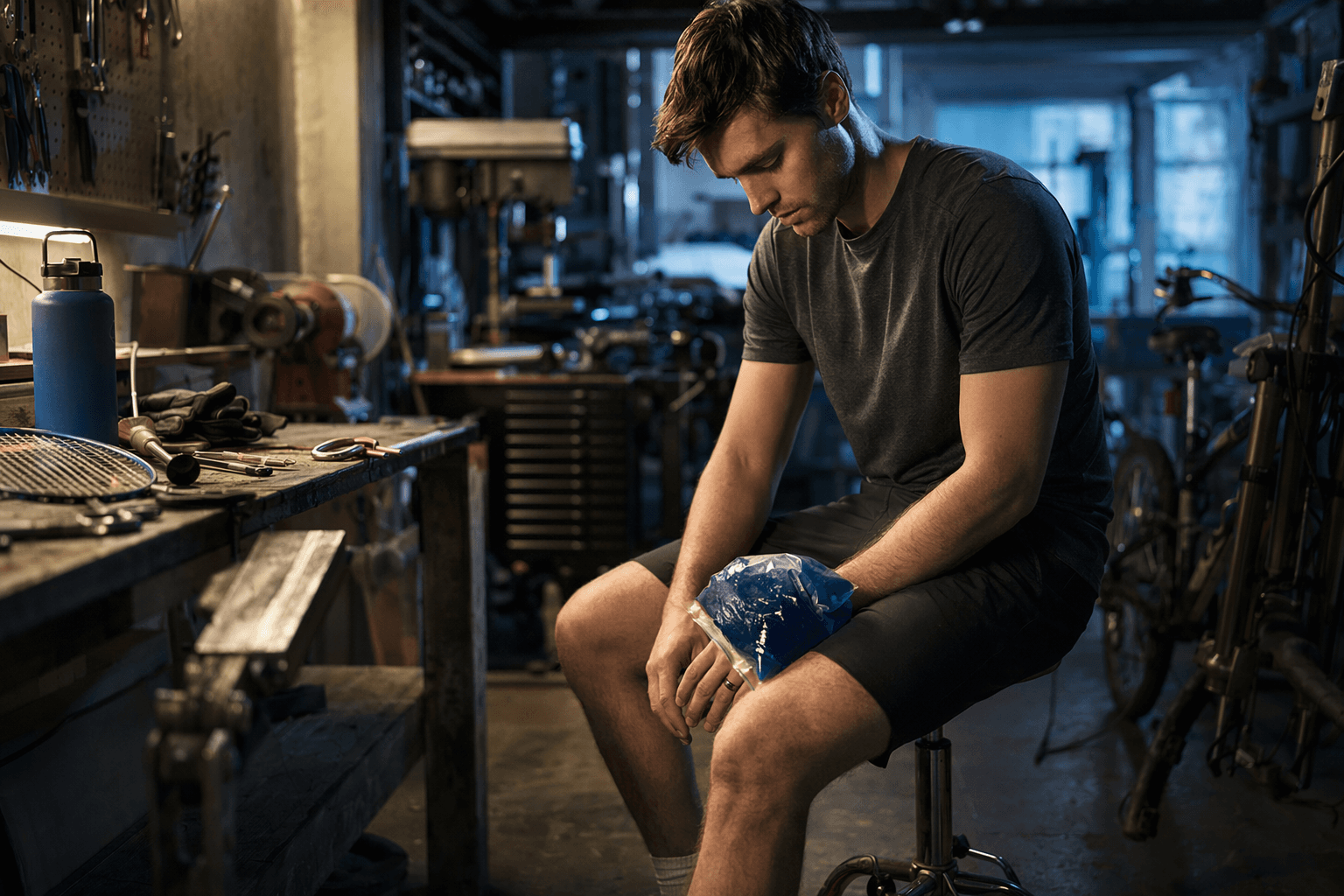
That tension lands hard in a recovery culture that still treats cold as a universal fix. Ice remains baked into the long-running RICE protocol, rest, ice, compression and elevation, and it still feels intuitive after a sprain, a strain or a hard training session. But the McGill findings fit a longer arc of skepticism. A 2008 review in Emerg Med J found insufficient evidence that cryotherapy improves clinical outcomes in acute soft-tissue injury, based on six human trials, four of which lacked randomization and blinding. That review also noted that modest cooling reduced edema in animal studies, while excessive or prolonged cooling could be damaging.
Later reviews kept pushing the field in the same direction. A 2021 to 2022 review in Res Sports Med said the role of cryotherapy in acute sport injury management was being challenged and called for study designs that better reflected real sporting conditions. Yale Medicine also noted that Gabe Mirkin, the sports-medicine physician who coined RICE, changed his position in 2015 and said rest and ice can possibly delay healing.
Mogil cautioned that the McGill findings are not yet directly transferable to humans, but the team is already testing whether similar effects show up in a clinical trial involving patients recovering from wisdom tooth removal. For ice bath culture, that matters because it separates two very different uses of cold: a deliberate plunge for training adaptation is not the same intervention as icing an acute injury. The new message is not to ban cold, but to use it with purpose, because the tub and the ice bag are solving different problems.
Know something we missed? Have a correction or additional information?
Submit a Tip