Paris hospital uses ice baths to treat heatwave patients
Paris-Saclay Hospital ran out of ice and borrowed from a fast-food restaurant to cool heatstroke patients in baths built to save lives, not sell wellness.
Paris-Saclay Hospital outside Paris had to borrow ice from a fast-food restaurant and buy more at a supermarket so medics could plunge heatwave patients into cold-water baths fast enough to drop body temperatures and cut the risk of death. The scene is a blunt reality check for anyone who treats cold plunges as a recovery tool first: in the emergency department, cold immersion is life-saving treatment.
France was in the middle of an exceptional heat wave when its national thermal indicator hit 29.6 C on June 23, the hottest day ever recorded in the country. Santé publique France said the episode was already the most severe heat wave ever recorded at that time of year, in the same league as July 2019 and August 2003. By June 24, 90 departments were under orange alert, covering 91% of the population, and 49 were under red alert, covering 52%.
The hospital in Orsay did not have an ice-making machine on site when the emergency hit, so staff improvised. A fast-food restaurant said the hospital could take its ice, and workers also bought ice from the supermarket. The hospital has since ordered its own ice machine for the emergency department, a small but telling upgrade in a system now being forced to treat ice as essential clinical equipment.
That shift is no longer limited to one ward. French officials have begun treating heat waves as a recurring operating problem for public hospitals, with cooling systems and other infrastructure work moving up the priority list. Prime Minister Sébastien Lecornu announced a 100 million euro package for cooling systems and other work meant to keep hospital wards functioning through summer heat.
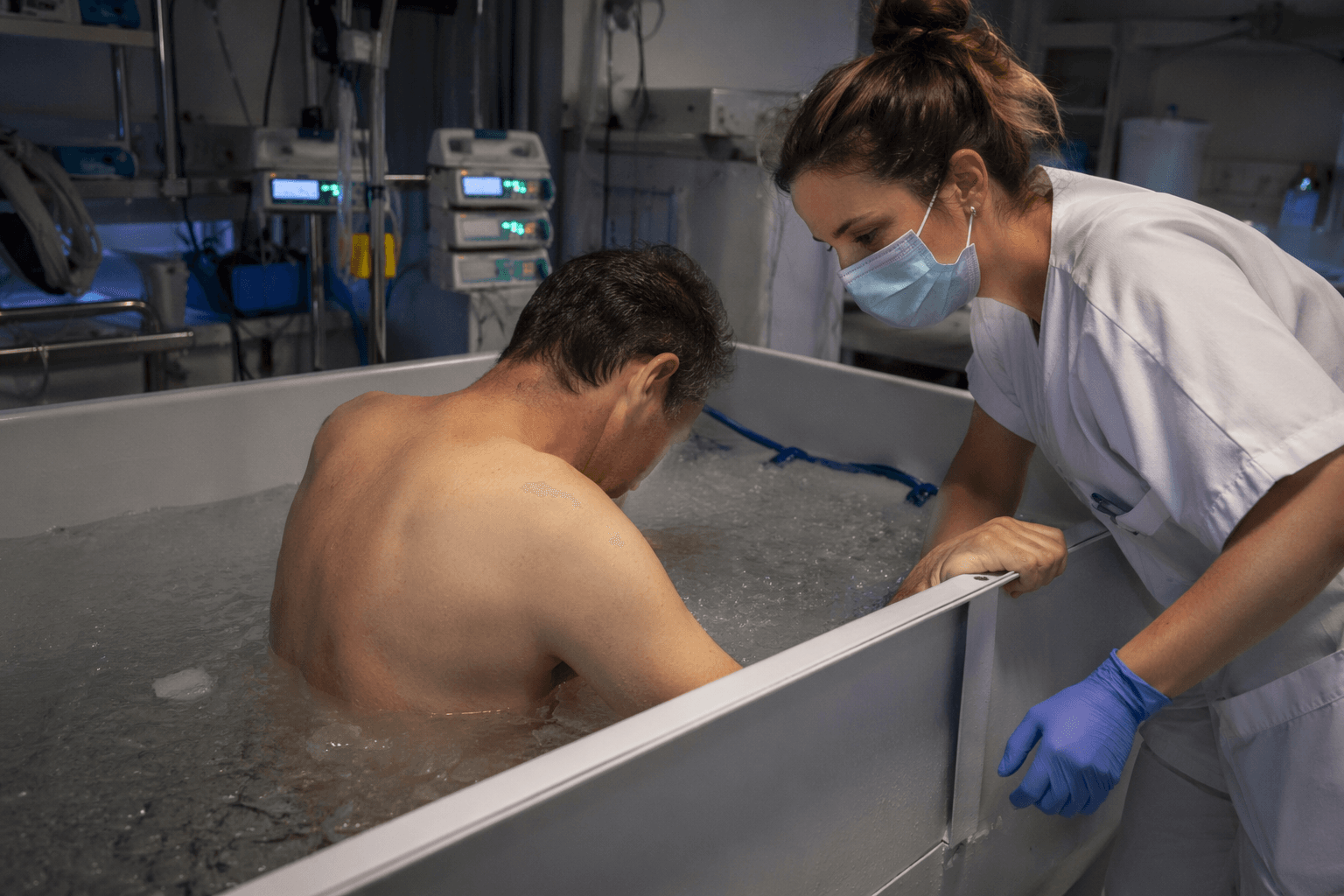
The stakes were not abstract. France’s public health agency later estimated around 1,000 additional deaths during the heat wave, with most of the excess deaths among people age 65 and older. That is the patient population that makes every minute count when core temperature rises dangerously fast, and it is why cold-water baths sit in a different category from the wellness-world cold plunge tub.
For the ice-bath crowd, the contrast is hard to miss. At Paris-Saclay Hospital, cold water was not about recovery, discipline, or a post-training buzz. It was emergency medicine under pressure, built around speed, supplies, and the kind of clinical improvisation that turns a borrowed bucket of ice into a chance to save a life.
This article was produced by Prism’s automated news system from verified source data, official records, and press releases, then run through automated quality and moderation checks before publishing. The system is built and supervised by the people who set the standards it runs under. Read our full AI policy.
Did this article answer your question?