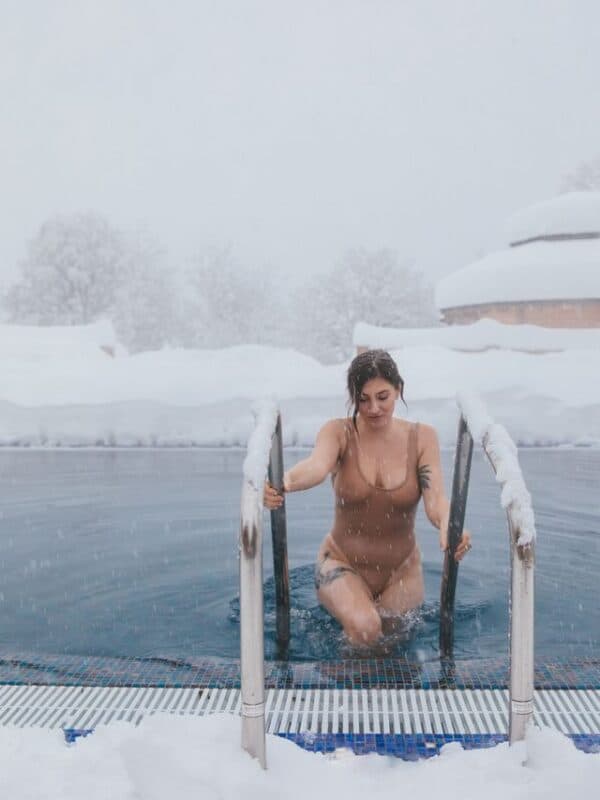
Sky Brown Says Ice Baths Fit Into Her Everyday Training Routine
At 17, Sky Brown treats ice baths like part of training, not a special event. That everyday mindset is where cold-plunge culture is headed.
Sky Brown is making ice baths look normal
Sky Brown is not selling recovery as a spa ritual. She is treating it like another part of a workday that already includes school, skate sessions, surf sessions, and the pressure of chasing another Olympic run. That is why her routine lands differently: a good meal, a sauna, and an ice bath are not a separate wellness identity, they are just how she keeps moving.
What makes that hit is the scale of her day. Brown says she skateboards about three hours and surfs for about two more, then folds recovery into the same rhythm instead of turning it into a production. For anyone watching cold-plunge culture drift from niche training tool to lifestyle badge, that is the real shift. The story is no longer about athletes doing extreme things in specialist facilities. It is about a 17-year-old making contrast therapy feel as ordinary as stretching out after practice.
Why Brown’s version of recovery matters
Brown’s approach cuts against the overengineered version of wellness that has taken over so much of the conversation around cold exposure. She does not frame training as a rigid program, and she does not frame recovery as something reserved for off-days or recovery weeks. She describes it as part of her everyday life, which makes the ice bath feel less like a stunt and more like a habit that fits between the things she already has to do.
That matters because Brown is not a retired pro, a founder, or an influencer chasing a wellness aesthetic. She is still in the middle of building a career, balancing school with elite sport and a growing media profile. When someone like that says saunas and ice baths sit naturally alongside practice, it signals where the category is headed: less ritual theater, more repeatable routine.
A training life built around two sports
Brown’s schedule is demanding even before recovery enters the picture. Skateboarding takes about three hours a day, surfing takes about two, and those sessions sit inside a broader life that also includes education and the pressure of Olympic qualification. In that context, recovery is not optional polish. It is the thing that lets her keep stacking days.
This is also why her wellness choices feel so practical. The same athlete who spends hours on a board is not looking for a complicated recovery stack. She keeps it simple: eat well, use the sauna, get in the ice bath, and get back to work. That kind of discipline is easy to misunderstand from the outside because it looks low-key, but for athletes with packed schedules, simple is often what survives.
What her routine looked like even before this moment
Brown’s recovery habits are not new. Olympics.com reported in 2024 that her training days already included barbell work, mobility exercises, futsal, dance, ice baths, and sauna visits as she prepared for Paris 2024. That detail matters because it shows the ice bath was never a one-off experiment bolted onto her life after it became trendy.
Instead, the cold plunge sits inside a much bigger physical ecosystem. She is not just skating and surfing; she is building strength, coordination, and resilience across multiple movement patterns. That gives the recovery piece real purpose. The ice bath is not there to look hardcore. It is there to support a body that has to absorb hard landings, long sessions, and the kind of repetitive load that comes with chasing elite results in more than one discipline.
The results have backed up the routine
Brown’s resume makes the recovery discussion even more compelling. Team GB says she was 13 years and 28 days old when she became Team GB’s youngest Olympic medallist, and Olympics.com has described her as Great Britain’s youngest-ever summer Olympian. She went on to win bronze at Paris 2024 despite a shoulder injury shortly before the Games, then won her second world skateboarding championship in São Paulo in March 2026. She also gave Great Britain its first skateboarding world championship in 2023.
Those milestones are not just trivia. They explain why this story is bigger than a wellness habit. Brown is already operating at a level where recovery is part of performance architecture. The ice bath is one small piece of a system that has helped her stay in the game across injuries, podiums, and constant travel. In that sense, her routine is a preview of how the next generation of athlete recovery may look: less obsessed with spectacle, more focused on what can actually be repeated.
Why the 2028 path raises the stakes
Brown is also aiming at something unusually ambitious: double qualifying for Los Angeles in 2028. That is not just a headline-grabbing goal, it changes what recovery has to do for her body. She is trying to stay competitive in both skateboarding and surfing, which means she needs a routine that can support different kinds of strain, different competition calendars, and different environments.
The surfing side is especially important now that the LA28 surfing competition is set for Lower Trestles in San Clemente, California. The approved qualification system includes the 2028 World Surf League Championship Tour and the ISA World Surfing Games, which means the pathway is clear but demanding. If Brown is serious about lining up in both sports, her recovery habits need to hold up across two Olympic lanes, not just one.
The science is useful, but it is not hype-proof
For all the athlete appeal, the evidence around cold-water immersion is still more complicated than the marketing around it. A 2022 systematic review found mixed results in the research, and a 2023 meta-analysis said cold-water immersion can reduce muscle soreness and help fatigue recovery after high-intensity exercise, though the results vary from study to study. That is exactly the kind of nuance the cold-plunge world often skips.
Brown’s routine sits in the middle of that tension. She is using a tool that many athletes swear by, but she is not presenting it as magic. The point is not that every session needs an ice bath to count. The point is that for an athlete in her position, recovery has to be accessible, repeatable, and boring enough to stick. That is a much stronger case than any flashy wellness pitch.
What this says about where cold-plunge culture is going
The biggest signal in Brown’s story is not that ice baths are becoming popular. It is that they are becoming ordinary. When a 17-year-old balancing school, skateboarding, surfing, and Olympic ambitions talks about saunas and ice baths the same way most people talk about brushing their teeth after practice, the culture has clearly moved on from novelty.
That is the direction worth paying attention to. Cold plunges are no longer being defined only by retired pros, recovery clinics, or wellness personalities trying to create a brand around pain tolerance. They are becoming part of the default training vocabulary for younger athletes who want tools that fit real life. Sky Brown is not turning ice baths into a trend. She is showing that the next wave of recovery culture will be built around everyday consistency, and that may be the most durable trend of all.
This article was produced by Prism’s automated news system from verified source data, official records, and press releases, then run through automated quality and moderation checks before publishing. The system is built and supervised by the people who set the standards it runs under. Read our full AI policy.
Did this article answer your question?