Vancouver Maritime Museum backs cold plunge sauna barge to shore up finances
A 150-foot sauna-and-cold-plunge barge at Kits Point could become the museum’s new income engine, but the plan already faces pushback from more than 1,500 petition signers.
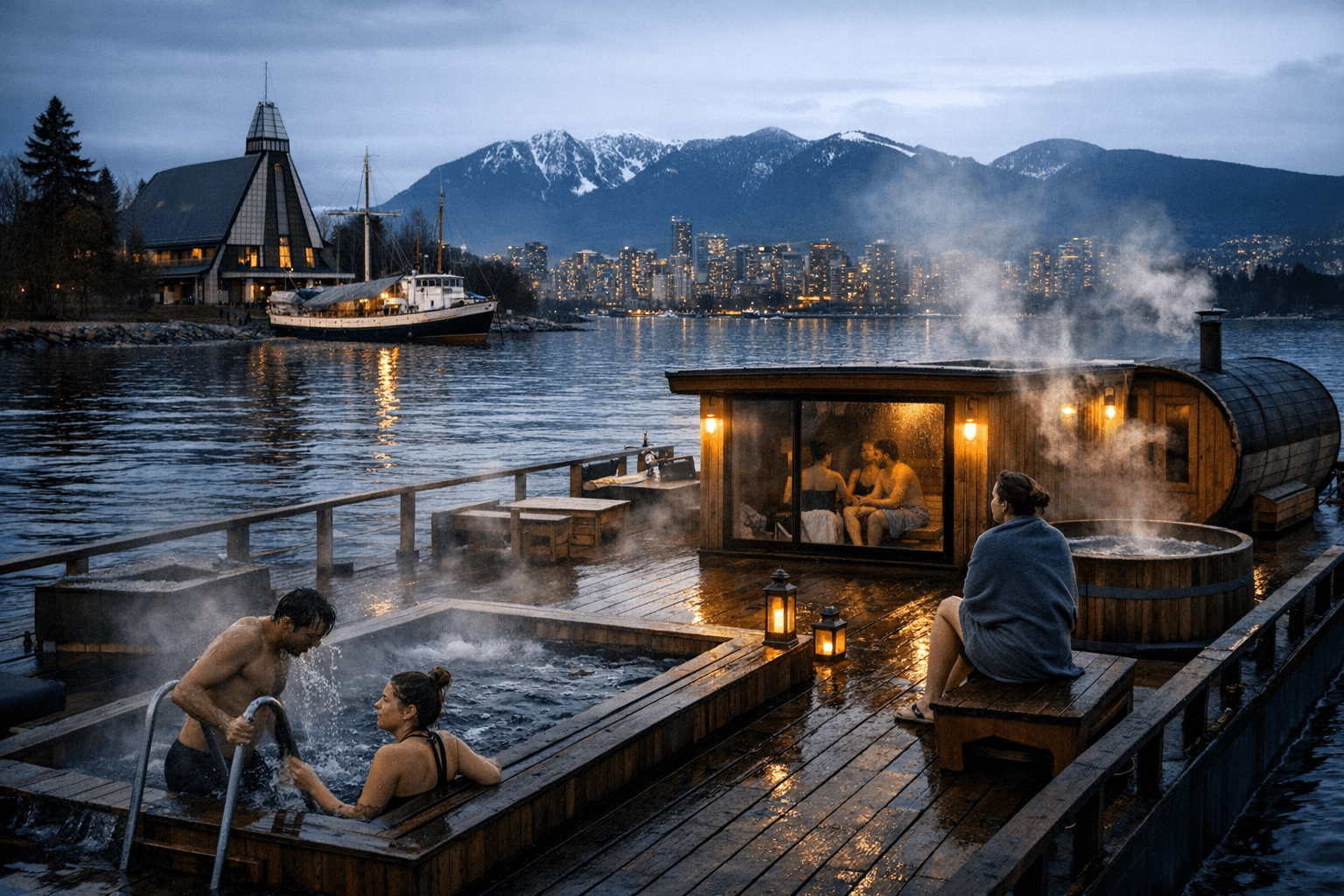
A cold-plunge and sauna barge beside Kits Point is being pitched as more than a wellness novelty. For the Vancouver Maritime Museum, it could also be a new revenue stream at a time when the institution has been wrestling with deficits and a budget that has not kept pace with its costs.
Executive director David Jordan told city officials the museum posted deficits in 2024 and 2025, while its annual operating budget sits at about $1.6 million. The city’s $400,000 annual contribution has stayed unchanged for two decades. Jordan has argued that earned revenue is the more stable path forward, especially if the museum wants to keep staff and avoid more turnover.
That pressure has already shown up inside the building. The museum has lost curators, program coordinators, an archivist and other employees to better-paying jobs and communities where living costs are lower. In that context, the barge is being framed as part of a larger survival strategy, not just a side attraction. The museum is also looking at an Inuit-led refresh of the St. Roch exhibit as part of the same revitalization effort.
The proposed project centers on a 150-foot refitted 1940s naval barge that would be owned and operated by HAVN Sauna Inc., a hydrotherapy company that launched a cold plunge-sauna barge in Victoria in June 2023. The city has already submitted a rezoning application on the museum’s behalf, moving the idea from concept into the city process that would decide whether the barge can actually take shape in Heritage Harbour Marina.
The idea has drawn resistance as quickly as it has drawn attention. An online petition against the plan has gathered more than 1,500 signatures, showing that the debate is not only about wellness culture, but about what belongs on a public waterfront and who gets to benefit from it. Supporters see a rare chance to turn a heritage institution into a more self-sustaining civic attraction, one that can pull in visitors through cold exposure, sauna sessions and harbor views.
If the project moves ahead, it could become a test case for other waterfront cities trying to blend recreation, cultural funding and public access without letting any one piece swallow the rest.
This article was produced by Prism’s automated news system from verified source data, official records, and press releases, then run through automated quality and moderation checks before publishing. The system is built and supervised by the people who set the standards it runs under. Read our full AI policy.
Did this article answer your question?