Continuous brew vs batch brewing, Kombucha Kamp weighs the trade-offs
Continuous brew wins when you drink kombucha on repeat and want less cleanup, steadier flavor, and less waste. Batch brew still fits the tinkerer who wants tighter control and smaller runs.
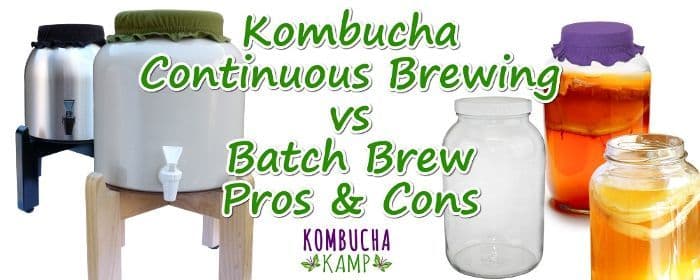
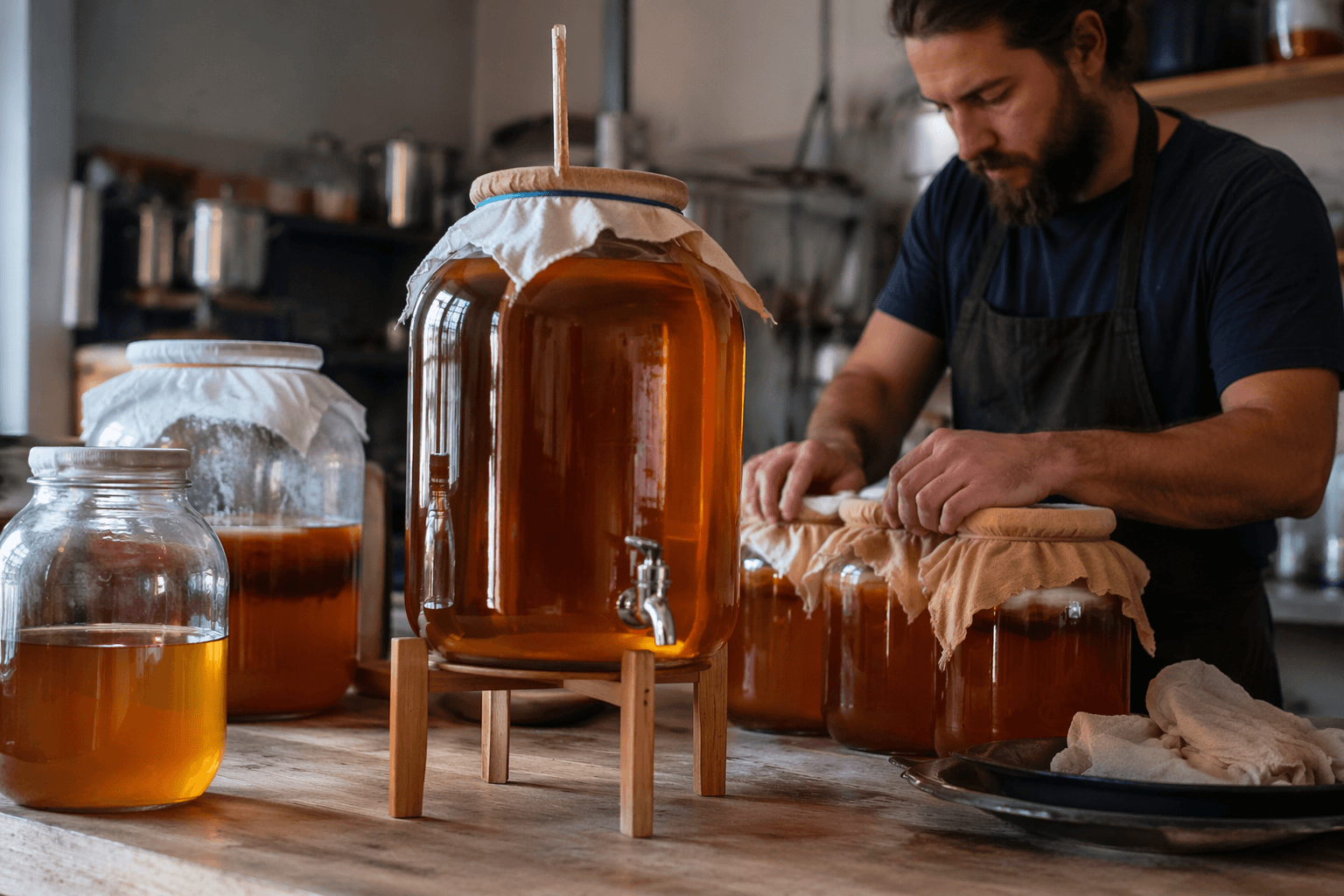
Continuous brew keeps one living culture running in a vessel, while batch brewing starts over every cycle with fresh tea, a SCOBY, and starter liquid. The method changes cleanup, consistency, waste, and how often you are resetting the whole operation.
The two systems, in plain brewer's terms
Kombucha is a lightly effervescent, cider-like beverage made by fermenting sweetened tea with a SCOBY, the starter culture of bacteria and yeasts. In batch brewing, that process happens in discrete rounds: brew sweet tea, add the SCOBY and starter liquid, let it ferment for roughly 7 to 14 days, bottle the finished kombucha, clean the vessel, and begin again.
In the continuous setup, the culture stays in the vessel over time. You draw off finished kombucha and replace it with fresh sweet tea, so the system keeps working without a full reset. Batch gives you a clean start every time, while continuous brew gives you a steady loop.
Where continuous brew earns its keep
This is the version that starts paying off when kombucha disappears from your fridge as fast as you can make it. Continuous brew can make a lot more kombucha over time, depending on taste preference and brewing cycle, and the method is especially useful for households that drink it regularly. If you are making bottle after bottle for a family, or you are the kind of drinker who reaches for kombucha every day, the lower-waste, lower-cost rhythm is hard to ignore.
The other advantage is mechanical, not mystical. Continuous brew can ferment faster, reduce SCOBY handling, and lower contamination risk because there is less opportunity for mold or other microbes to get a foothold. That is one reason the method feels easier after you get used to it: you are not constantly opening the system, moving the culture, and restarting from scratch. Kombucha Kamp says it has taught millions of homebrewers since 2004, and argues that continuous brew is not a club for advanced users, but a method that becomes simpler as the system settles in.
A well-placed spigot matters here too. A continuous-brew container works better when the spigot is positioned carefully so sediment is less likely to end up in your bottles.
Where batch brewing still makes more sense
Batch brewing still has a real edge when you want a tighter grip on each cycle. Because you start fresh every time, it is easier to change teas, adjust sugars, and treat each run as its own experiment. If you only brew occasionally, or your fermentation space is small and you do not want a permanent vessel taking up counter space, batch keeps the process contained.
It also suits people who like a clean finish line. Brew, ferment for 7 to 14 days, bottle, wash the jar, move on. That structure is straightforward, and for a lot of beginners it is easier to understand than a living vessel that is always on duty. Continuous brew is not actually complicated, but it does ask you to think in terms of balance and flow rather than one sealed batch at a time.
Flavor, SCOBY health, and the cleanup problem
The biggest argument for continuous brew is consistency. The method can deliver better flavor consistency once you learn the system, because the culture is not repeatedly interrupted. Batch brewing gives you full control over each cycle, but it also means more abrupt changes from batch to batch, especially if you are altering your tea base, sugar level, or ferment time.
SCOBY health is tied to that steadiness. Continuous brew keeps the culture in one vessel and reduces the handling that comes with repeated start-stop cycles. Batch brewing is not unsafe or wrong, but it asks the culture to reset over and over, and that makes the workflow feel more fragile when you are trying to dial in repeatable results.
Cleanup is the least glamorous part of the equation, and it is where continuous brew often wins outright. Batch means more washing and more setup every time you finish a jar. Continuous brew trims that cycle down, which is why it can feel less like a monthly project and more like part of the normal kitchen routine.
Safety and the bigger kombucha context
Health claims around kombucha vary widely, and only limited scientific research is available on benefits and safety. Kombucha is often sold and discussed like a functional health drink, while the evidence base is still thin. The U.S. Food and Drug Administration also maintains a consumer-facing kombucha page.
In 1995, the Centers for Disease Control and Prevention's MMWR documented unexplained severe illness in Iowa linked to kombucha tea consumption, including one death. That does not mean home brewing should scare you off, but it does mean sanitation, vessels, and handling matter.
How to choose the setup that fits your life
If you drink kombucha often, want a constant stream, and care about reducing waste, continuous brew is the cleaner fit. If you like experimenting with teas and sugars, brew in smaller runs, or simply want each cycle to begin with a fresh reset, batch brewing gives you that control.
Grand View Research estimated the U.S. kombucha market at $1.62 billion in 2024 and projected 13.6% CAGR from 2025 to 2030.
This article was produced by Prism’s automated news system from verified source data, official records, and press releases, then run through automated quality and moderation checks before publishing. The system is built and supervised by the people who set the standards it runs under. Read our full AI policy.
Did this article answer your question?