Kombucha Kamp guide explains jun tea flavoring and continuous brew
Jun is its own ferment, not kombucha with honey. Get the tea, starter, heat, and flavor timing right, and the first batch behaves more like a plan than a gamble.
Kombucha Kamp’s Jun Tea Recipe & Flavoring Guide treats jun as a separate ferment, and that is the right mindset if you are coming from standard kombucha. Jun uses green tea and raw honey instead of black tea and cane sugar, ferments faster, and rewards tighter control over heat, starter strength, and flavor timing.
Why jun behaves differently
Jun is built around a true Jun culture that is adapted to raw honey and green tea, not just a kombucha SCOBY dropped into a sweeter recipe. That matters because honey brings readily available sugars and micronutrients to the table, which is why the guide says jun often ferments faster, lands with a lighter body, and develops the floral aroma and naturally high carbonation people chase in the first place. The same page also pushes back on the lazy “no yeast” myth: yeast still drives the early fermentation, just as it does in kombucha.
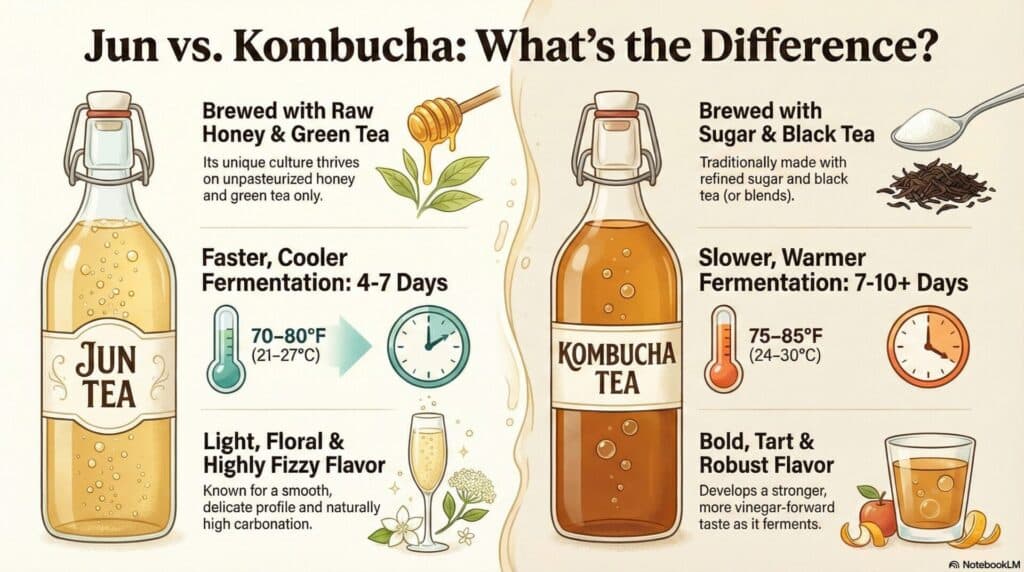
Kombucha Kamp’s comparison chart makes the split even clearer. Jun is listed as a raw-honey, green-tea ferment that typically runs 4 to 7 days per gallon, compared with kombucha’s 7 to 10-plus days, and it prefers a cooler window of 70 to 80°F, with 75°F marked as ideal. That shorter cycle is part of the appeal, but it also means you do not get much room to be casual about temperature or starter quality.
Match the tea and starter to the culture
If you are used to brewing kombucha on black tea, this is the first real course correction. Kombucha Kamp says the genuine Jun cultures it sells are grown using only raw honey and prefer green tea, though other tea blends will still brew, and the kit page specifically includes Hannah’s Green Goddess Tea Blend for jun or kombucha. The continuous-brew and culture pages also frame jun as a raw-honey cousin of kombucha, which is a useful shorthand only if you remember that the culture is still expecting the right fuel.
Starter strength matters just as much. The Jun Brew Kit includes at least 1 cup of strong starter liquid and notes that the heirloom Jun SCOBY makes 1 gallon in the first batch, with a second culture recommended if you want more than a gallon right away. That is the kind of detail that keeps a first jun batch from wandering into weak, sluggish fermentation territory before it even gets going.
The other practical shift is the honey itself. The kit page says future batches should continue with raw honey, and recommends 8 ounces per gallon, which is a very different ingredient habit from standard sucrose-based kombucha. If you already have a kombucha routine, this is where jun stops being a flavor tweak and becomes a separate workflow.
Continuous brew changes the rhythm
Kombucha Kamp does not treat jun as a one-off novelty. The Jun page says it is continuous-brew friendly, and the broader continuous-brew FAQ explains why that matters: CB flips the ratio toward more already fermented liquid and less fresh sweet tea, then keeps the vessel running in place instead of restarting every batch. In that system, the site says 1 gallon can turn every 2 to 5 days after the initial batch, and the ideal vessel size is 2 to 5 gallons so the balance of bacteria and yeast stays steady.
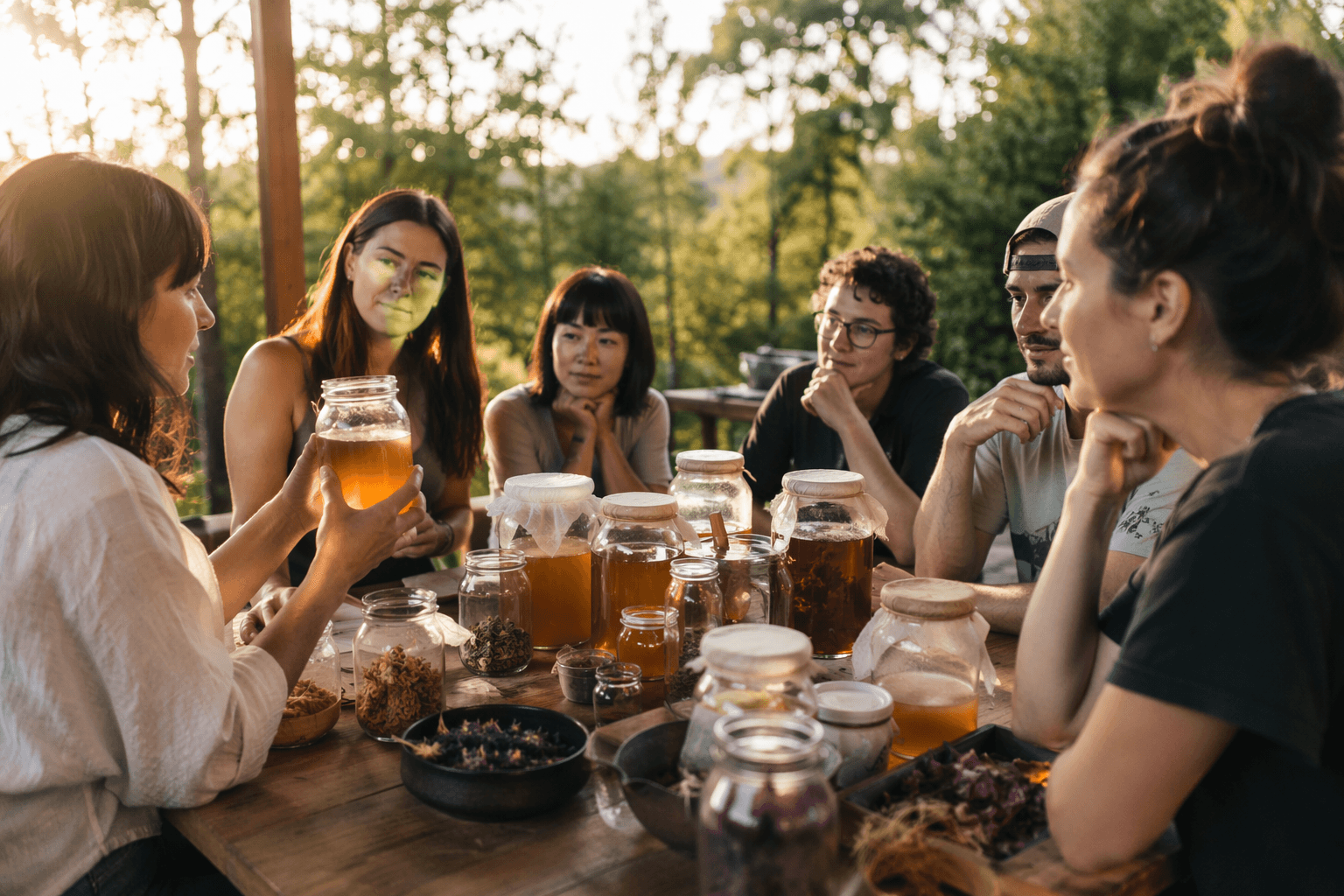
That setup is also less fussy in day-to-day handling. The FAQ says a continuous-brew vessel can be refreshed only every 3 to 6 months instead of every week, and the spigot makes decanting cleaner than juggling funnels and jars. For jun, that is a strong fit if you want an ongoing supply of a delicate, fizzy drink without rebuilding the culture from scratch every time.
Heat is not a background detail
Temperature control is where a lot of first jun batches get shaky. The Jun kit page says 70 to 80°F is the best range, with 75°F ideal, while Kombucha Kamp’s heating guide says young kombucha does best as close to 78 to 80°F as possible because that helps prevent mold and keeps fermentation consistent. Put those together and the takeaway is simple: jun wants a stable spot, not a drafty countertop, and a heating strip or year-round heating system makes sense if your room runs cool.
The company’s own continuous-brew guidance backs that up for larger vessels, recommending heating help for 2.5-gallon brewers. In practice, that means jun is less about chasing speed with extra heat and more about keeping the culture in its comfort zone long enough to do the job cleanly.
Flavoring works best after jun settles into F2
Once the base ferment is where you want it, jun takes to flavoring the same way kombucha does. Kombucha Kamp’s flavoring guide says flavoring happens during second fermentation, after the SCOBY is removed, and that fruit, juices, herbs, spices, or extracts can be added before bottling. The guide’s bottle rules are specific: fill to the neck, leave 1/2 to 1 inch of headspace, store warm for 1 to 5 days, and burp daily to avoid over-carbonation.
That caution matters even more with jun because the jun page already describes it as naturally very fizzy. The flavoring guide adds a useful control knob: smaller fruit pieces push flavor faster, frozen fruit releases flavor quickly, and muddling can intensify the result. If you want jun to stay elegant instead of turning into a pressure test, keep the fruit cut and the timing tight.
Jun works when you stop treating it like a shortcut and start treating it like a different culture with different habits. Get the green tea, raw honey, starter liquid, and temperature right, then flavor it after the base ferment is stable, and the lighter body, floral lift, and champagne-like fizz the guide promises show up the way they should.
This article was produced by Prism’s automated news system from verified source data, official records, and press releases, then run through automated quality and moderation checks before publishing. The system is built and supervised by the people who set the standards it runs under. Read our full AI policy.
Did this article answer your question?