Kombucha Kamp guide lays out practical home brewing safety steps
Kombucha Kamp's safety guide turns brew day into a risk audit, showing where mold, pH drift, and bottle bombs start before a batch goes bad.
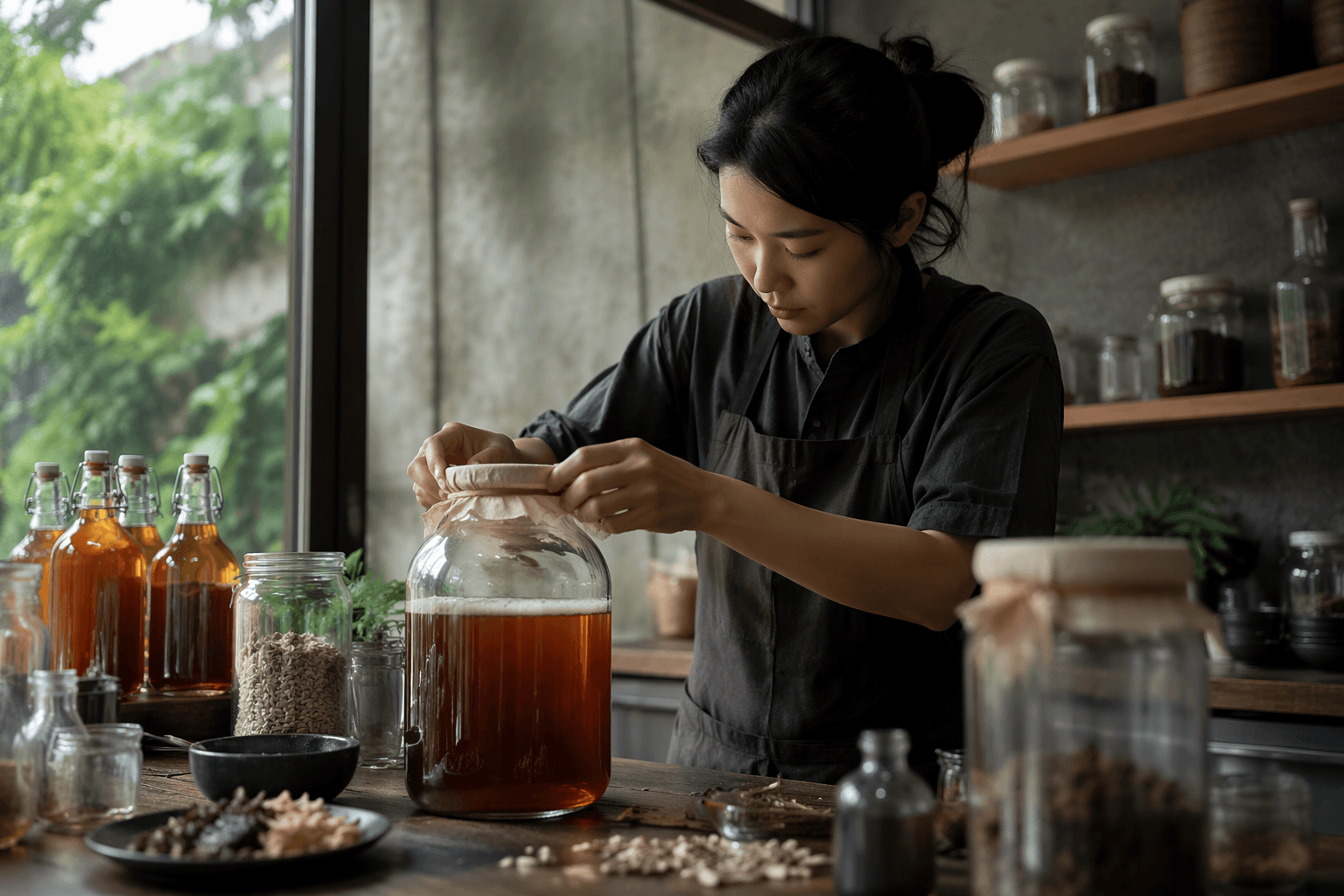
Kombucha Kamp’s brewing safety guide reads like the checklist you want on the wall before the next batch ever touches a jar. It treats mold, acidity, temperature, and bottle pressure as one system, which is the only sensible way to keep home kombucha from sliding into a ruined batch, a nasty cleanup, or worse, a bottle bomb.
Start with the basics, not the hype
Kombucha itself is straightforward: a lightly effervescent, cider-like drink made by fermenting sweetened tea with a SCOBY. Colorado State University Extension makes the important point that the SCOBY is not a mushroom, even if the nickname has stuck for decades. That matters because kombucha safety starts with understanding the process, not with the usual internet mythology about mystery health effects or dramatic warnings that flatten everything into fear.
The drink also has a longer and messier history than most home brewers realize. The University of Wyoming Extension notes that kombucha was not introduced commercially in the United States until the 1990s, while records of it as a functional beverage in China go back to about 220 BC. Colorado State also notes that only limited scientific research exists on kombucha’s benefits and safety, which is exactly why practical process control matters more than wishful thinking.
Sanitation is the first real safety gate
The strongest part of the guide is its refusal to treat sanitation like a feel-good slogan. Kombucha Kamp’s message lines up with extension guidance: clean equipment, clean hands, and no shortcuts around the starter culture. Wyoming Extension recommends starting with a licensed, inspected SCOBY source if possible, then using 1.5 to 2 cups of starter liquid for a 1-gallon batch so the brew has enough acid protection from the start.
That clean start is not just about the jar and spoon. Colorado State University Extension says to wash your hands and rinse with kombucha or vinegar before handling the SCOBY, and to keep the brewing environment clean so mold and harmful bacteria have fewer chances to take hold. Wyoming Extension also recommends steeping tea in water hotter than 165°F to kill vegetative pathogens, which gives you a concrete temperature floor instead of vague advice to just "make it hot."
A practical brew-day audit looks like this:
- clean vessel, cloth, and tools
- hands washed before handling the SCOBY
- starter liquid measured, not guessed
- tea steeped above 165°F
- no cracked glass, sticky counters, or mystery residue
If any of those checks fails, the batch is already starting from a bad position.
Know what healthy fermentation looks and smells like
A lot of kombucha trouble starts with people not knowing when a batch is simply fermenting and when it is drifting into danger. Wyoming Extension gives a target finishing pH range of 2.5 to 4.2, which is one of the most useful numbers in the whole safety conversation because it turns "seems fine" into something measurable. Stable temperature matters too, because unsafe kombucha is often the result of sloppy process control, not some inherent flaw in the beverage itself.
The visual test matters just as much. Colorado State University Extension is blunt on this point: fuzzy blue, gray, green, brown, or black mold means the batch should be discarded. That is not the moment to scrape, skim, or try to rescue the brew. The safest move is to toss it and start over, because a bad-looking batch is exactly where false confidence becomes expensive.
Bottle pressure is where good brews go wrong
Secondary fermentation is where kombucha gets lively, but it is also where the risk shifts from contamination to pressure. Kombucha Kamp explains the chain clearly: yeast plus sugar plus warmth in a sealed bottle creates carbonation, and when that chain is mismanaged, you can end up with geysers, overflow, or, in rare cases, dangerous bottle bombs. That is the moment when a hobby that felt relaxed turns into a kitchen hazard.
The pressure problems are usually preventable and usually boring, which is the whole point. Common causes include overfilling, too much fruit or sugar, bottling when the drink is already very dry, high second-ferment temperatures, thin or low-quality glass, long room-temperature storage, and not leaving enough headspace. If you bottle for secondary fermentation, those are the exact places to check before you cap anything.
The safest habit is to slow down and ask whether the bottle setup makes pressure predictable. If the answer is no, the sparkling payoff is not worth the risk of shattered glass or a runaway geyser.
Why the caution is real, not alarmist
The reason these controls matter is that kombucha’s reputation has always lived between wellness beverage and risky experiment. The Centers for Disease Control and Prevention documented a 1995 Iowa investigation involving unexplained severe illness tied to kombucha consumption, including one death. That episode is old, but it still explains why careful brewers should take process control seriously instead of leaning on casual reassurance.
There is also a labeling and alcohol angle that home brewers cannot ignore. The U.S. Food and Tobacco Tax and Trade Bureau says containers of alcohol beverages sold or distributed in the United States with 0.5 percent alcohol by volume or more must carry the required health warning statement. Wyoming Extension notes that properly fermented kombucha typically stays under that threshold, but alcohol is still present and can rise under some conditions, especially when fermentation runs long. Pennsylvania guidance adds that alcohol and acetic acid can increase during extended fermentation, which is another reason not to treat time and temperature like loose suggestions.
Colorado State University Extension also notes that adverse reactions can happen if acid levels become unusually high, and Food Protection Trends published a 2025 article focused on critical food safety factors for safely homebrewing kombucha. Put together, those sources point to the same conclusion: the brew is safest when you respect acidity, keep conditions clean, and stop trying to improvise around obvious warning signs.
The real value of Kombucha Kamp’s guide is that it turns all of that into a habit instead of a headache. If you treat brew day like a risk audit, the scary stuff stays hypothetical, and the batch stays where it belongs, quietly fermenting instead of turning into mold, bad acid, or a bottle bomb.
This article was produced by Prism’s automated news system from verified source data, official records, and press releases, then run through automated quality and moderation checks before publishing. The system is built and supervised by the people who set the standards it runs under. Read our full AI policy.
Did this article answer your question?