Kombucha SCOBY study points to bioleather made with natural dyes
A new kombucha study treated the SCOBY as raw material for bioleather and colored it with curcumin, dragon fruit peel and butterfly pea flower.
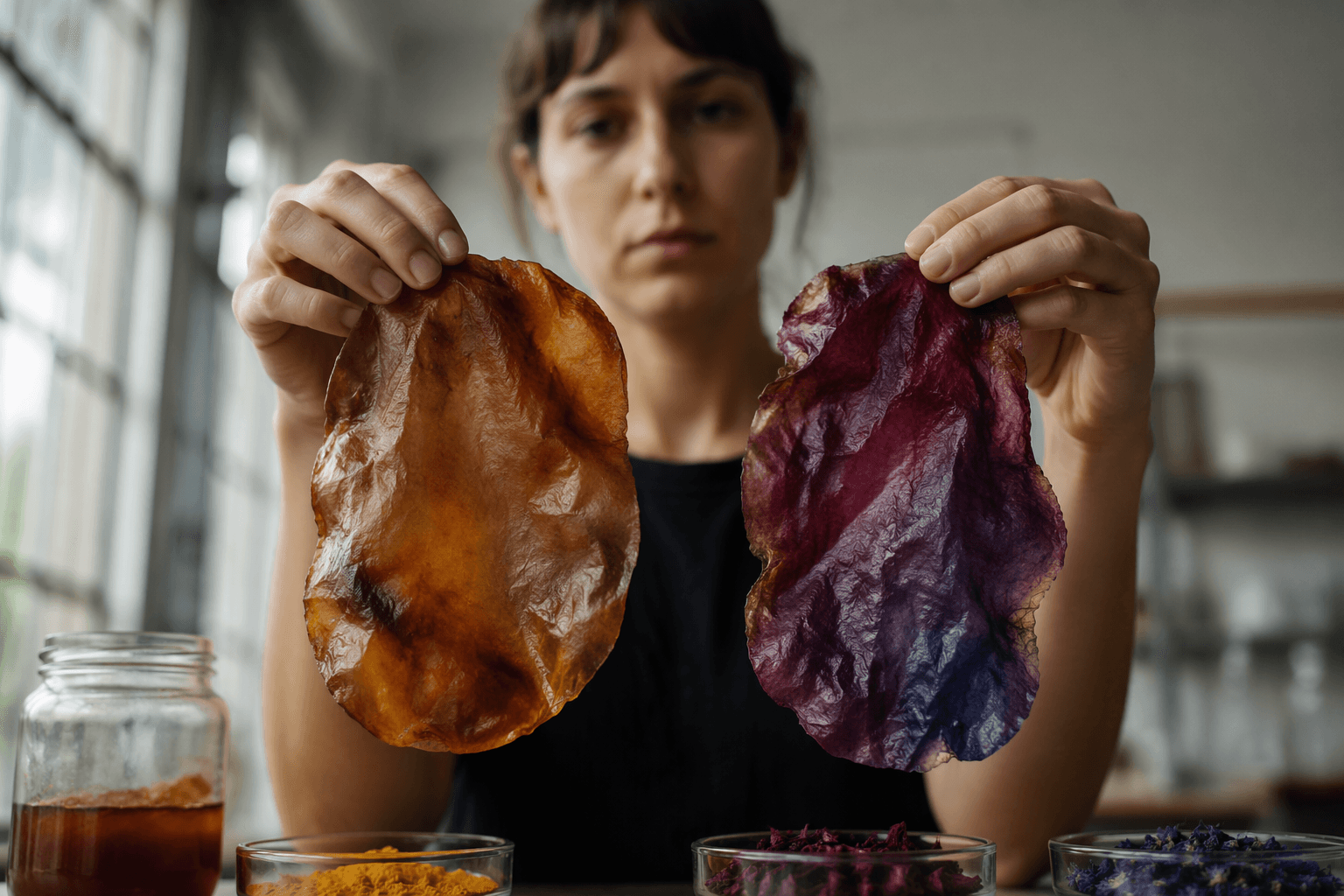
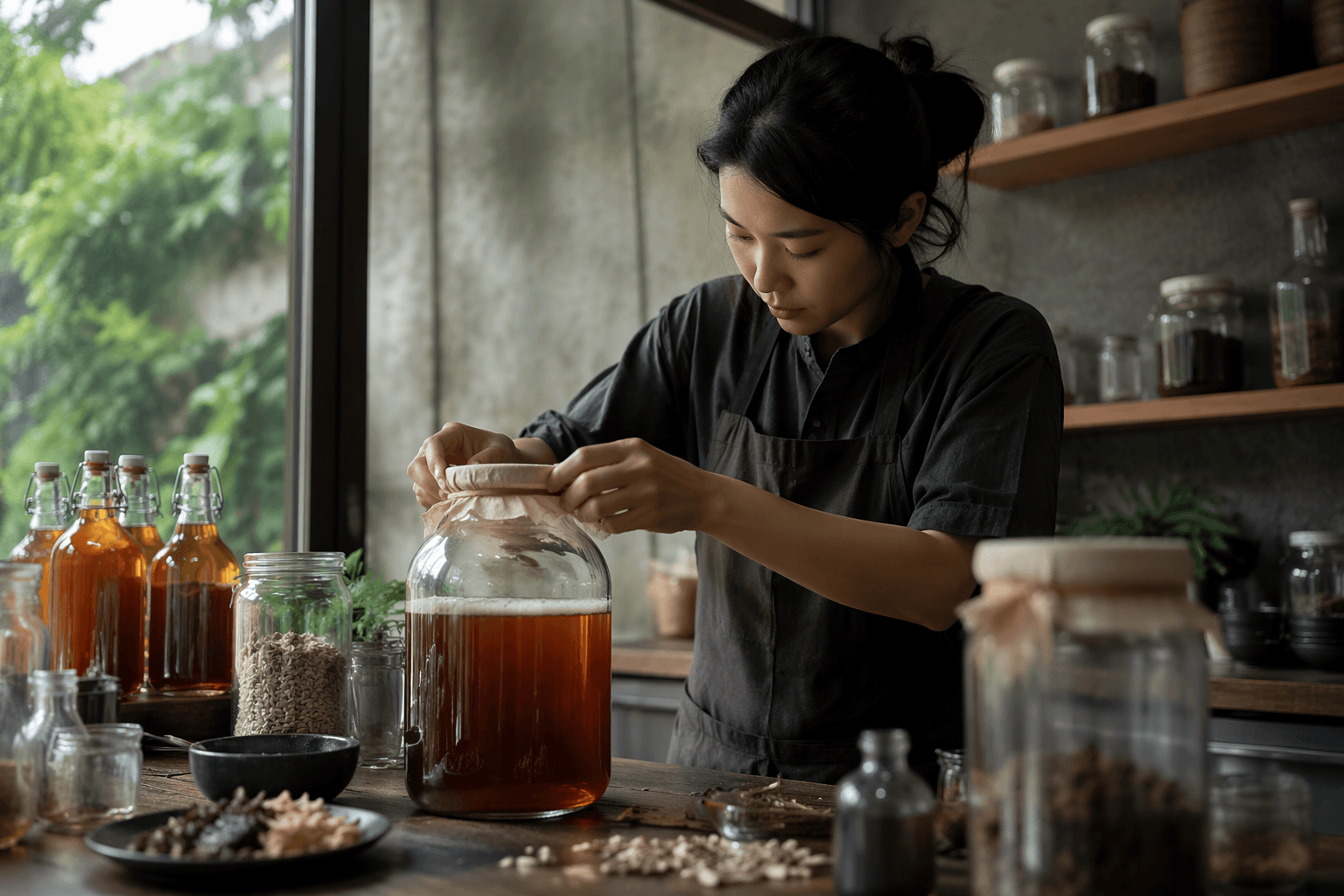
That extra pellicle you peel off and toss may be closer to a material than compost. A new kombucha-related study framed SCOBY-derived bacterial cellulose as a route to bioleather, then pushed beyond the usual kitchen-scale trial-and-error with one-factor-at-a-time screening and Box-Behnken Design to optimize the process.
The details matter. The paper did not stop at growing a cellulose sheet, it tested nutrient sources and then colored the material with natural dyes including curcumin, red dragon fruit peel and butterfly pea flower. That is the kind of move that tells you where the researchers think this can go: not just a brownish lab sample, but something that could someday be tuned for appearance, consistency and use.
There is a useful reality check in the earlier kombucha materials work. A 2025 Springer study found that green tea and palm sugar produced the strongest result among the nutrient combinations it tested, with a thickness of 0.194 ± 0.04 mm and tensile strength of 24.42 ± 3.90 g. It also reported color stability after eight months at room temperature when the material was dyed with coffee, ginger or sappan wood. That is promising, but still a long way from a factory-ready sheet you can rely on roll after roll.
The weakness has shown up before. An Emerald Publishing fashion study found kombucha bacterial cellulose kept its best deformation properties when dried at about 25°C, while higher drying temperatures made the film stiffer and more brittle. In plain brewer terms, that means process control is not a side issue. Dry it wrong and the material changes fast.
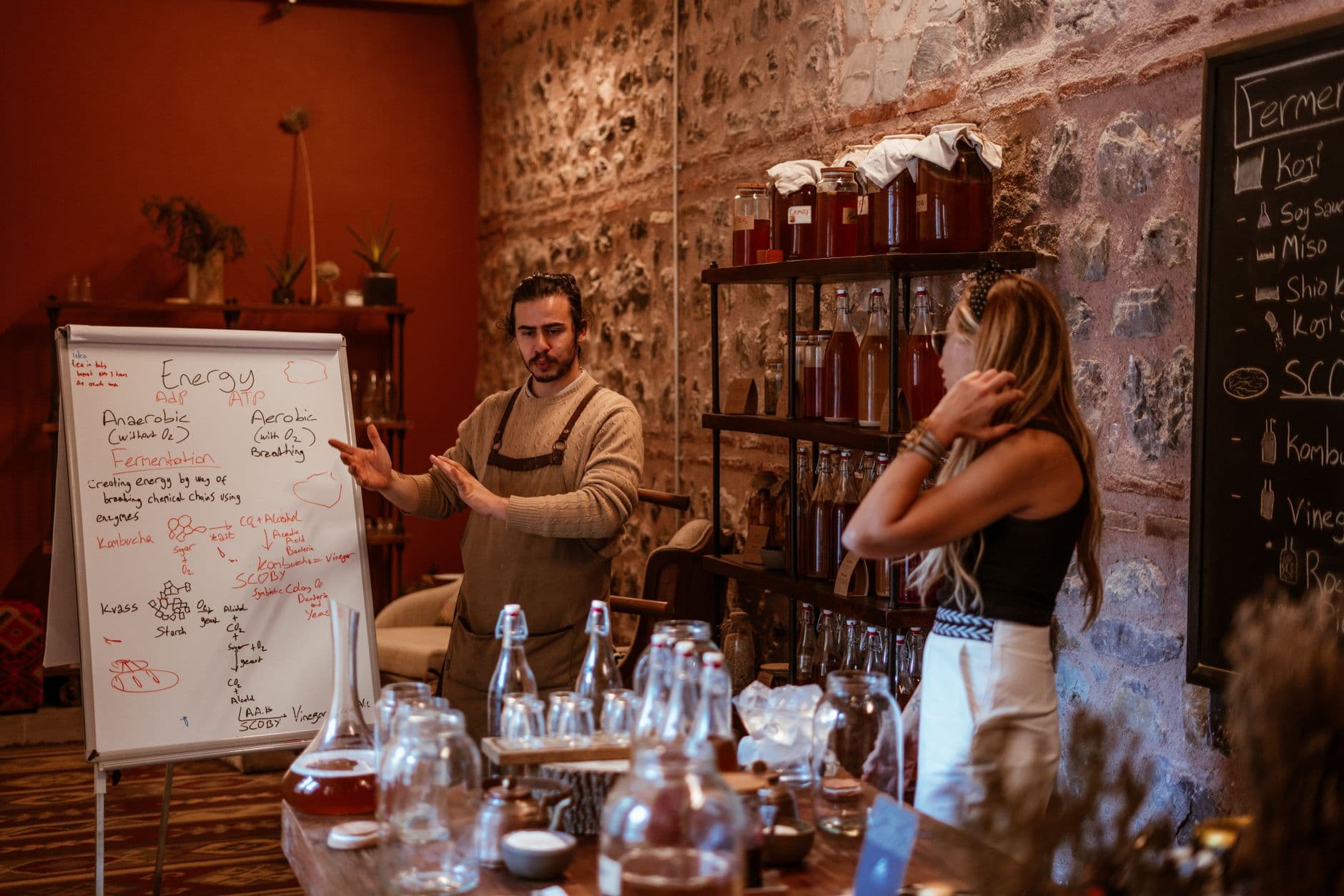
The broader scientific case for kombucha cellulose is stronger than most home brewers realize. RMIT University Vietnam has described bacterial cellulose as a material first identified in 1886 and said it can be about ten times stronger than cotton. It has also shown up in lab work as wallets and painting canvases, which is a lot more practical than the average pellicle sitting in a jar on the counter.
Even the newest environmental angle points in the same direction. A 2026 study from The University of Manchester and Manchester Metropolitan University found kombucha-derived bacterial cellulose biofilms reduced dye colour intensity by more than 79% for acid blue and 63% for reactive navy after 30-day growth in black tea and sugar or Hestrin and Schramm medium. Dye pollution remains a major problem for the fashion and textile industries, and kombucha cellulose is now being tested on that front too.
For brewers, the takeaway is simple: the SCOBY you usually skim off and discard is no longer just brewery waste in the lab imagination. It is being handled like a feedstock, and that is the biggest shift of all.
This article was produced by Prism’s automated news system from verified source data, official records, and press releases, then run through automated quality and moderation checks before publishing. The system is built and supervised by the people who set the standards it runs under. Read our full AI policy.
Did this article answer your question?